
Eggemoggin Reach Regatta: A Celebration of Wooden Sailboats in Maine
There can be plenty of ego, shouting and rough behavior in competitive sailing, especially when a boat doesn’t take first place. But in the world of wooden sailboat racing, aesthetics and camaraderie often matter as much as the finish line—a graceful sheerline, polished brightwork, or a newly built cold-molded yacht that evokes classic designs can steal the show.
That sensibility is exactly what defines Maine’s Eggemoggin Reach Regatta (ERR), an event Ron Zarella—owner of the 49-foot racer-cruiser Blackfish—dubbed “the Woodstock of the wooden sailboat racing world.”
“He’d never been here before,” says Steve White, president of Brooklin Boat Yard (BBY), recalling Zarella’s first visit to the regatta. “He came up and said, ‘I have never had so much fun.’”
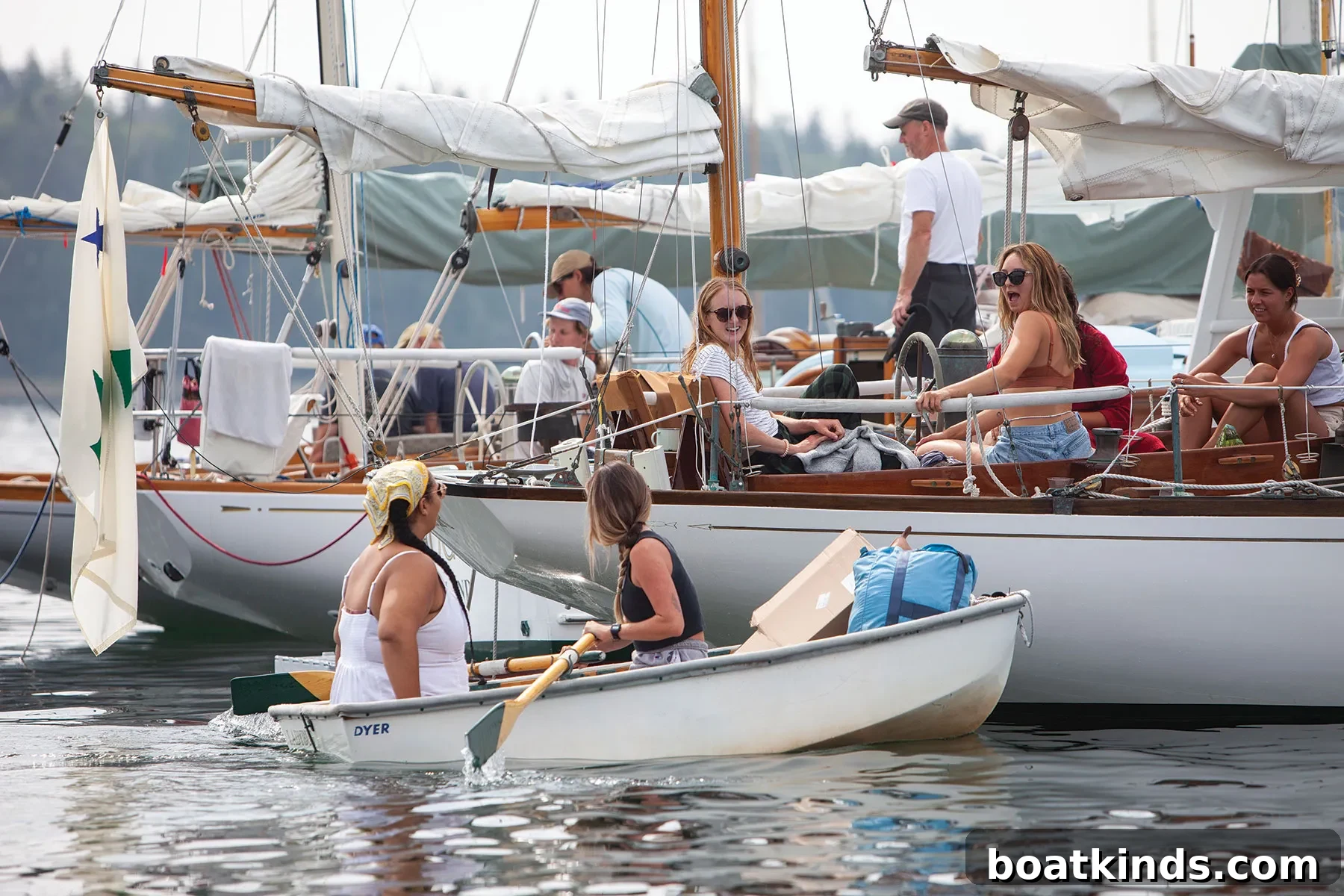
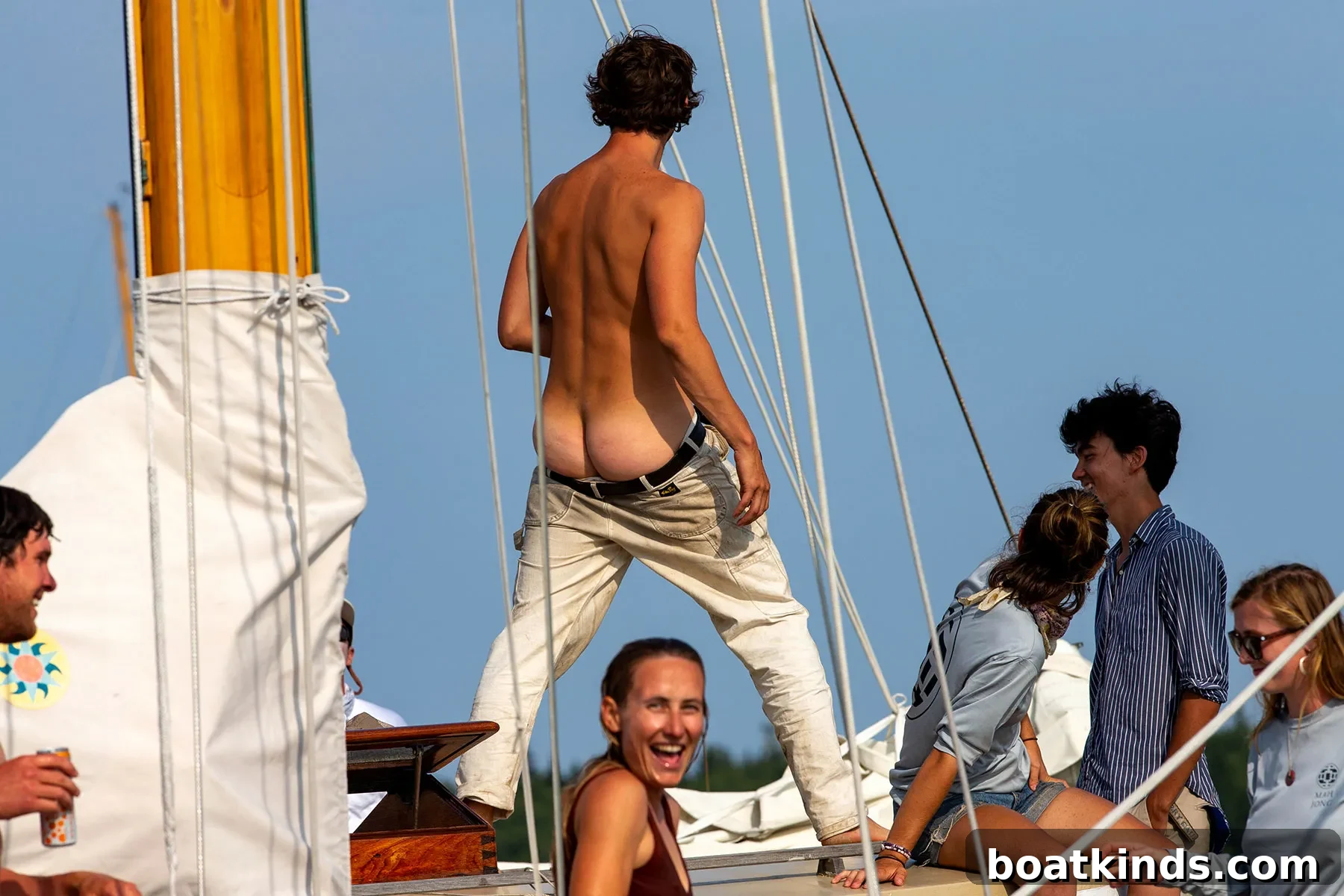
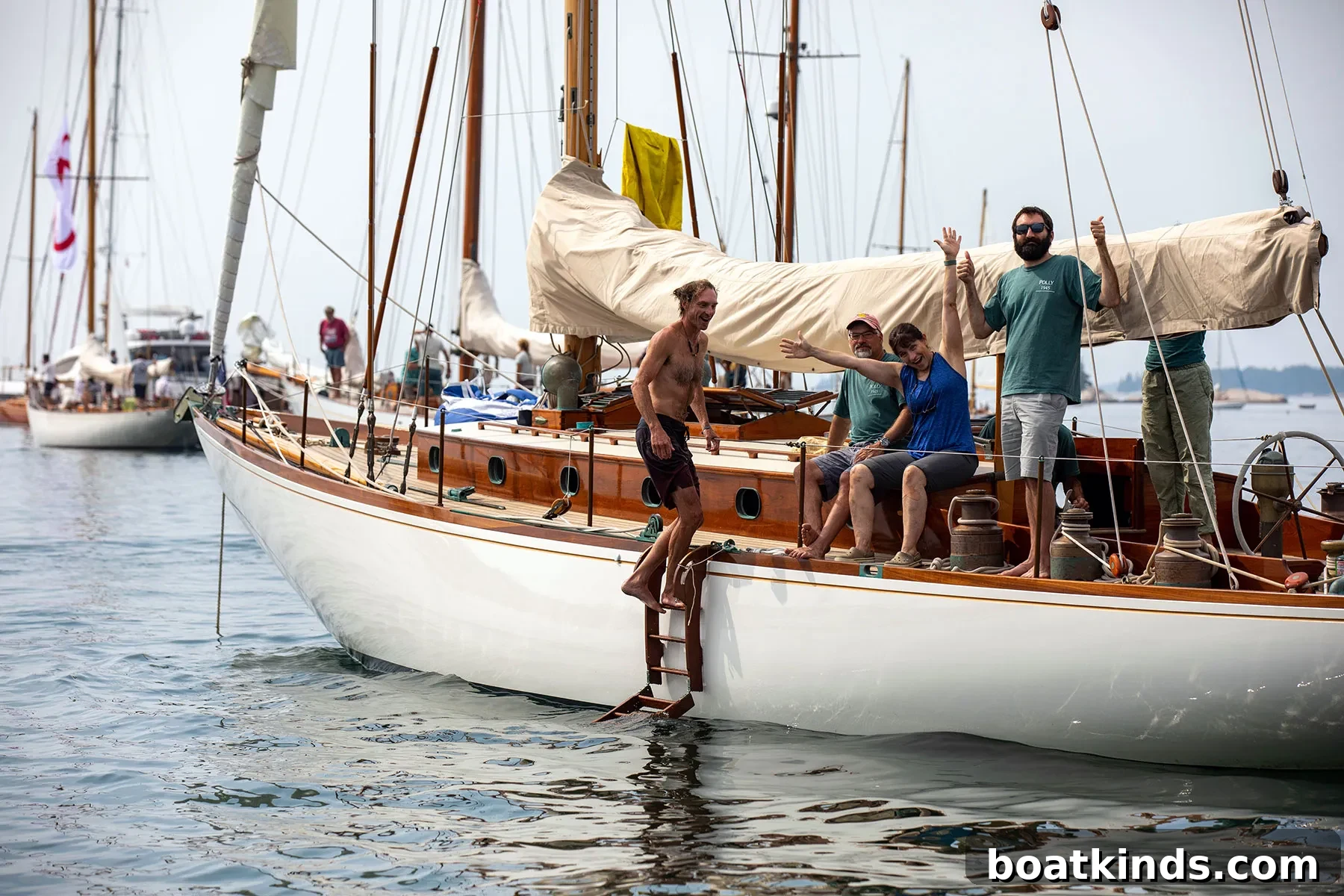
Fun is at the heart of the ERR. Yes, sailors race to win, but the event places equal emphasis on the boats, the friendly atmosphere and the communal celebrations. After the day’s competition, boats raft together, crews swim, beer flows, a live band plays, a barbecue is served, and awards are handed out by children who raced with their parents.
“It’s an amazing regatta,” says Patrick Gavin-Brynes, skipper of the 1968 Bill Tripp Sr.–designed sloop The Hawk. “You see boats, families, kids and spectators—more than a hundred yachts taking off up the Reach. It’s rare to see so many boats on a course heading in the same direction. And the boats aren’t ugly, and the people are nice.”
Sam Temple, president of Rockport Marine, which co-organizes the ERR with BBY, echoes that sentiment: “It’s very familial.” Rockport Marine supplies much of the volunteer manpower that keeps the event running.
White and BBY vice president Frank Hull launched the regatta in 1986 with a straightforward idea: many wooden boats were stored at their yard but not racing, so they started a race specifically for them. The first year drew 13 boats; within a few years the fleet doubled and doubled again. “I was astonished when we hit 30, then 60,” White remembers. For the last decade the event has consistently attracted between 90 and 110 boats—this year 112 vessels participated. What began as a local gathering grew into a flagship event for classic-yacht enthusiasts.
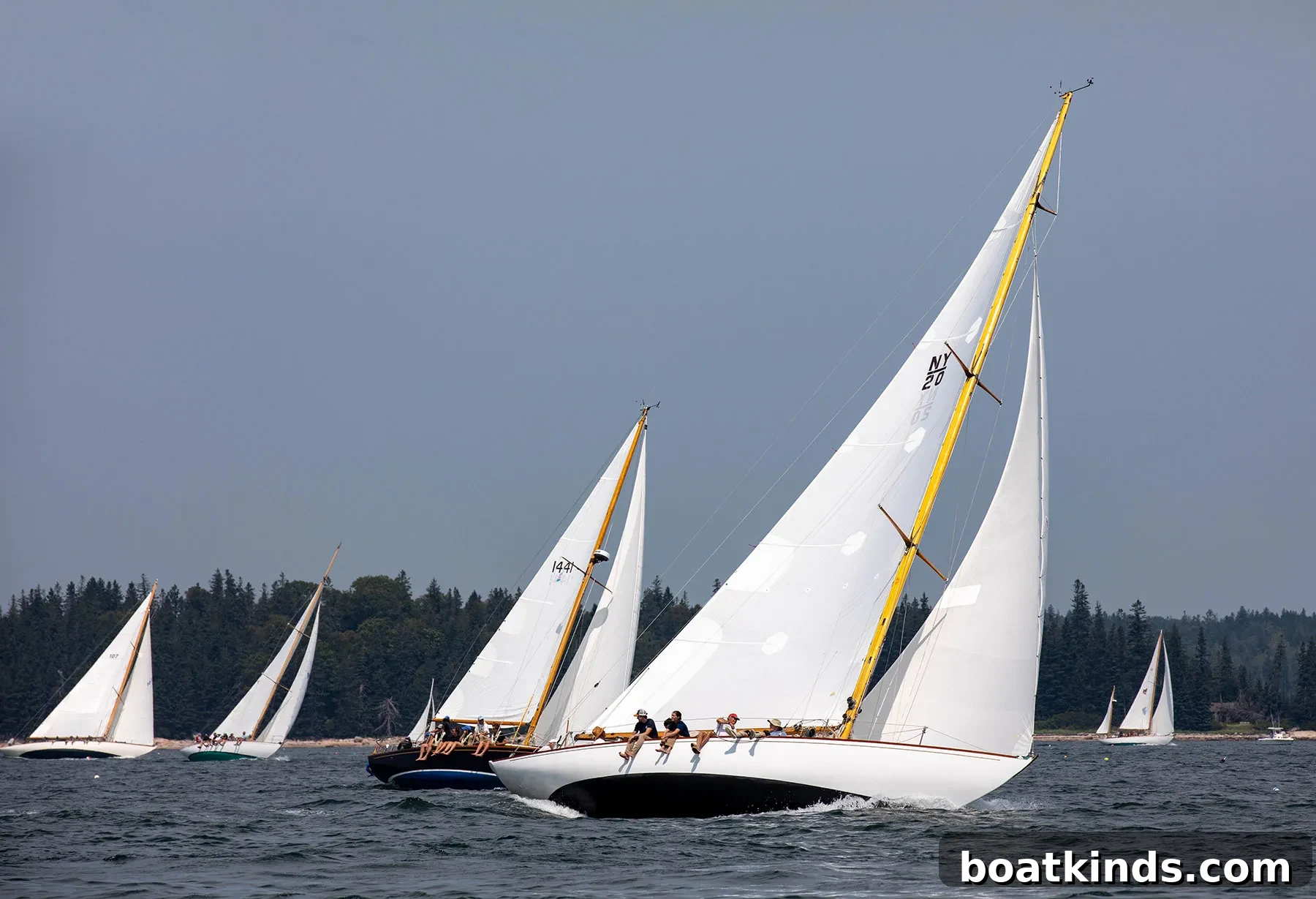
The regatta draws classic yacht sailors from across the country to race in the scenic waters between the Blue Hill Peninsula, Deer Isle and Mount Desert Island. The 16-mile course has remained unchanged for more than three decades: it starts inside the Reach at the base of the Blue Hill peninsula, runs east and south into Jericho Bay, passes Swans Island, heads out to Halibut Rocks, and returns north to finish in Brooklin’s Great Cove.
“This is probably one of the most beautiful backdrops,” says Trevor Harney of Manassas, Virginia, who sailed aboard The Hawk. “It couldn’t be more picturesque. If you don’t like this, find another sport.”
The event’s rustic, low-tech character is part of its draw. Great Cove is remote—more than a mile from Brooklin’s small town center—so unlike many regattas where competitors tie up at town slips and enjoy restaurants ashore, captains at the ERR anchor and visit one another from their boats. “Virtually every other regatta you’re tied off in a town. Here, there isn’t anything ashore except Wooden Boat Publications and the Brooklin General Store. It’s more of an adventure,” White says.
Race morning underscores the event’s down-home spirit. At the skipper’s meeting, White steps onto a wooden picnic table bench to cover a few basic instructions: use the provided Porta-Potties to protect the small septic system, note that the Wooden Boat School campground may be closed, and accept that boat assignments are posted by random numbers—he shows the crowd number 13 and draws laughter. When a skipper asks what radio channel the launch uses, White jokes that the launch has no channel: “Blow a horn or just wave.”
Getting to the boats is its own adventure. Sailors ferry to and from the dock using every available craft—launches, dinghies, lobster boats and even paddleboards. Someone even paddled out with a dog. Rockport Marine volunteers use the company aluminum workboat Tin Pig and Temple’s wooden lobsterboat Spare Time to shuttle competitors, and organizers intentionally avoid sponsorships and banners to keep the event informal.
Light wind delayed the start by 30 minutes before a steady sea breeze built. During the first sequence an International One Design briefly collided with the starting dinghy—no serious damage—and the fleet poured out the Reach. Over the next 50 minutes, 112 classic yachts left the harbor in roughly 10-knot winds, with shoreline crowds and many spectator boats watching the procession toward the bay.
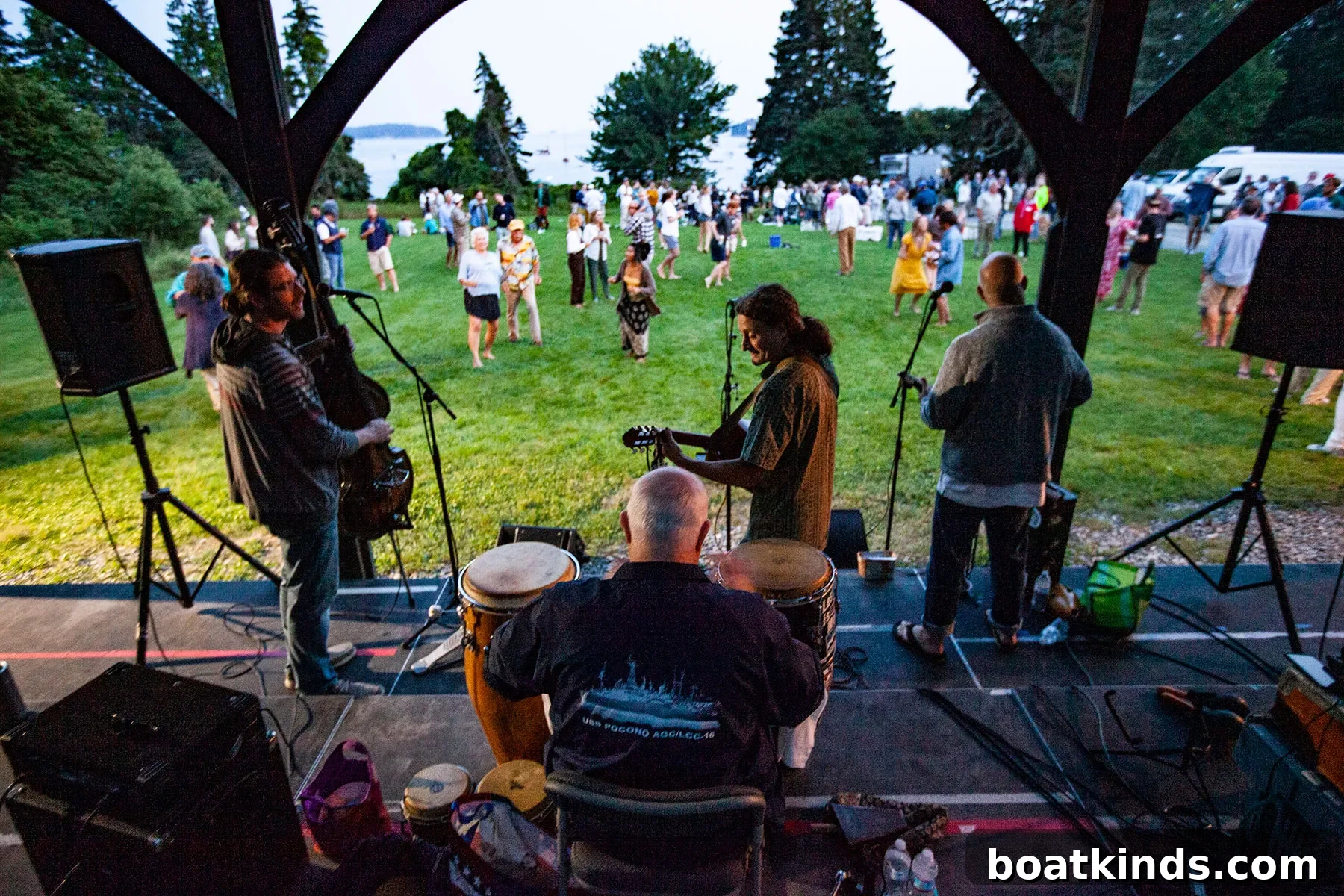
A southerly breeze let most boats clear the Reach on a single tack, then up Jericho Bay they faced lighter wind. Outlier, a 56-foot Spirit of Tradition racer built by Brooklin Boat Yard in 2019, reached the windward mark first and flew its spinnaker on the run home—its high rating and strong performance left it first across the line in just over three hours. As other boats finished and anchored in Great Cove, crews returned ashore to gather around the kegs and enjoy a barbecue and live music.
“The party is pretty important,” says Katie Schoettle, Rockport Marine assistant general manager and event organizer. The social element is central: for 36 years the ERR has combined competitive sailing with relaxed celebration. The race has been canceled only once, due to heavy fog, yet the community still rallied. Even during Covid restrictions, people found ways to race and celebrate from their boats.
As evening falls, a popular Portland band plays Cuban dance music and sailors take to the lawn to salsa. Dinners are simple and convivial. Competitors like Josh Goldberg—who campaigns a Concordia named Dame and a Buzzards Bay 18 named Besherte—appreciate the event’s egalitarian spirit: “Yacht clubs are great, but having boatbuilders run the race makes it more inclusive. It’s all about cool wooden boats and having a good time.”
Later, White and race director Richard Stetson present awards. White summarizes the day, offers a few comments on notable boats, and crew and owners come forward to collect trophies in a relaxed ceremony. “There’s never any heartburn around the awards,” Temple notes. The regatta’s low-key, welcoming atmosphere is a major reason sailors return year after year.
Some competitors, like Frans Van Schaik, embrace the spirit regardless of scoring. Van Schaik brought the 1956 57-foot Sparkman & Stephens cutter Zwerver to the ERR in 2009 and won its class, earning a tougher handicap the following year—part of the regatta’s effort to keep competition fair across diverse classic designs. “I really love the weather and the sailing,” he says. “It’s not about the owners; it’s about the sailors.”
For many attendees, the Eggemoggin Reach Regatta is the highlight of the season: a scenic, well-run race that celebrates wooden boat heritage, invites friendly rivalry, and finishes with a lively community party. “This is the best place in the world to sail,” Gavin-Brynes says, summing up why the ERR continues to attract classic-yacht sailors from near and far.
This article was originally published in the November 2021 issue.