Mast and Electronics Refit on a 1986 Grand Banks 32
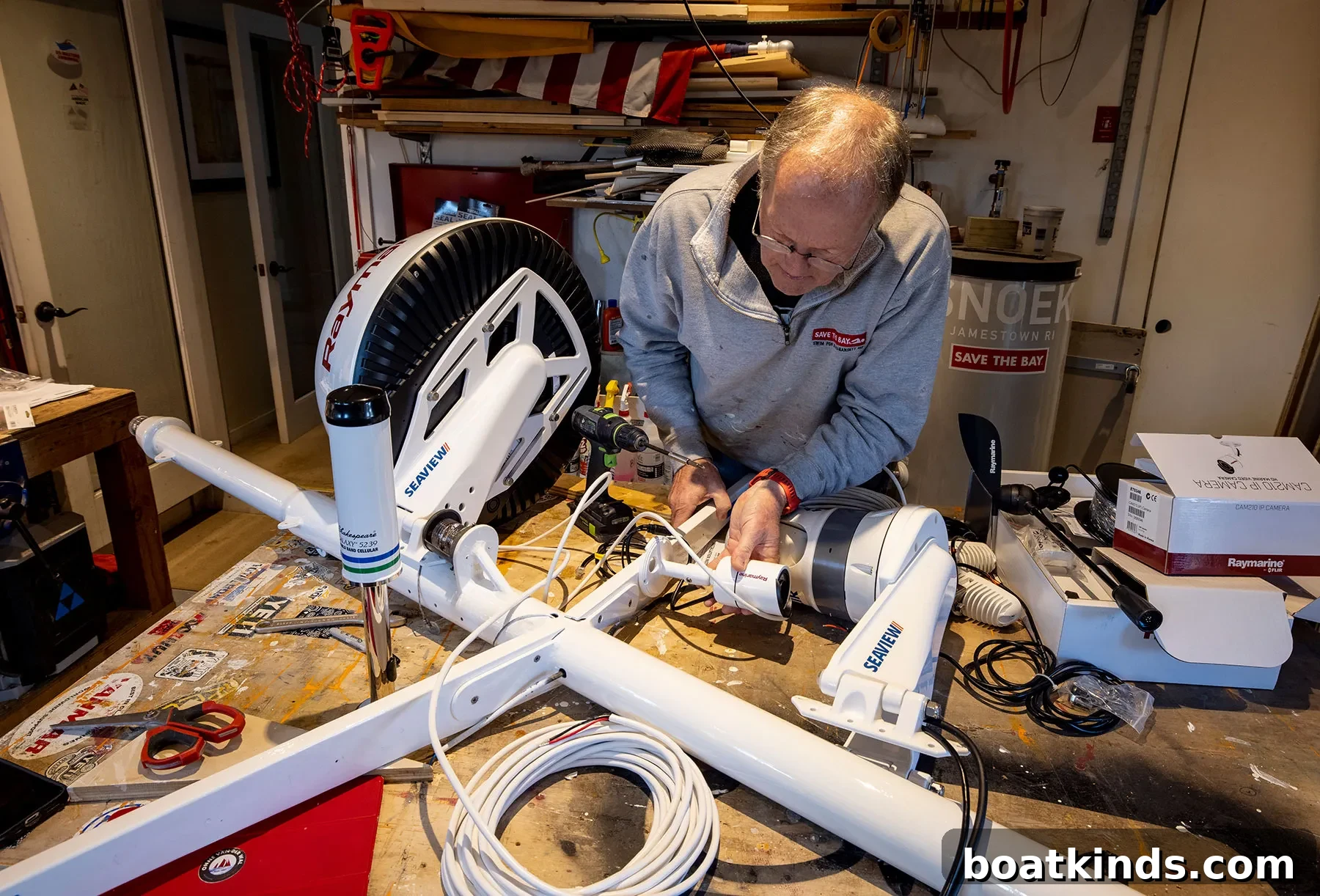
When Rhode Island temperatures hovered in the thirties one January morning, photographer and boat owner Onne van der Wal decided to bring the mast and boom from his 1986 Grand Banks 32 into the warmth of his home workshop. Beyond cosmetic wear, the spars and the vintage electronics needed attention: the radar dated back to the 1990s and many components were original to the boat. Onne ordered a modern navigation package to update the system and set about preparing the aluminum mast and wooden spreaders for new gear and a fresh finish.
The mast, about 12 feet long, fit just inside his workshop. After lowering it himself—an effort he later acknowledged would have been easier with help—he transported it home in his Suburban. Inside, with the thermostat turned up, he stripped the old instruments from the mast and spreaders, removed milky lenses, and prepared the spars for painting.
To remove old coatings and corrosion, Onne relied on an orbital sander and Festool Granat sanding discs, working from 100 grit up through 180 and finishing with 220 grit for a smooth surface. He praised the tools for speeding up the tedious sanding. For sealing and painting he used TotalBoat products: TotalBoat Seal elastomeric sealant to fill old holes, a coat of TotalBoat Topside Primer, and two coats of TotalBoat Wet Edge, a one-part urethane, for a glossy protective finish. Because the exterior was too cold to spray, he applied the coatings by brush.
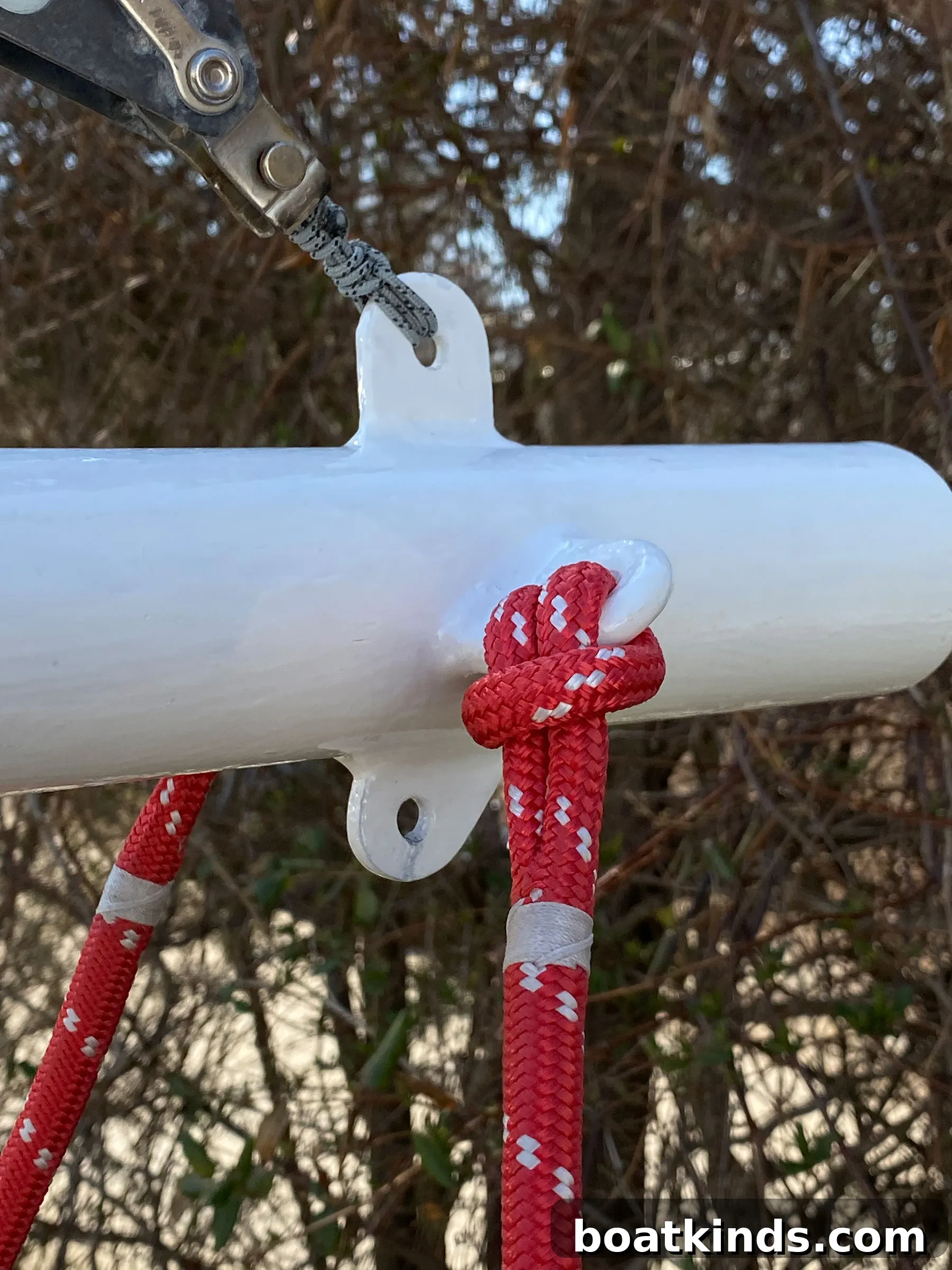
To make painting easier and more efficient, Onne suspended the spars from the workshop ceiling with wire so he could rotate them as he worked from one end to the other. Once the finish cured, he set the spars outside on sawhorses to wait for the electronics package to arrive.
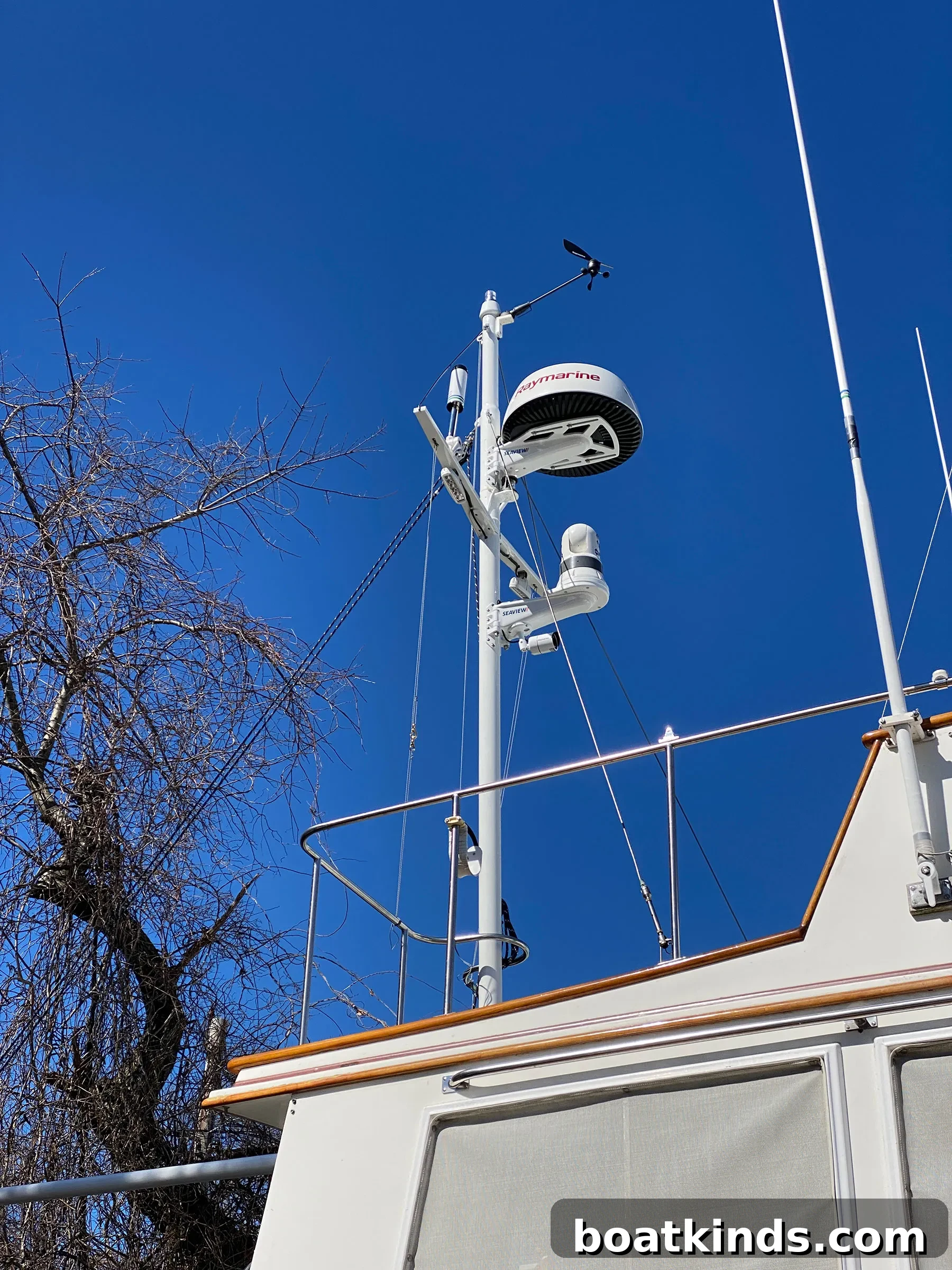
The new navigation and sensing suite included a FLIR M232 Thermal Image Camera System for night vision, Raymarine’s Quantum 2 Doppler Radar for improved target detection, an AR200 Augmented Reality Camera Pack to overlay visual cues on the chartplotter, and an i70S Wind Bundle Pack for wind data. He also installed a Shakespeare Super Halo cell booster and replaced old incandescent spreader lights with Imtra ILSL-1806F IML LED fixtures to modernize illumination and reduce power draw.
The FLIR thermal camera brings night-vision capability, while the augmented reality camera enhances daytime situational awareness by overlaying video, AIS and chart information on the plotter display—identifying buoys, lighthouses and nearby vessels. With AIS, radar and the AR overlay, the electronics on Snow Goose became comprehensive enough to feel like a small command center.
After drilling and tapping new mounting holes, Onne riveted Seaview brackets to the aluminum mast to support the FLIR and radar units. To prevent galvanic corrosion between stainless rivets and the aluminum mast, he installed small nylon bushings as insulating spacers. He retained the boat’s original steaming and navigation light housings because of their durability, but replaced the cloudy lenses and swapped incandescent bulbs for LED modules. He fabricated a new rubber gasket from materials on hand so the lens assemblies would seal properly. The upgraded lights now shine clearly with the new LEDs.
Wiring for the new gear required care. Long manufacturer-supplied leads were routed down the mast and out through the base, while connections for the spreader LED fixtures were spliced. Onne crimped the splices and sealed them with heat-shrink tubing to protect against moisture and corrosion. The stainless standing rigging remained serviceable, but the running rigging for the boom needed replacement. For that work he enlisted his son, Billy van der Wal, who runs the rigging shop at West Coast Sailing in Portland, Oregon. Onne shipped the lines to Billy for professional splicing, and Billy returned the finished lines to Rhode Island for reinstallation.
Preferring quiet, damage-free connections, Onne avoids shackles on certain fittings; instead he lashes blocks with a 1/8-inch cord he sourced years ago from Yale Cordage. With a Dyneema-like core, the line provides high strength and abrasion resistance without the clanging hardware that can chip paint.
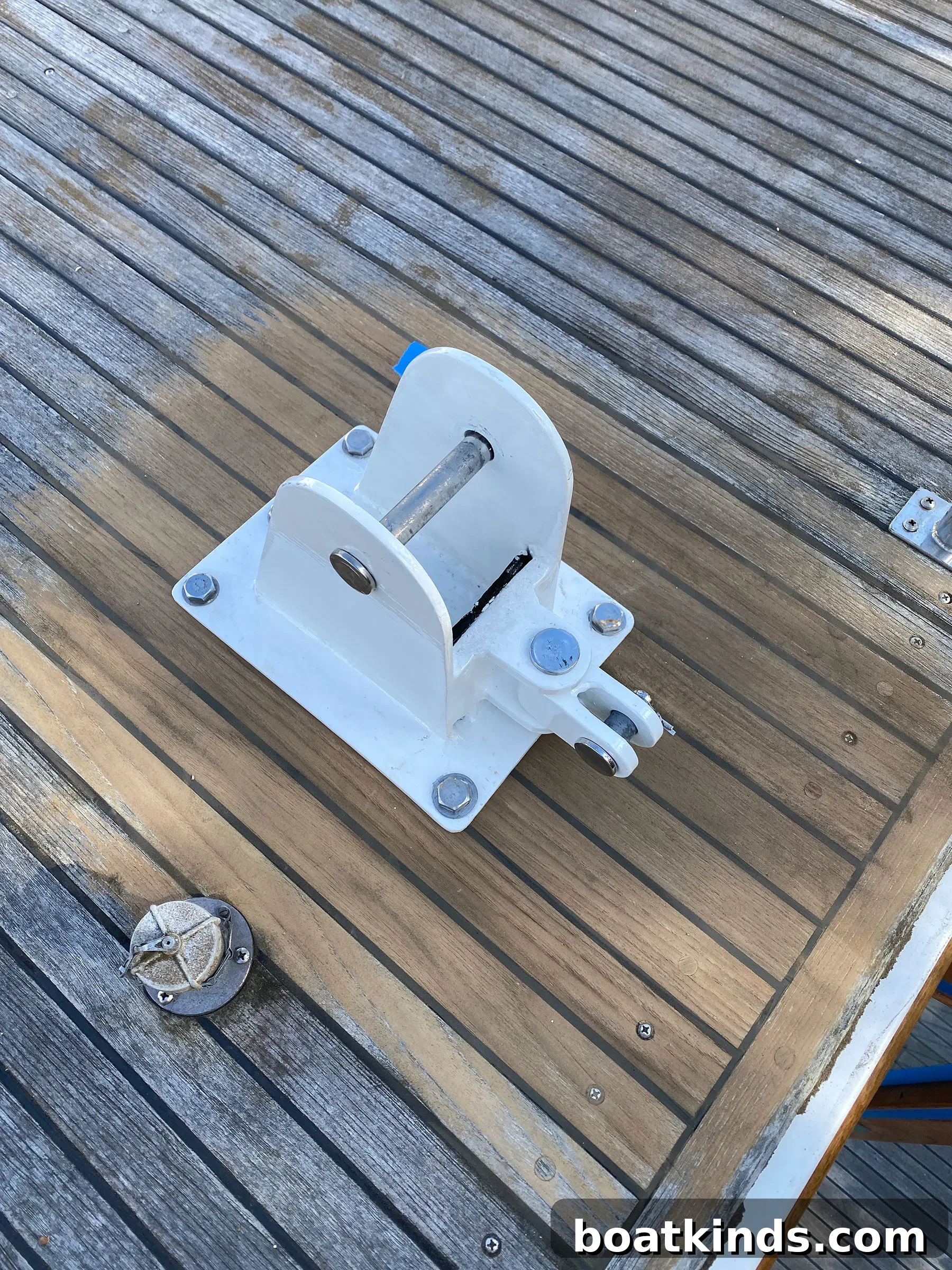
When it came time to return the mast to Snow Goose, Onne recruited two friends for the lift. Before reinstalling the tabernacle, he sanded the teak deck around it; the tabernacle had likely been in place since 1986 and stood slightly proud, so he used 60-grit to fair the deck surface. The tabernacle installation allows the mast to be lowered later to reduce air draft for passing under low bridges.
The mast went back in on a warm, sunny March day, and Onne enjoyed the simple satisfaction of sitting on the deck and confirming that all the lights worked. The remaining work is routing the remaining cables to the flybridge and through to the helm in the salon below—completing the integration of the new radar, thermal camera, AR system and instruments into the boat’s navigation suite.
Originally published in the May 2021 issue.