
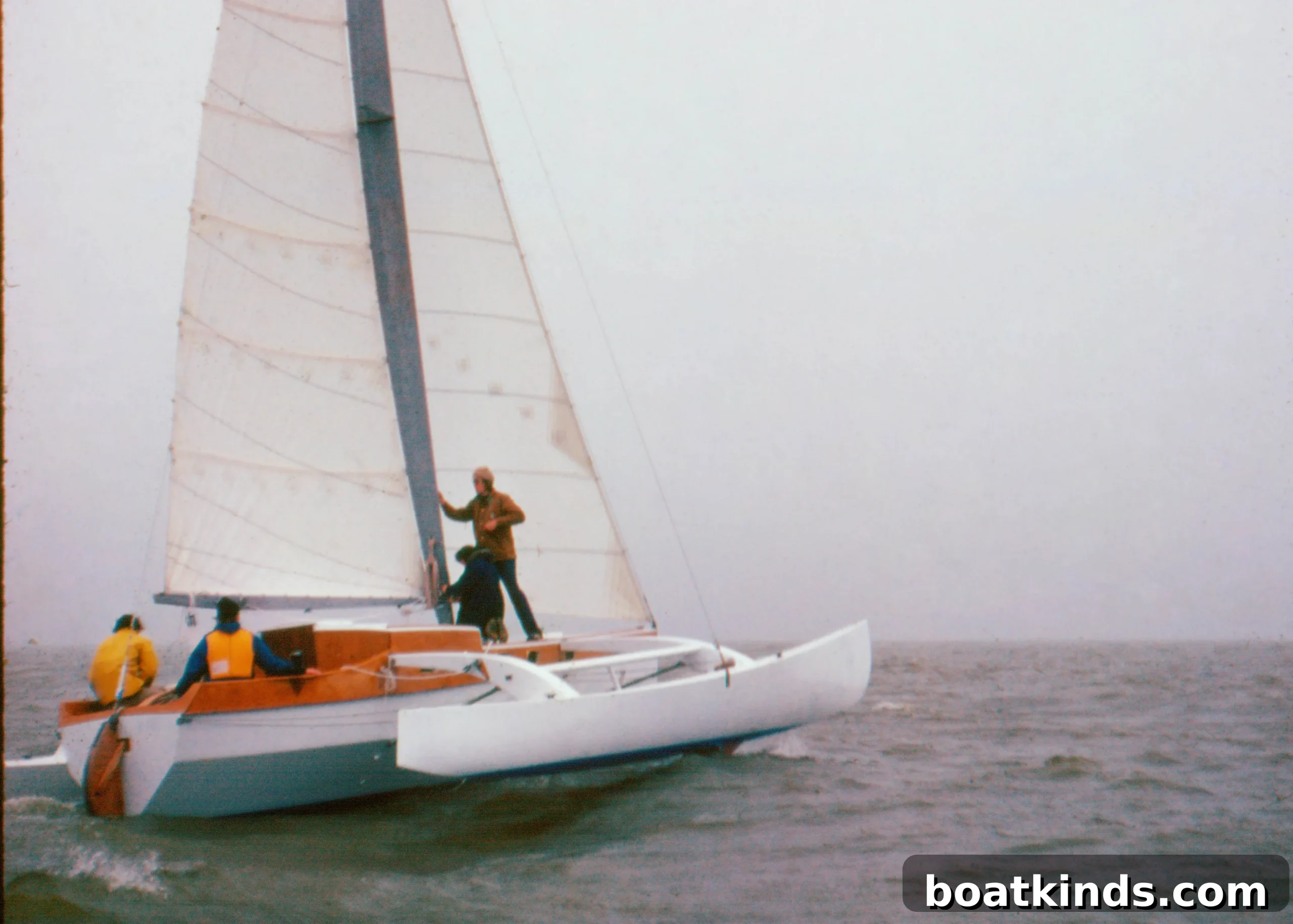
Jan Gougeon and the FLICKA Capsize: Survival in the North Atlantic
On June 20, 1979, during a qualifying race for the Observer Single-Handed Transatlantic Race (OSTAR), Jan Gougeon’s self-designed and built 31-foot trimaran, FLICKA, was overwhelmed by heavy seas and capsized in the North Atlantic. Jan survived for four days on the overturned plywood-and-epoxy multihull before being rescued by a passing freighter. This incident and the immediate aftermath are preserved in a phone call transcript recorded on June 26, 1979.
The FLICKA episode remains a striking example of single-handed ocean racing risks and the resilience required to survive catastrophic equipment failure at sea. Jan Gougeon, an experienced builder and sailor, had designed and constructed the 31′ trimaran using plywood and epoxy—materials and methods that reflected a practical, hands-on approach to multihull construction. During a qualifying race for the OSTAR, a renowned single-handed transatlantic event originally named for its first sponsor, the British Observer newspaper, FLICKA encountered forceful seas in the North Atlantic that led to her capsizing.
After the capsize on June 20, 1979, Jan remained with the overturned trimaran for four days, enduring exposure and waiting for rescue. The vessel’s plywood/epoxy construction and multihull form played a role in his ability to remain with the craft until help arrived. A passing freighter eventually found and rescued him, bringing him safely ashore. The rescue concluded the immediate physical danger, but it also launched a series of reactions, questions, and a moment of reckoning for those involved in Jan’s life and the wider multihull community.
Shortly after being returned to land, Jan spoke by phone with his brothers Meade and Joel and with fellow multihull designer and sailor Mike Zuteck. That conversation took place on June 26, 1979—just hours after the freighter delivered him to dry land. The recorded transcript captures that initial exchange of relief, detail, and reflection, offering a raw and immediate snapshot of what the experience meant to Jan and to those closest to him.
This account does not attempt to embellish or reinterpret the contents of the transcript; rather, it summarizes the factual sequence surrounding the capsize and rescue and frames the phone call as a primary-source document that preserves the immediate human response. The participants in the call—Jan, Meade, Joel, and Mike Zuteck—bring together family concern and technical expertise. The combination of personal relationships and multihull knowledge provides context for why the transcript is of particular interest to sailors, designers, and anyone studying survival at sea.
For readers interested in the technical and emotional dimensions of single-handed ocean sailing, the FLICKA incident highlights several enduring themes: the unpredictable nature of offshore weather and sea state, the importance of robust design and construction for small ocean-capable boats, and the crucial role of timely rescue. The incident also illustrates the value of firsthand accounts and contemporaneous records—such as transcripts—when reconstructing events and learning practical lessons from close calls.
Though this summary focuses strictly on verified details—the date of the capsize (June 20, 1979), the type and size of the vessel (a self-designed 31′ plywood/epoxy trimaran named FLICKA), the location (North Atlantic), the duration of survival on the overturned craft (four days), the rescue by a passing freighter, and the subsequent phone call transcript dated June 26, 1979—those facts are enough to paint a clear picture of the incident and its immediate aftermath. The preserved transcript remains a valuable record for anyone researching Jan Gougeon, multihull design, or survival stories from single-handed ocean racing.
Continue reading: the full June 26, 1979 transcript captures the immediate reactions and technical observations made by Jan Gougeon, his brothers Meade and Joel, and fellow multihull designer Mike Zuteck.