
He never wanted to fight a swordfish, but then the skipper ordered him into the chair
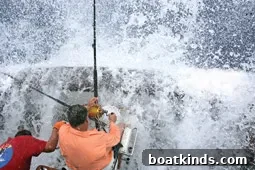
To be honest, I never set out to catch a swordfish. I had written about the rise of daytime swordfishing—landing broadbill swordfish in full daylight off Islamorada in the Florida Keys—and seen it done enough to appreciate the skill involved. But after watching a dozen or more fights, I figured it was simply too grueling: you sit in a heavy, barber‑chair-style fighting chair, gripping a stout big‑game rod and a massive reel that looks like it was built to pull the world itself.
On July 19, though, I found myself strapped into that chair on the Catch 22, owned by Richard Stanczyk and skippered by his brother Scott. I had joined the trip to chase dolphin (mahi‑mahi) and to help produce a video for our Keys tourism site, not to wrestle a broadbill. Then the skipper gave the order to take the chair, and suddenly I was connected to a swordfish 1,800 feet down with no real option but to crank.
We were about 28 miles off Islamorada, and the weather was far from postcard‑perfect for a Keys day. Wind and rough seas pushed spray over the transom and drenched me as we chased the fish. I remember thinking, with a grin, that this was the sort of struggle Hemingway captured in The Old Man and the Sea—but there was nothing romantic about the hard work of hauling line in those conditions.
The overcast sky and cool breeze, however, turned out to be a blessing. In bright sun and heat I might have wilted; instead the spray kept me focused and moving. Fifteen minutes into the fight I had taken in nearly 1,200 feet of line and the fish was rolling at the surface with power that made the boat shudder.
“This is the real thing, Andy,” Richard shouted. He and his friend Vic Gaspeny were pioneers of daytime swordfishing in the Keys, and their confidence was contagious. For a moment I felt adrenaline and humility at once—this was a top‑level big‑game fight, and I was part of it.
We finally saw the leader, but then the fish made a sudden run and dove again. I had to let out about 500 feet of line, then fought for nearly ten minutes to regain 250 feet. After that the battle settled into a grinding stalemate: I’d inch the line forward a few feet, and the fish would take it back. The back‑and‑forth went on for at least half an hour, and the effort was relentless—hands cramping, legs bracing in the chair, every muscle focused on the steady rotation of the reel.
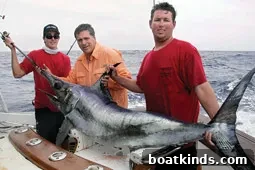
At last, inch by inch, the broadbill came within reach. Mate Hunter Baron seized the leader as the fish neared the transom, and with the help of Nick Stanczyk, Richard’s son, they gaffed the 168‑pound swordfish and hauled it over the side into the boat. The hookup to landing took roughly 80 minutes, and when it was over the crew traded handshakes and pats on the back—equal parts relief and satisfaction.
Landing a swordfish in broad daylight off the Florida Keys is a demanding, unforgettable experience. It’s a test of patience, endurance, and teamwork: the angler must manage the rod and reel, the skipper must position the boat and control the drift, and the crew must be ready to bring the fish aboard safely. For anyone who asks why anglers travel the globe for big‑game fishing, that single 80‑minute battle sums it up. In my case, Richard was right—this prized fish came from our own backyard.
Editor’s note: Andy Newman directs media relations for the Florida Keys & Key West Tourism Council. Learn more about fishing in the Keys at www.fla-keys.com.
This article originally appeared in the October 2010 issue.