
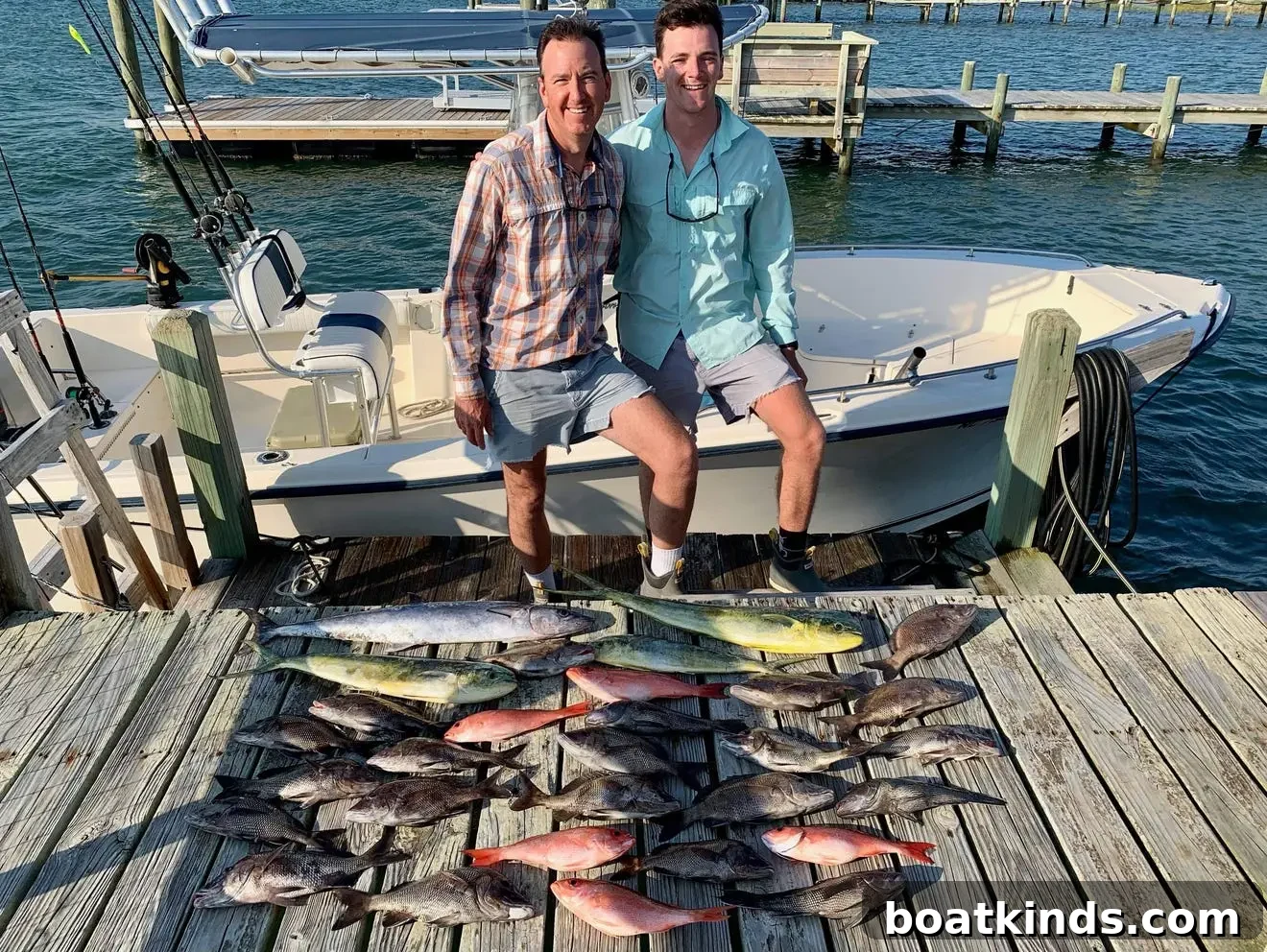
Father and Son Rescue Drifts, Recover Unmanned “Ghost” Boat and Save Exhausted Fisherman 40 Miles Off North Carolina
On July 5, a routine day on the water turned into a tense search-and-rescue when Andrew Sherman of Roanoke, Virginia, and his son Jack encountered an unmanned 23-foot Parker Pilothouse drifting roughly 40 miles off the North Carolina coast. The pair, who were fishing nearby, nearly collided with the unattended vessel. Because there was no one at the helm, they pursued the boat, matched its roughly 9-knot speed and took action to investigate.
As they closed, the Shermans confirmed the Parker was a ghost vessel — moving without a visible operator. After contacting the U.S. Coast Guard to report the situation, Andrew and Jack used the unattended boat’s multiple GPS units to trace its recent track in hopes of locating the missing person who had been operating it.
Careful Coordination and a Methodical Search
Working together, Andrew drove the Parker while Jack handled their 21-foot Sea Hunt. They established a search pattern with the two boats about a mile apart, running parallel lines to scan the area where the ghost vessel had been drifting. During the sweep, Jack spotted a pair of boating shoes floating in the water — a grim clue that suggested someone had gone overboard.
Andrew, 50, relied on decades of boating experience to narrow down the likely drift path. “I figured out which way the boat was drifting in the water and then I went back to the last place that boat had been on a straight line and when I got back to that straight line I more or less started doing these big (s patterns) back and forth,” he told Roanoke’s 10News.
Finding and Recovering the Missing Captain
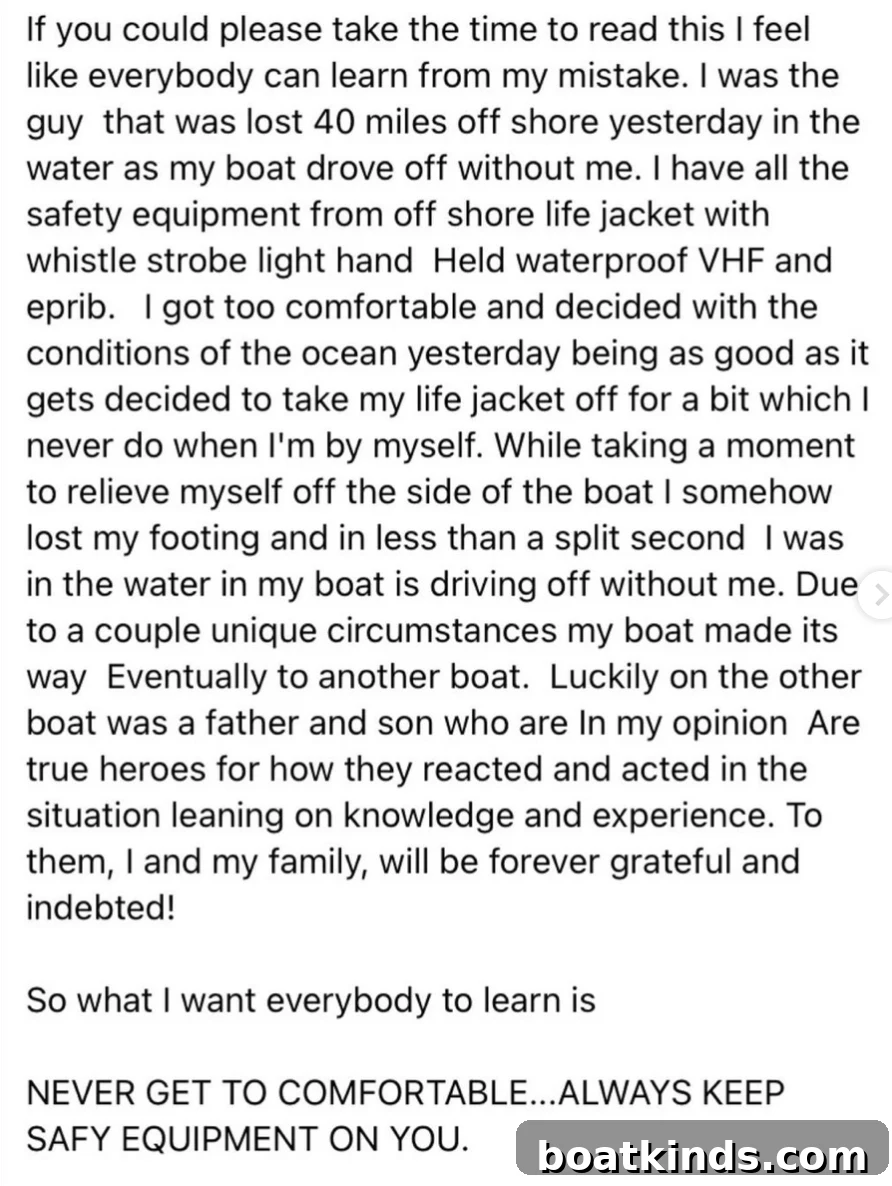
After a few careful passes along the reconstructed path, the Shermans located the missing operator, later identified as Sascha Scheller. When Andrew pulled Scheller from the water, he had been treading for nearly three hours and had started to cramp. Scheller, described as an experienced boater and father of two, declined to be interviewed but did make a social media post afterward so others could learn from what nearly became a fatal incident.
Andrew emphasized the lesson Scheller wanted to share: “It’s not like we haven’t all made those bad decisions in our life. His big message to everyone, and I think it’s the best message, is, just be very cautious of letting your guard down,” he said.
Why This Matters: The Risks of Unmanned Boats and Overboard Incidents
Unmanned or “ghost” vessels present a serious hazard to other boaters, navigation, and the person who goes overboard. Even short periods in open water can lead to exhaustion, cramping and hypothermia depending on conditions. In this case, quick detection, a coordinated response and experienced seamanship made the difference between a near miss and a successful rescue.
Practical Boating Safety Tips
While every situation is different, the Shermans’ rescue highlights several practical precautions that can reduce the risk of overboard incidents and improve chances for a safe recovery:
- Wear a life jacket. A personal flotation device dramatically increases survival time and helps rescuers spot someone in the water.
- File a float plan. Tell a responsible person your route, destination and expected return time.
- Carry communication and locating gear. A VHF radio, GPS, and an EPIRB or personal locator beacon can speed rescue efforts.
- Secure yourself when moving on deck. Use grab rails and wear a safety tether in rough conditions or when alone.
- Check steering, throttle and bilge systems before leaving port. Mechanical failures can lead to loss of control and overboard emergencies.
- Monitor autopilot and electronic systems. If you rely on electronics, confirm settings and watch for alarms.
- Report a ghost vessel immediately. Alerting the Coast Guard or local marine authorities helps coordinate a safe response and protects other vessels.
Final Thoughts
The Shermans’ actions offer a clear example of how experience, calm judgment and a steady search plan can save lives at sea. Their decision to notify the Coast Guard, use the ghost vessel’s GPS to reconstruct its path, and perform systematic passes along that track led to the successful recovery of Sascha Scheller. Above all, the incident serves as a reminder that vigilance and safety precautions are essential for everyone who goes afloat.