
Life on a Remote Island
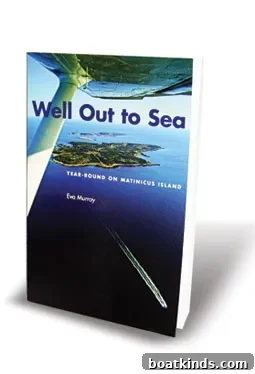
What is it like to live on an island 22 miles offshore, home to only about three dozen winter residents, whose local economy revolves around lobstering? That question lies at the heart of a clear-eyed, intimate account of year-round life on Maine’s Matinicus Island.
About the island
Matinicus sits well out to sea, far enough that weather and distance shape daily life. The island’s small population swells in summer and contracts to a tight-knit community in winter. With lobstering as the mainstay of the local economy, work schedules follow the tides, the seasons and the demands of the fishery. Distance from the mainland creates a rhythm defined by boats, supplies, and the constant awareness that help may be far away when storms roll in.
Eva Murray’s story
Eva Murray first came to Matinicus in 1987 intending to teach in the island’s one-room school for a single year. That initial stay became a lifetime: she married the island electrician, raised a family, and made the island home. Her memoir, Well Out to Sea: Year-Round on Matinicus Island (2011, 320 pages, paperback $20), collects stories and observations from daily life on an outer island and offers readers an honest portrait of what it takes to live in such a remote place.
Daily life and the seasons
Living year-round on Matinicus means embracing extremes. Sunrises and clear, bright summer days reward residents with spectacular views and quiet hours for work and reflection. But island life also includes long stretches of challenging weather: gales that batter houses and boats, weeks of dense fog that can cut one off from the mainland, and winters when only a few hardy souls remain. These seasonal swings create a lifestyle that requires resilience, resourcefulness and the ability to work with what’s at hand.
Community, resilience, and interdependence
One of the clearest themes in Murray’s book is the degree to which islanders rely on one another. In a community where professional services can be hours away, neighbors become first responders, mechanics, teachers, caregivers and anchors. The memoir recounts dramatic moments—searches for lost mariners, boats rescued against the odds, fires and power failures—as well as countless quieter acts of support: shared meals, repaired nets and lines, or a hand hauling in a heavy lobster trap. These small gestures add up to a deep social fabric that sustains people when circumstances are difficult.
Challenges without romanticizing
For readers expecting a romanticized escape-to-Maine fantasy, Murray’s narrative offers a corrective. The island’s beauty is real and often breathtaking, but so are the hardships. Six months of relentless gales, weeks of fog that blur time and navigation, and the practical strains of limited access to services and supplies temper any idyllic notion of constant serenity. Murray writes with balance: she celebrates the island’s rewards while acknowledging the costs and sacrifices that come with remote living.
Education and family life
The one-room school where Murray began teaching illustrates how education on small islands often differs from mainland models. Teachers handle multiple grades, curricula are adapted to small class sizes, and education is woven into community life. Raising a family on Matinicus meant that children grew up learning practical skills alongside reading and arithmetic—skills shaped by the sea, the seasons, and the demands of living where everyone’s role matters.
Why this book matters
Well Out to Sea is as much a social document as a personal memoir. It captures the rhythms of an island economy, the peculiarities of remote living, and the human relationships that make survival possible. Readers interested in coastal communities, New England islands, small-school teaching, or the realities of working fisheries will find Murray’s account both informative and emotionally resonant. Her writing preserves the texture of daily life while avoiding sentimentality, giving readers a clear sense of what it means to belong to a community shaped by the sea.
This article originally appeared in the October 2011 issue.