
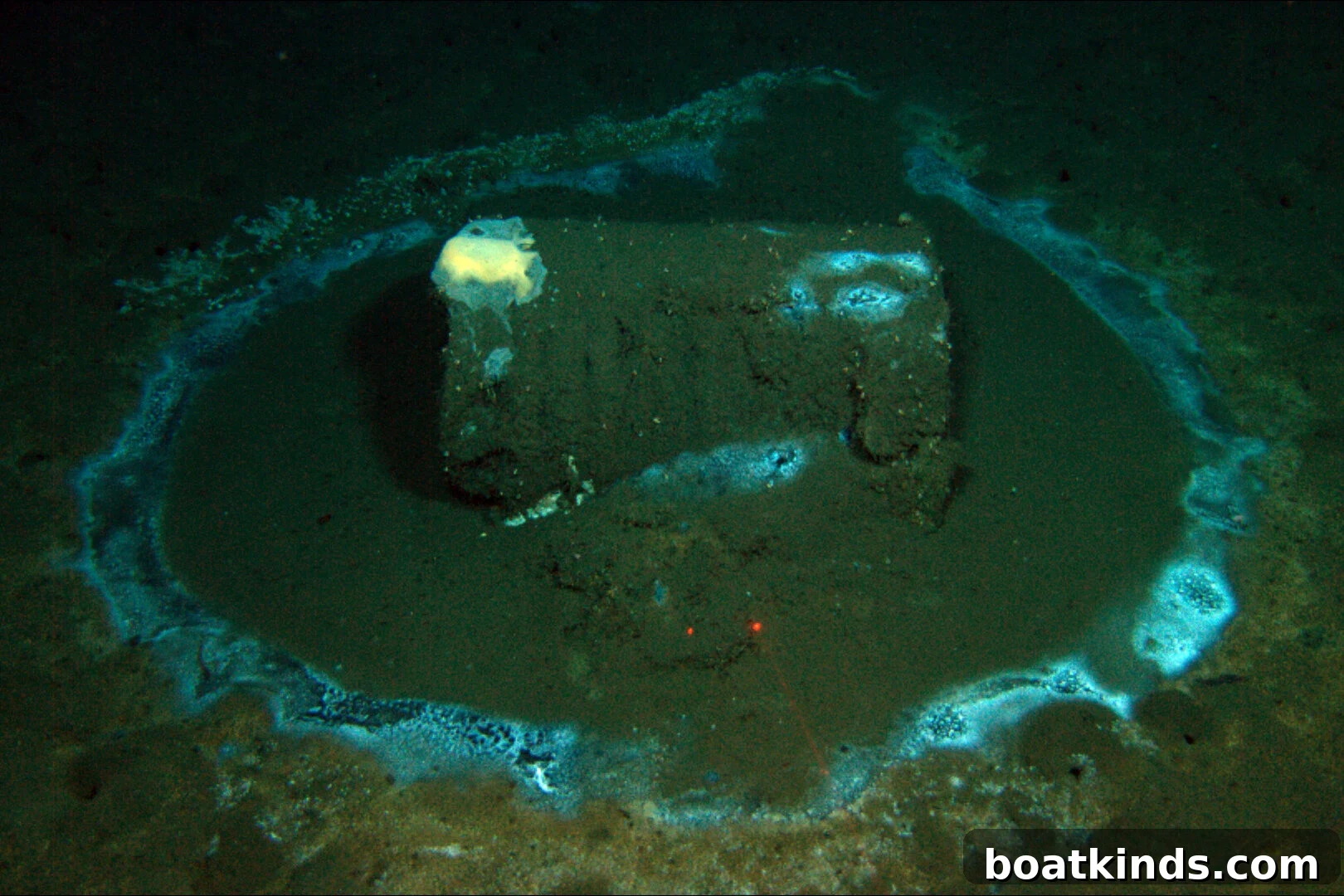
Marine scientists from the Scripps Institution of Oceanography at the University of California San Diego have identified what appears to be a major underwater toxic waste site off southern California: roughly 25,000 barrels detected near Catalina Island that may contain the insecticide DDT. The discovery, based on surveys using underwater drones and sonar mapping, suggests this part of the Pacific Ocean was used for ocean dumping of hazardous materials in the mid-20th century prior to the 1972 Ocean Dumping Act.
Researchers had long suspected that barrels and other debris were deliberately disposed of in this area between World War II and the early 1970s, but the exact location, scale and contents of any containers remained unclear until the recent wide-area mapping campaign. Sonar imagery and remotely operated vehicle (ROV) observations allowed the team to map dense clusters of barrel-shaped objects on the seafloor. From the mapped distribution and estimated number of containers, scientists calculate that the site could represent between about 320 and 640 tons of DDT, although they emphasize that sediment and container sampling are still required to confirm the chemical contents and total mass.
DDT (dichlorodiphenyltrichloroethane) is a persistent organic pollutant known to resist breakdown in the environment, to bioaccumulate in fatty tissues, and to travel up food chains. Because of those properties, even buried or partially contained DDT can become an ongoing source of contamination for sediment, water and marine life if containers breach or corrode over time. The full environmental and ecological consequences of the Catalina-area barrels are not yet known, but the presence of DDT in local wildlife has been documented in previous studies. For example, elevated levels of DDT compounds have been measured in the blubber of bottlenose dolphins in Southern California, and research has linked DDT-related contaminants with health impacts, including increased cancer risk, in sea lions.
Determining whether these barrels are intact is central to next steps. If detailed inspection and testing show the containers are still sealed and contain DDT but have not leaked, authorities and environmental managers may opt to remove and transport them to a safe disposal facility. That work would require substantial planning and coordination among federal, state and local agencies, as well as careful engineering to avoid further disturbance. If barrels are found to have leaked or if sediment tests indicate widespread contamination, scientists will need to conduct a more extensive assessment that includes sampling water, seafloor sediment and tissue from marine animals to define the scope and severity of contamination.
To support decision-making, the Scripps research team is emphasizing additional targeted sampling. Sediment cores and chemical analyses will clarify whether the barrel clusters contain DDT compounds and at what concentrations. Tissue sampling from marine mammals and fish—conducted under appropriate permits and with animal welfare considerations—would help reveal bioaccumulation patterns and potential risks to wildlife and human consumers of seafood. Long-term monitoring will likely be necessary to track changes over time, especially if remediation or removal operations are initiated.
The discovery highlights the legacy of historical ocean dumping practices and the challenges of addressing persistent pollutants on the seafloor. The 1972 Ocean Dumping Act significantly curtailed deliberate disposal of hazardous wastes at sea, but materials discarded before that law remain on or beneath the seabed in many regions. Discoveries like the Catalina Island barrels are prompting renewed attention to how those legacy sites are identified, assessed and, where necessary, remediated to reduce ecological and public-health risks.
Scientists involved in the survey hope the new findings will help secure funding and regulatory support for follow-up investigations and any cleanup actions that prove necessary. For now, the primary outcomes are a clearer map of the suspected dump site and a plan for targeted sampling to establish whether the barrels actually contain DDT, whether they have leaked, and what the ongoing risks may be to marine ecosystems and coastal communities.