
Century-Old Message in a Bottle Reunites Family with Memory from 1926
On the Friday before Father’s Day weekend, Captain Jennifer Dowker was diving in the Cheboygan River, Michigan, performing routine maintenance on the hull of her glass-bottomed tour boat, Yankee Sunshine. The vessel, used for summer shipwreck tours, often requires divers to scrape barnacles and check the underside for damage. During one of those routine dives, about 10 feet beneath the river’s surface, she noticed an old green glass bottle that caught her attention.
At first the bottle looked like many others Dowker has collected over the years while diving the freshwater wrecks and shorelines around Cheboygan. This one, however, contained a surprising relic: a rolled piece of paper. Although the bottle had taken on water over time—its seal had deteriorated and the interior was roughly two-thirds full—Dowker could still make out part of the message. The single decipherable word she saw initially was “this.”
A Message Dated November 1926
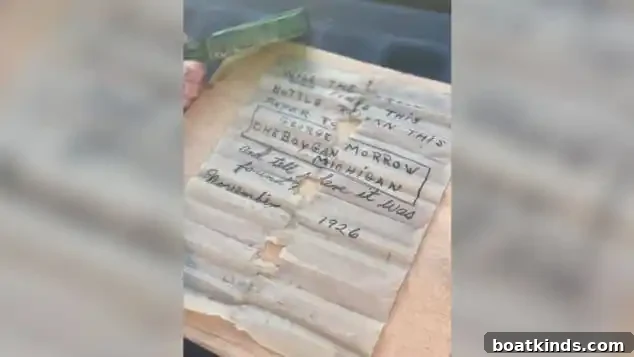
Careful inspection revealed a short handwritten note dated November 1926. The text requested: “Will the person who finds this bottle return this paper to George Morrow Cheboygan, Michigan and tell where it was found?” The discovery of a nearly 100-year-old message in a bottle immediately captured Dowker’s imagination, blending personal history with the maritime stories she shares on her glass-bottomed boat.
Rather than keeping the find private, Dowker posted a photograph of the note and a brief explanation on her company’s Facebook page, hoping someone might recognize the name and help reconnect the message with the writer’s family. She expected only a few reactions from locals or fellow history enthusiasts, but the response was far greater than she anticipated.
Viral Post Leads to a Family Reunion
The post spread quickly and went viral overnight, accumulating more than 100,000 shares. By the following morning Dowker found herself at the center of an unexpected social-media-driven search. On Father’s Day she received a message from Michele Primeau, who identified herself as the daughter of George Morrow. Although the note had been written decades before Primeau was born, she recognized her father’s handwriting. According to her, George’s birthday in November made it plausible that he had tossed the bottle into the water that month; she estimated he would have been about 17 or 18 when he wrote the message.
Primeau said the bottle’s appearance and the act of throwing notes into the water were not out of character for her father. He was known to be sentimental—on occasion he left notes hidden in the walls during home renovations and once cast a bottle into Lake Huron while the family was on a camping trip. Those small acts of whimsy and memory helped explain why a young George might have sent a message into the river nearly a century ago.
Keeping the Message as a Family Treasure
George Morrow himself died in 1995, but the sudden reappearance of his handwritten note brought his memory vividly back into the life of his daughter on that Father’s Day. Dowker offered to return the paper to Primeau, but the daughter insisted the captain keep it. In response, Dowker plans to preserve the relic: she will create a framed shadowbox to display the fragile message on the Yankee Sunshine or in the tour company’s office, where it can be seen by passengers and visitors.
This unexpected reunion—sparked by a simple glass bottle found while cleaning a boat hull—highlights how small objects can bridge generations. The discovery not only provided a tangible link to a local family’s history but also brought a moment of human connection to the boat tours that celebrate the maritime past of the Cheboygan area. For Captain Dowker and the passengers on Yankee Sunshine, the bottle and its paper become more than a curiosity; they serve as a reminder that stories, and the people behind them, can resurface in the most unlikely places.
Dowker’s find reinforces the allure of messages in bottles and the enduring fascination with maritime artifacts. Preserved in a shadowbox on the glass-bottomed boat or in the company office, the 1926 message will continue to spark conversations, anchor local history, and honor the memory of George Morrow for future visitors and family members alike.