
19th-Century Boat Unearthed During St. Augustine Roadwork
During routine road construction in downtown St. Augustine, Florida, a backhoe operator uncovered an unexpected discovery: a plank of wood embedded in the mud while digging a trench for a storm water pipe. Work stopped immediately, and Dr. Sam Turner, the archaeologist from Search Inc. who was on site, carefully brushed away more mud. As the team and archaeologists cleared the soil, the outline of an old wooden boat slowly emerged.
Construction sites occasionally reveal historic artifacts, but finding a largely intact boat during a routine utility excavation is rare. Because several recent archaeological finds have occurred across Florida, Search Inc., an Orlando-based archaeology firm, has been assigned to monitor local construction projects so specialists can respond quickly when discoveries happen.
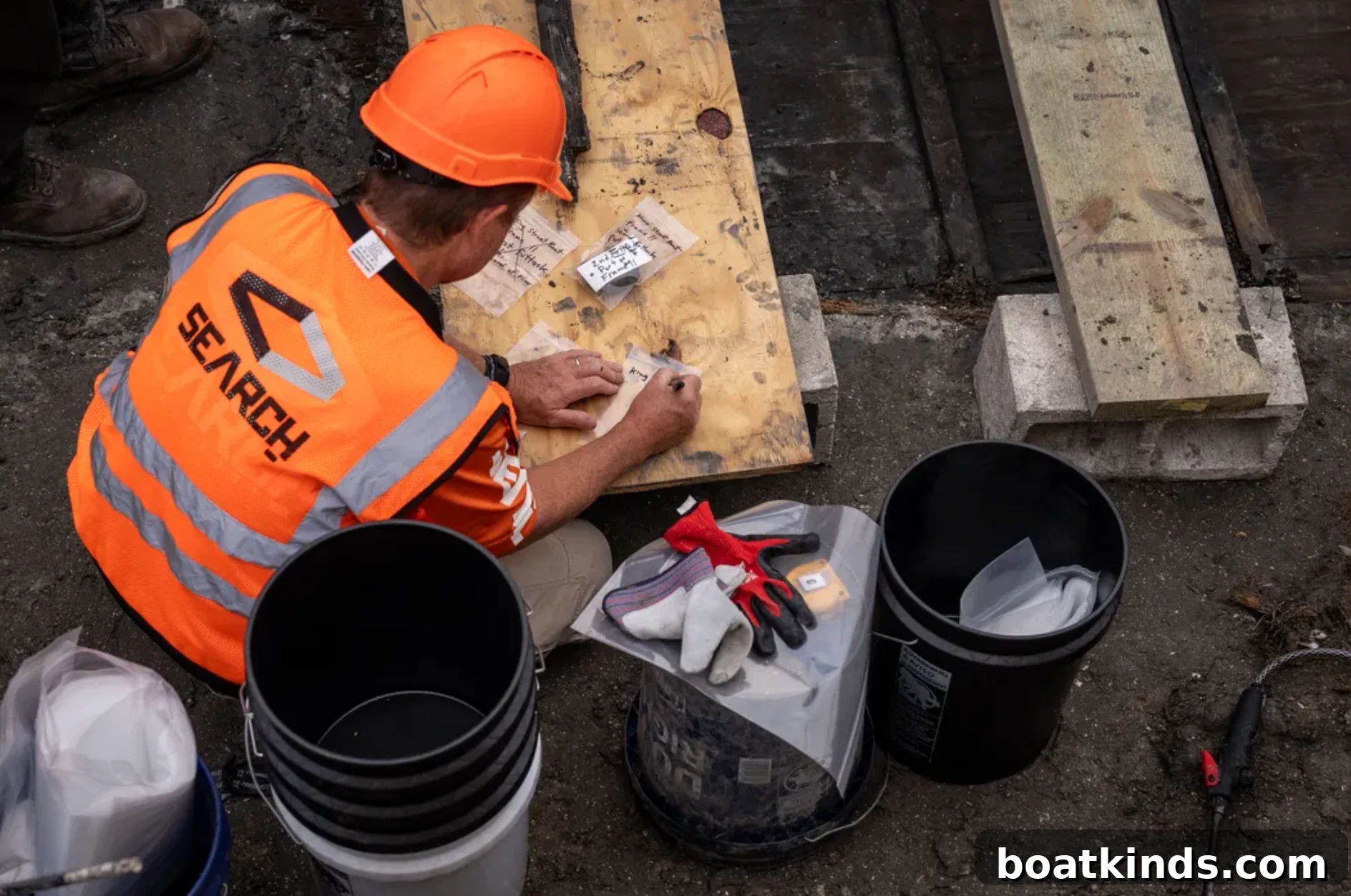
According to Jim Delgado, vice president of Search Inc. and an experienced maritime archaeologist, the planks recovered from beneath the road were in a fragile state, their fibers softened by long immersion in saltwater. He described them as having the consistency of wet cardboard, a condition caused by prolonged exposure to salt and anoxic mud that both preserves and weakens organic material over time.
Delgado and the team estimate the vessel dates to roughly 1880–1900. Their assessment is based on the boat’s dimensions—about 24 to 28 feet long with a seven-foot beam—and its construction features: a flat bottom and provision for one or two masts. Those characteristics suggest a small working craft typical of coastal Florida in the late 19th century, likely used for oystering, inshore fishing, or short-haul delivery of produce such as squash and oranges to nearby markets.
“These were the working craft that regular, ordinary folks were building and using,” Delgado said on an Orlando News 6 podcast. “It was the way they kept their families fed, how they paid their rent, it’s what they did.” His comment underscores the cultural and economic importance of small workboats, which rarely appear in histories that focus on larger ships and famous wrecks.
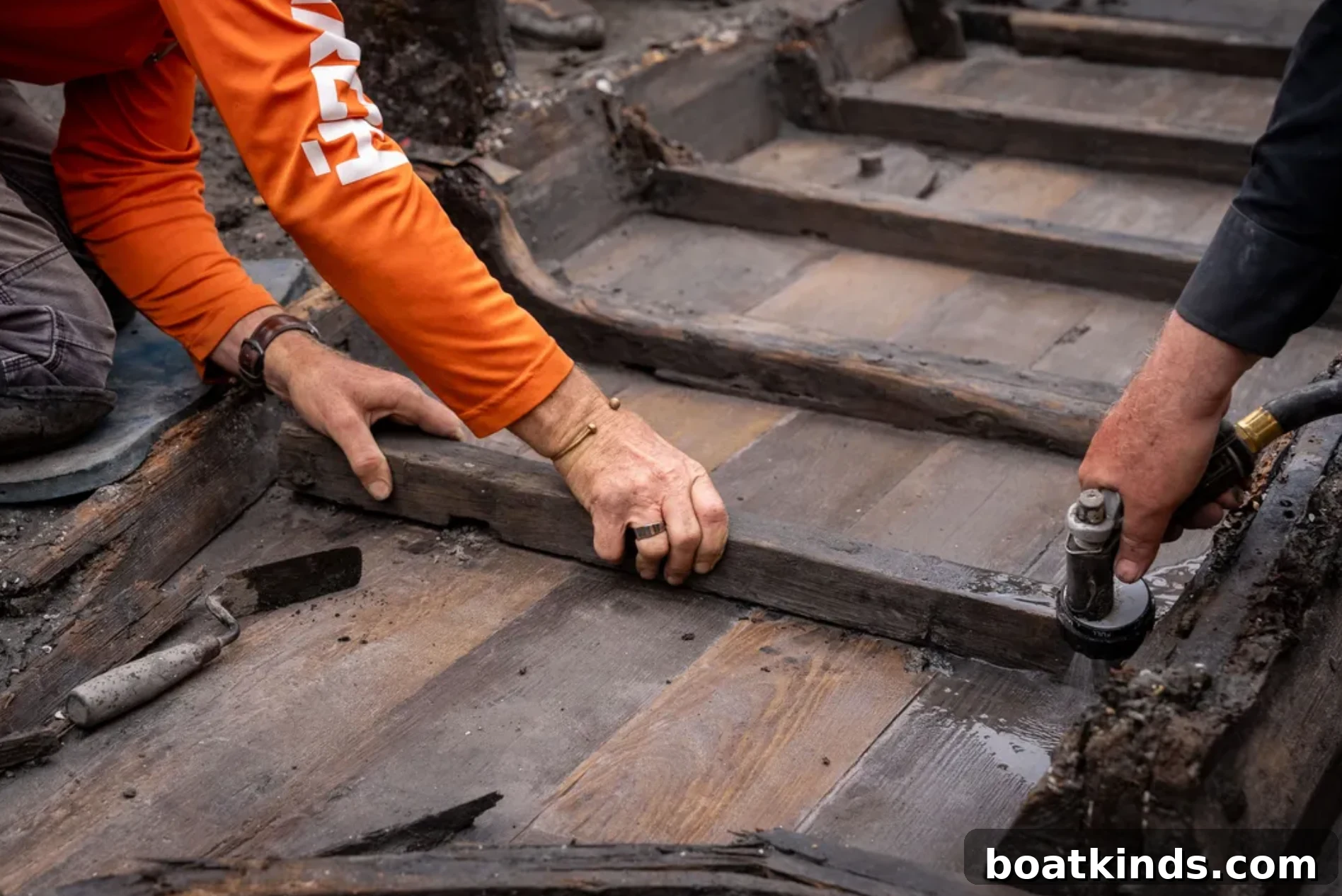
Over five days, the combined construction and archaeological crew used warm water to soften and remove the surrounding mud without causing abrupt drying or further damage to the timbers. Each plank was lifted carefully and placed on plywood stretcher boards for transport. The recovered components were taken to the St. Augustine Lighthouse Maritime Museum, where initial preservation will take place in fresh water to stabilize the wood and prevent rapid shrinkage or cracking.
Delgado explained that full reconstruction — whether physical or for public display — is a lengthy, technically demanding, and costly process, so it remains unclear if the vessel will ever be rebuilt and exhibited. Before any decision on reconstruction, the archaeological team will produce a detailed paper reconstruction, documenting measurements, joinery, and the vessel’s layout so the information will be preserved even if a full physical restoration is not feasible.
For maritime archaeologists, discoveries like this one carry great professional and public value. Delgado, who has worked on high-profile wrecks including sites associated with Pearl Harbor, the Titanic, and the Clotilda, emphasizes that everyday working boats offer a different but equally powerful perspective on the past. They reveal how ordinary people earned their livelihoods, moved goods, and shaped coastal communities.
“These vessels with no names speak to the reality of life as well,” Delgado said. “And sharing that, that’s practically one of the best days on the job.” The recovery in St. Augustine will add another chapter to the region’s maritime history, providing researchers and the public with fresh material to study the patterns of work, trade, and daily life along Florida’s coast in the late 19th century.
The immediate next steps include continued documentation, conservation work at the Lighthouse Maritime Museum, and archival study to place the boat within a broader historical context. Whether or not the hull is reconstructed for display, the timbers and the research derived from them will help tell the story of ordinary coastal livelihoods and the small boats that made them possible.