
Back Cove Introduces the 372: An Evolution of the Popular 37 Downeast Cruiser
Since 2003, Back Cove Yachts has earned a reputation for building practical, attractive Downeast-style cruising powerboats using thoughtful, high-quality construction methods. One of the company’s most successful models has been the Back Cove 37, more than 200 of which were built after its 2009 introduction. In 2020 the production mold for the 37 reached the end of its service life, presenting Back Cove with an opportunity to rework the design while refreshing the mold. The result is the updated Back Cove 372, a refined successor that retains the original modified-V hull lines while incorporating structural and systems upgrades informed by more than a decade of owner feedback.
Hull and Construction Enhancements
The 372 keeps the proven hull geometry — a modified-V shape with 16 degrees of transom deadrise, healthy freeboard and a gentle sheer — but brings modernized construction techniques to improve rigidity and reduce weight. Hull stringers are now dry-installed before being integrated into the hull through vacuum resin infusion. According to Back Cove, this infusion process bonds the stringers and hull more effectively than traditional hand-layup methods, producing a lighter, stronger structure while preserving the visual quality and finish owners expect from a hand-built part.
Power and Performance Upgrades
Back Cove solicited input from its 37 owners when rethinking propulsion. The original model commonly shipped with a 480-hp Cummins diesel that reached roughly 21 knots. Because more than 95 percent of 37 owners chose larger powerplants, the 372 standardizes a 600-hp Cummins QSC 8.3, which is expected to raise top-end speed to about 26 knots. A Volvo Penta D8 will remain available as an alternative for buyers who prefer that drivetrain. In addition to more horsepower, the 372’s maneuverability benefits from an upgraded SidePower SE 100 bow thruster (replacing the original SE 80 series). Stern thrusters are offered as an option, and both bow and stern thruster endurance is improved by a more efficient 24-volt DC electrical system.
Comfort, Visibility and Interior Improvements
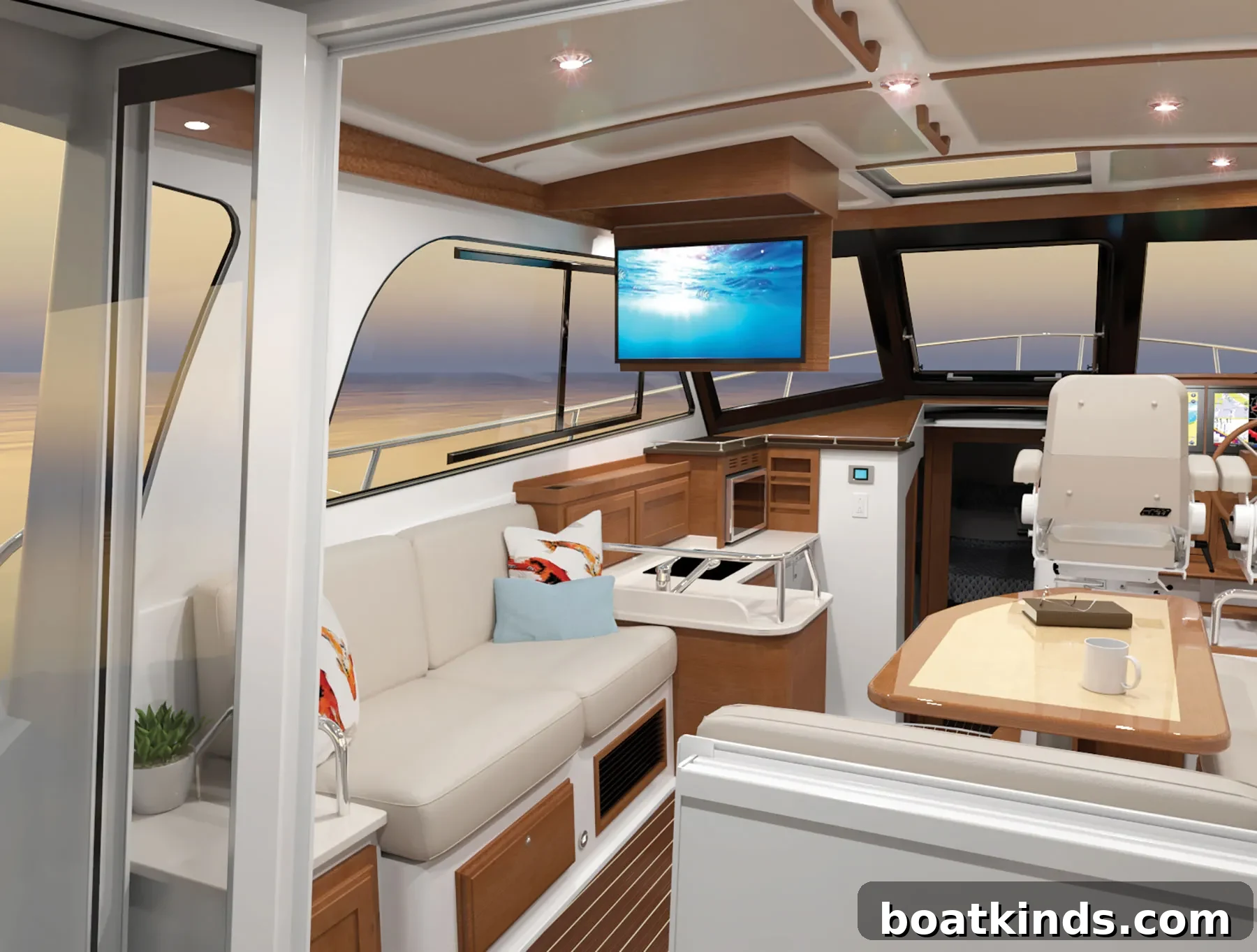
The 372 introduces a number of practical refinements aimed at comfort, safety and everyday usability. Pilothouse glazing has been updated: fixed, glazed windows replace the original sliding units to improve sightlines and provide a more consistent, sealed barrier against the elements. Back Cove also added a black windshield liner to reduce glare at the helm. The head has been redesigned to include a larger cabinet and an improved shower layout, enhancing onboard livability for extended cruises.
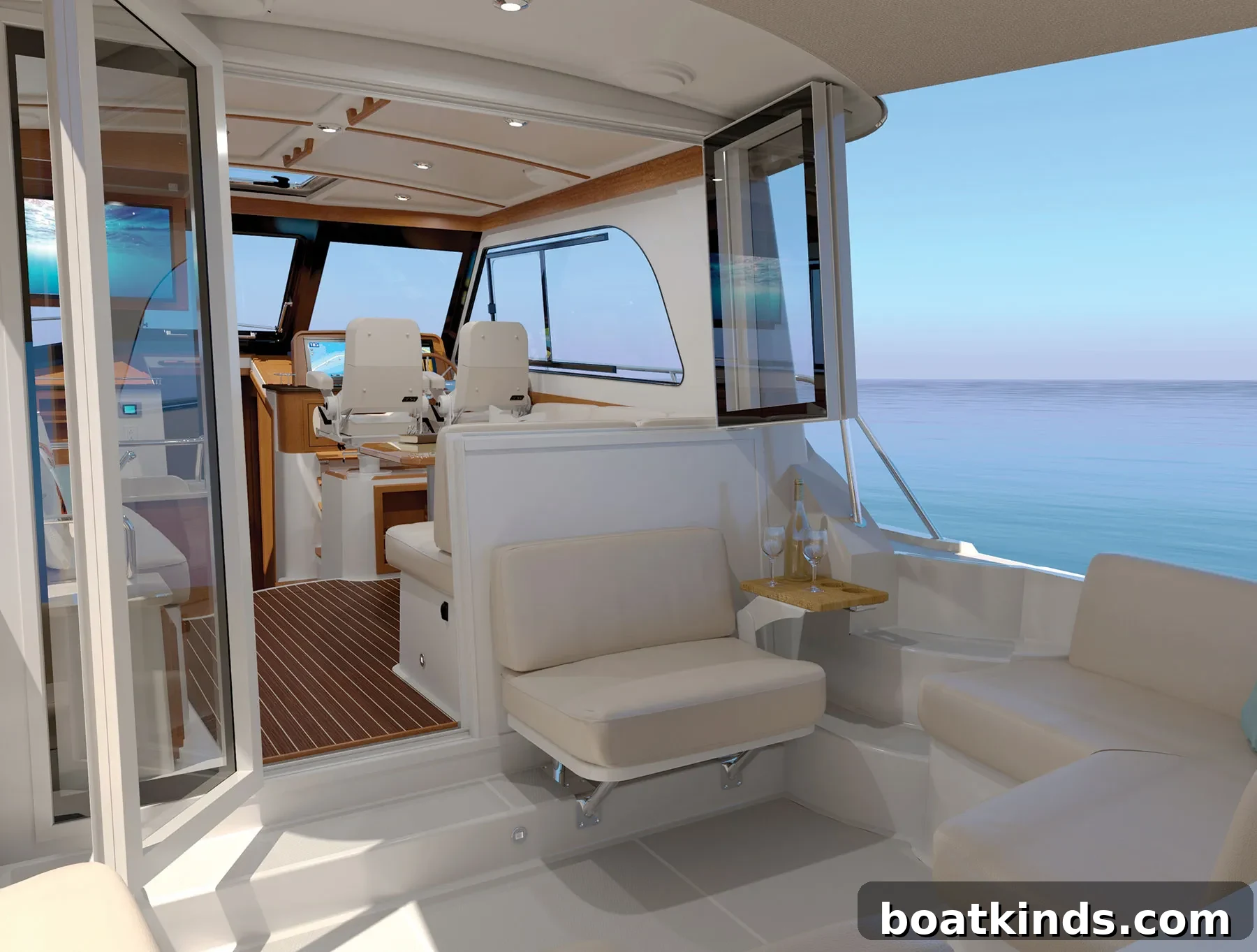
The cockpit and deck plan receive attention as well, with new amenities to make socializing and seamanship easier. Aft-facing seating has been integrated into the cockpit, and a bi-fold window on the starboard side opens the saloon to the deck. A new salon door on the port side improves traffic flow between cockpit and interior, giving owners and guests a more flexible living space when at anchor or underway.
Production and Availability
Back Cove has already produced the first 372 from the new mold at its Rockland, Maine facility. The company expects the new model to be water-ready by late summer, with an official public debut scheduled for October at the United States Powerboat Show in Annapolis, Maryland. The 372 represents an evolution rather than a wholesale redesign: it preserves the classic Downeast aesthetic and proven hull form while integrating owner-driven improvements, stronger infusion-built structure, more potent standard propulsion and refined onboard ergonomics.
This article was originally published in the August 2021 issue.