Wilbur 61: A Maine-Built Flagship That Marries Traditional Craftsmanship with Modern Performance
Lee S. Wilbur of Southwest Harbor, Maine, launched his first boat in 1973—a 36-foot fiberglass sportfisher built on a hull designed by Raymond Bunker. Over the following three decades, Wilbur’s yard earned a strong reputation rooted in loyal owners and a team of skilled shipwrights who hand-built each vessel with the practical, seafaring knowledge passed down through Maine boatbuilding traditions. When Lee Wilbur retired in 2001, the business remained a family operation: his daughter Ingrid and her husband, John E. Kachmar, took over the yard and continue to run it today. Under their stewardship the shipyard has produced more than 200 boats ranging from 29 to 61 feet.
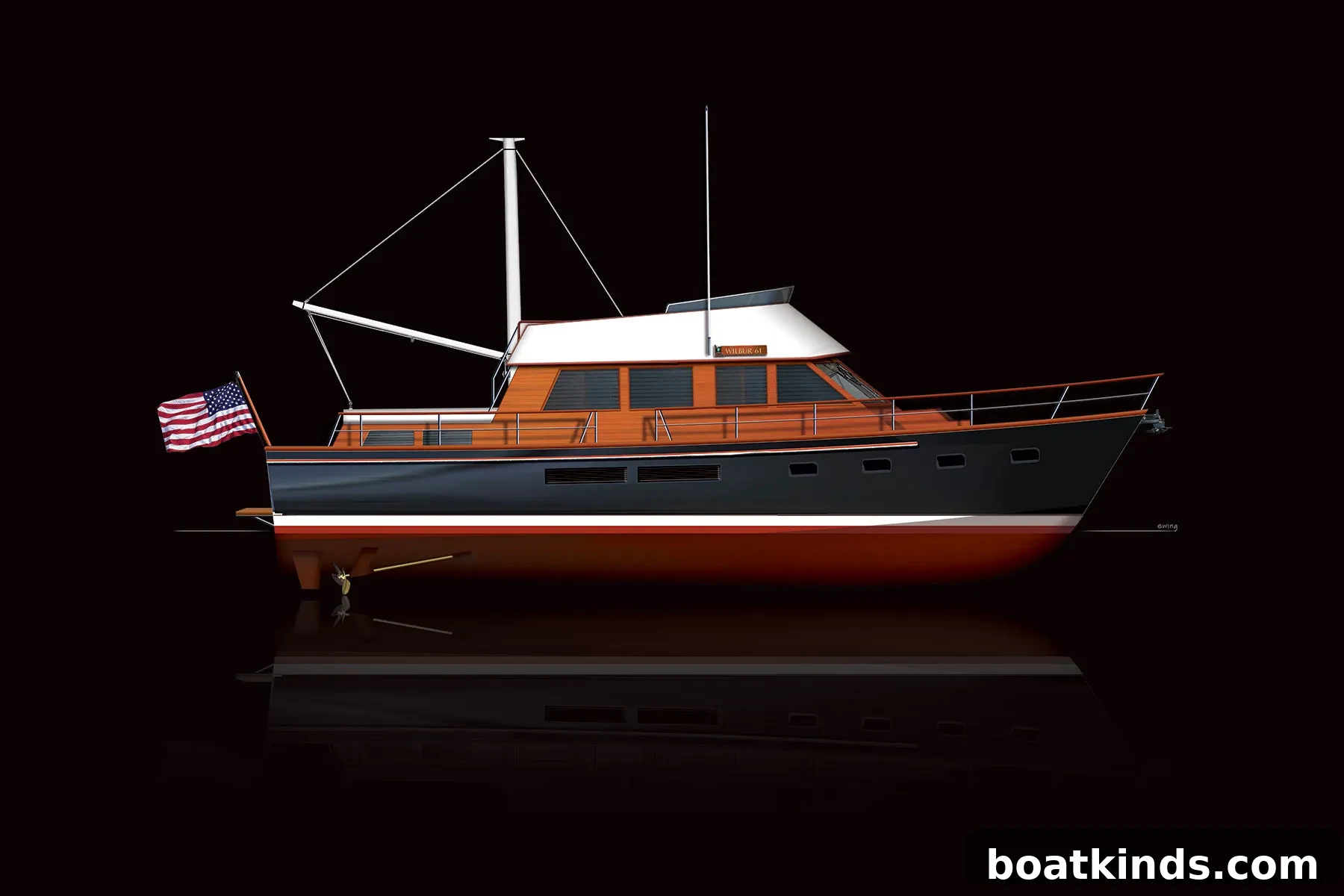
The Wilbur 61 is the yard’s flagship model, representing the intersection of time-honored construction techniques and thoughtful modern design. Built on a Hunt-designed deep-V hull, the 61 aims to balance steady seakeeping with efficient cruising. Three Wilbur 61s were completed and launched in 1986, 1988 and 1994; the 1994 example, named Tumblehome, is a prime example of the model’s character and capability. The hull is solid fiberglass for durability and rigidity, a characteristic that contributes to a solid feel underway and long-term structural resilience.
While many Wilbur 61 superstructures are constructed from a composite matrix of hand-laid fiberglass and end-grain balsa and finished with paint, Tumblehome reflects an owner’s preference for classic woodwork: her topsides and house are finished in varnished teak. The combination of traditional joinery and modern naval architecture underscores the yard’s skill at accommodating customization without compromising performance or seaworthiness.
Performance-wise, the Wilbur 61 is designed to be comfortable and capable. With an approximate displacement of 75,000 pounds, the 61 typically cruises around 16 knots when powered by twin Caterpillar C18 engines, with the ability to add a few more knots at wide-open throttle. Her fuel capacity—about 1,000 gallons split between two self-leveling tanks—gives the yacht extended range and added stability underway. These characteristics make the Wilbur 61 well suited to longer passages and conditions where steady motion and reserve fuel are valued.
On deck the Wilbur 61 is unmistakably robust. The model’s 17-foot beam delivers expansive teak-planked decks and comfortable, safe walkarounds. High stanchions enhance safety on deck, while the broad beam creates substantial interior volume. The yacht’s layout typically includes three staterooms, with the master suite enjoying the convenience of a private entrance from the aft deck—an arrangement that enhances privacy and ease of access for owners cruising with guests or crew.
The interior emphasizes classic materials and practical ergonomics. A salon with an L-shaped settee provides seating and dining for six, complemented by a fully equipped galley suitable for extended cruising. Signature Wilbur interior appointments—such as a teak-and-holly sole and rich teak joinery throughout—create a warm, traditional atmosphere that reflects the yard’s Maine heritage. The lower helm is located for good visibility and features a side door for quick and safe access to the deck during maneuvers and while docked.
One of the Wilbur 61’s notable features is its flybridge. The flybridge wings extend outward to the width of the deckhouse, maximizing useable space for the upper helm station and guest seating. This configuration provides an excellent vantage point for navigation and socializing while underway or at anchor, combining functional control space with comfortable accommodations for guests.
Built to be a self-sufficient yacht for all seasons, the Wilbur 61 is a bespoke project that reflects significant investment in time and labor. A typical Wilbur 61 is an 18-month build that represents roughly 24,000 man-hours from keel-laying to launch, underscoring the intensive handcrafting and attention to detail that go into each hull. The result is a yacht that blends rugged Maine construction, classic interior finishes and practical cruising performance.
This article was originally published in the October 2021 issue.