Despite the pandemic, Erik Brown, 30, and his wife Alyce Flanagan, 30, launched Left Coast Charters at Boat Haven in Port Townsend, Washington. Combining lifelong sailing experience with boatbuilding skills, they created a small, locally based daysailing charter business. For many, turning a personal passion into a livelihood is a goal encouraged by the introspection the pandemic brought; for Brown and Flanagan it was a deliberate, hands-on decision to stay connected to the water and the community.
Both owners grew up on boats. Brown, from New Haven, Connecticut, and Flanagan, who belongs to a Northwest schooner family, are licensed captains with experience as instructors, deckhands and mates. Their resumes include time aboard the 70-foot cutter Geronimo of St. George School in Newport, Rhode Island, and the Hudson River sloop Clearwater, once owned by late folksinger and environmentalist Pete Seeger. That mix of practical seamanship and traditional wooden-boat knowledge made starting a charter service a natural fit.
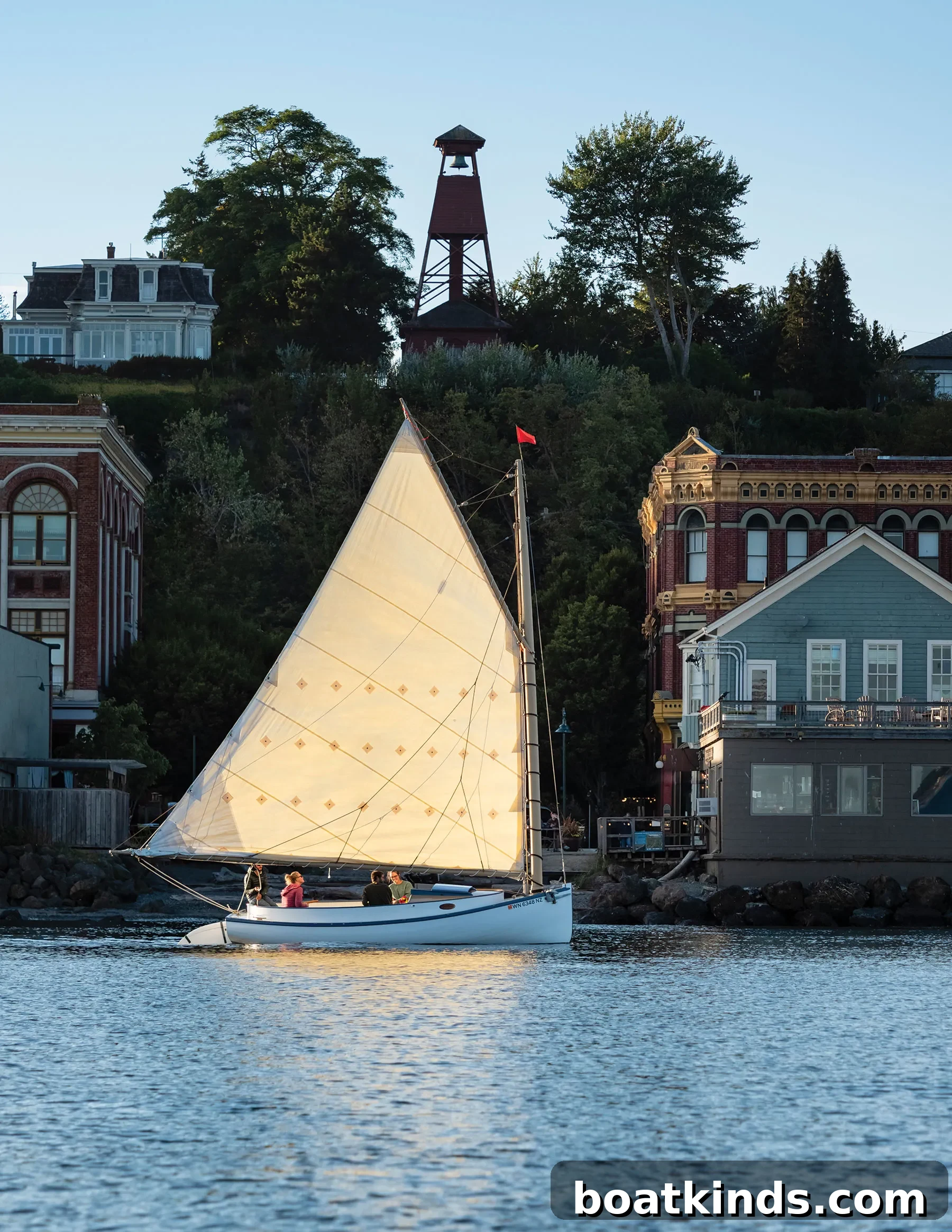
The vessel at the heart of their enterprise is Katie M, a 20-foot replica of a Breck Marshall New England catboat. Catboats are known for their wide beam, shallow draft and roomy cockpits—features that made them ideal working boats for 19th-century fishermen around Cape Cod and that now make them comfortable and stable choices for daysailing charters. Operated with a gaff-rigged mainsail only, this style is simple to handle and well-suited to short coastal trips.
Katie M is, as Brown describes it, “a modified Crosby design,” a reference to the Crosby Boat Shop of Osterville on Cape Cod, where thousands of similar craft were produced beginning in the 1850s. This particular boat was built over several years by students at the Northwest School of Wooden Boatbuilding and launched for a private owner in 2009. Her traditional materials and construction include a purpleheart backbone, Western red cedar planking over white oak frames, steam-bent oak cabin house sides, yellow cedar decking and sapele trim—details that reflect sincere wooden-boat craftsmanship.
From an operator’s perspective, the layout is ideal. With a compact cabin, a roomy cockpit, generous freeboard and a tall rig, Katie M comfortably carries up to six passengers for charter sails around Port Townsend. Brown typically stands aft handling the mainsheet while steering with a tiller, leaving the cockpit open for guests. A walnut table mounted on the centerboard trunk serves as a convivial centerpiece and even doubles as a simple clinometer—if a pot of flowers begins to slide, it’s time to ease the sail. Most guests prefer to sit back and enjoy the slow, scenic passages along the waterfront, past coves, docks and weathered brick buildings with faded murals.
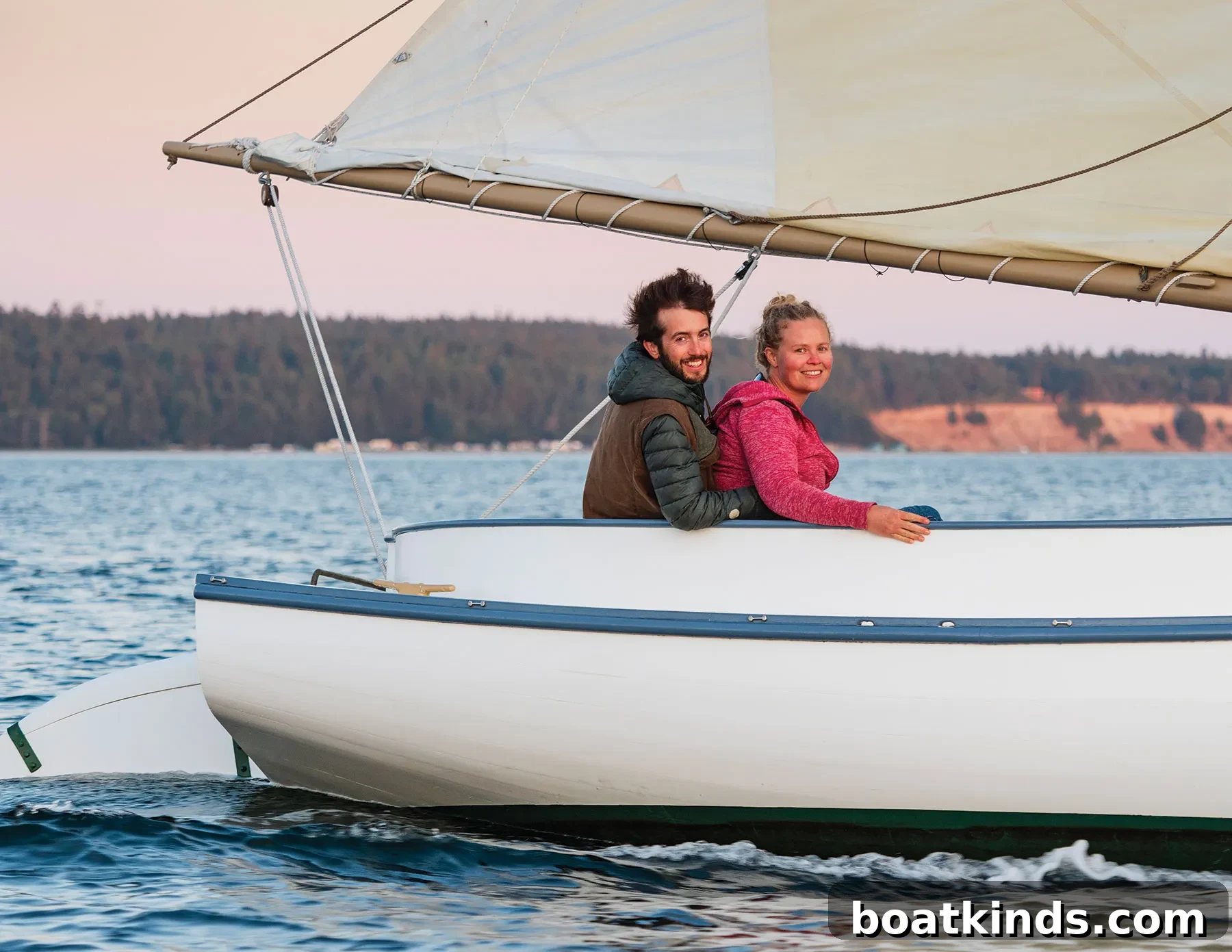
Brown discovered Katie M through a friend and fellow wooden-boat enthusiast connected to the previous owner’s family while he was attending Evergreen State College in Olympia. He had already restored a 30-foot Lyle Hess cutter named Kirin and apprenticed at several boatyards and composites shops, including Fast Forward Composites in Bristol, Rhode Island, and the Seattle Center of Wooden Boats. Those experiences, along with time at the Port Townsend Foundry learning to cast bronze fittings, gave him the skills to restore and prepare Katie M for commercial use.
When Brown and Alyce began their refurbishment in March 2021, the boat showed signs of long-term wear. They worked intensively for two and a half months to ready her for the season. Modern upgrades include a Torqeedo 4 kW electric pod drive paired with a 48-volt, 5 kWh lithium-ion battery. That electric propulsion provides ample power for maneuvering in and out of the marina and also supports on-board systems via a converter that keeps a 12-volt house battery charged. The retrofit reflects the couple’s interest in blending traditional wooden-boat aesthetics with cleaner, quieter propulsion technology.
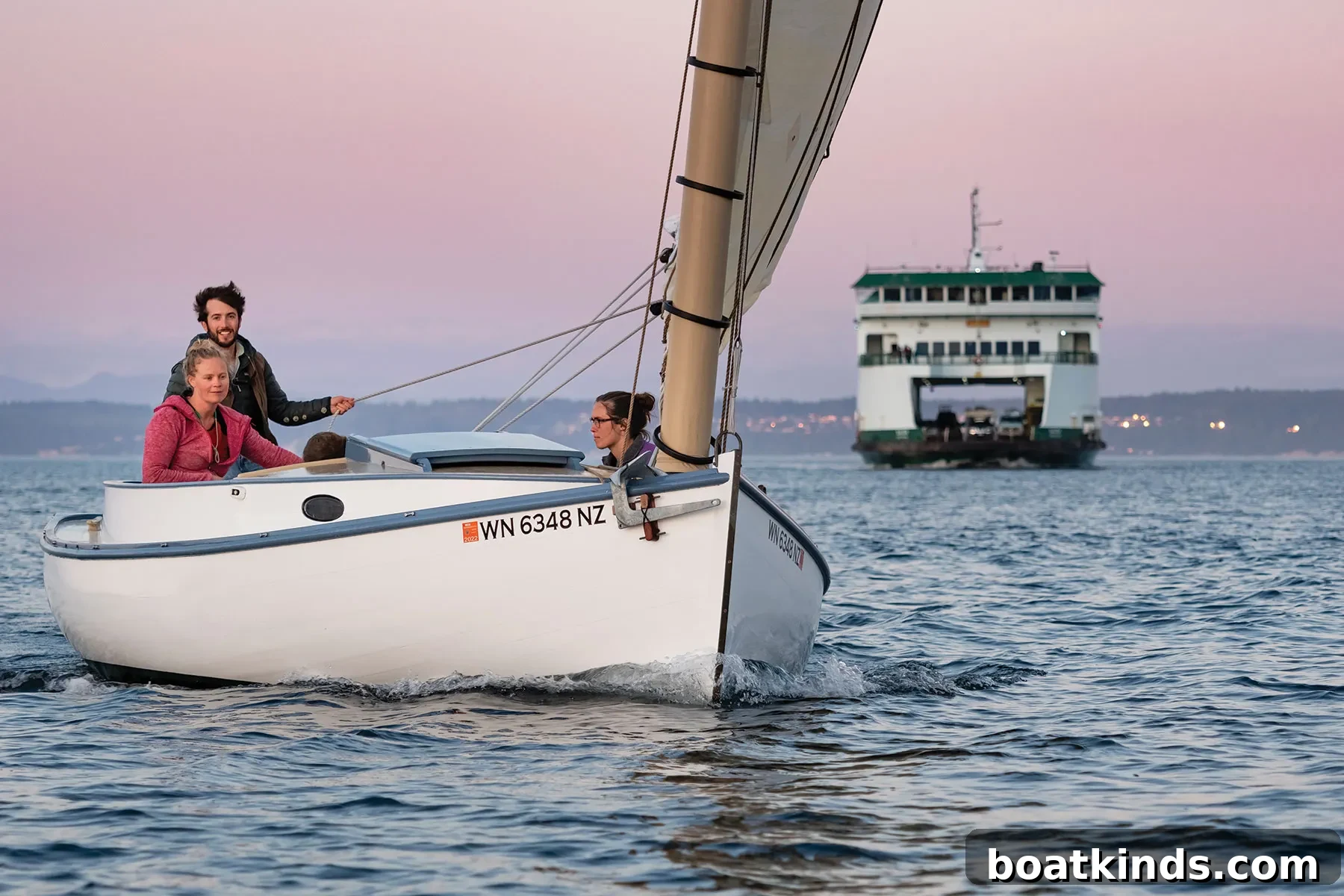
Structural and cosmetic repairs were extensive. Brown repaired worm-damaged planks with about 60 Dutchman patches, using epoxy to fill boreholes and restore plank integrity. He built a new barndoor rudder from plywood and applied Pettit EZ-Poxy polyurethane topside and deck enamel to protect the hull and deck. The approach to maintenance mirrors the high standards of the Flanagan family—owners of the well-maintained 81-foot schooner Alcyone, built in 1956 by Frank Prothero—where painting, rigging and sail work have been a family tradition.
Katie M has quickly become part of the Port Townsend waterfront scene. Even with the Wooden Boat Festival canceled during the pandemic, the charter finds a steady stream of guests looking to experience the town from the water. John “Sugar” Flanagan, Alyce’s father and a local sailing figure, notes that Port Townsend’s growing tourism helps the daysailing business succeed and praises the boat’s comfortable, stable behavior. He also commended the electric drive—initially a small risk—that proved effective for their operation.
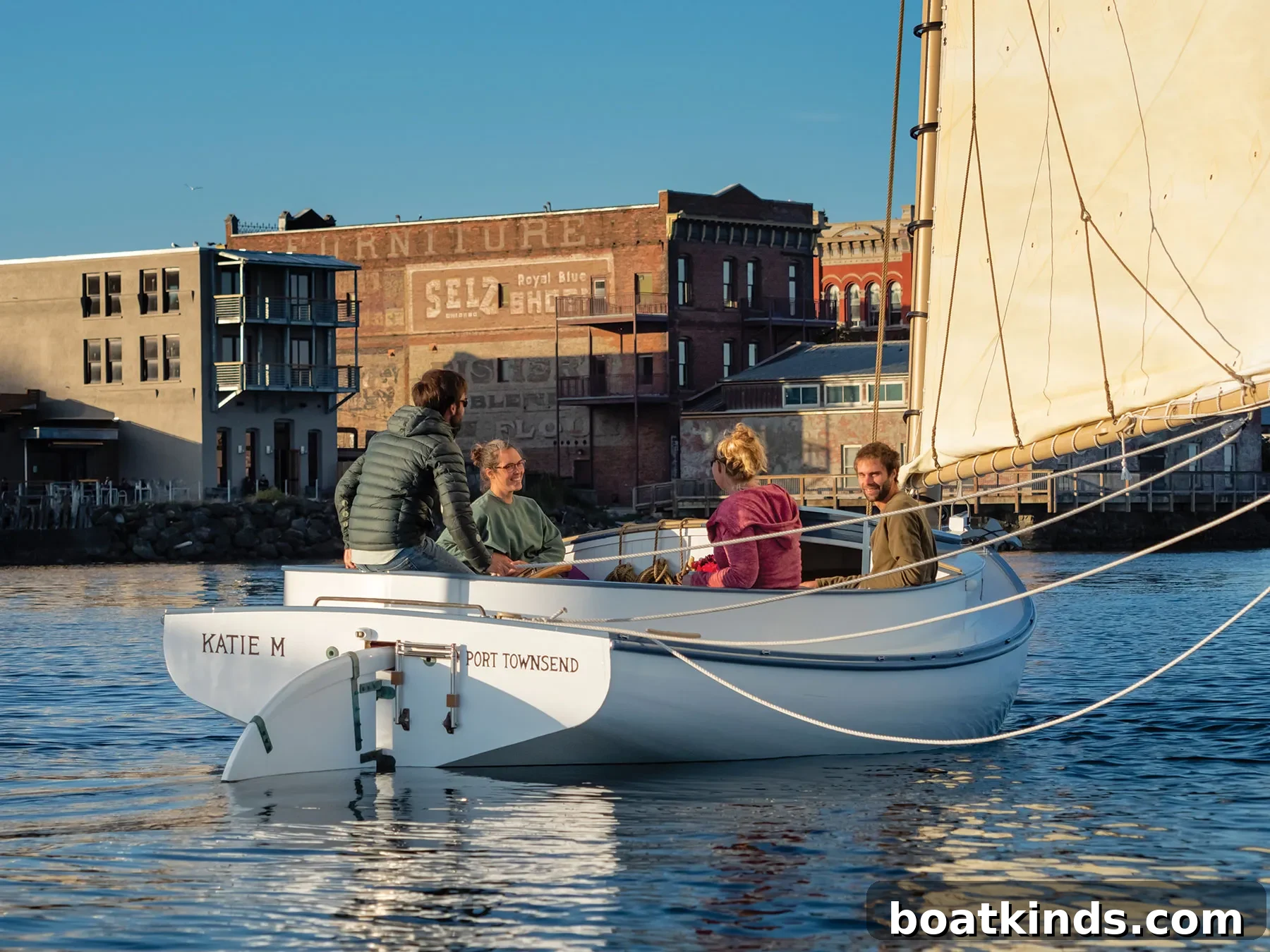
By the end of their first season Brown and Flanagan reported they had recovered their initial outlay in the lower five figures for boat purchase and materials, while keeping operating costs modest. Their next steps include boosting visibility through search engine optimization and making targeted upgrades: Brown is considering switching from a tiller to wheel steering during the offseason and commissioning a new mainsail tailored to the boat’s charter role.
When schedules allow, the couple still sails Katie M for pleasure—overnighters in nearby anchorages or faster sessions on hydrofoiling windsurfers in Dungeness Bay. Turning professional captains into charter operators felt like a logical progression for this generation of mariners, but they have maintained a clear line between work and enjoyment, ensuring the business remains rooted in the joy of sailing.
This article was originally published in the December 2021 issue.