
Solar-Powered, Uncrewed Vessel Crosses Atlantic: A Milestone for Autonomous Boating
Imagine a future in which two people can share a long ocean passage and both sleep safely through the night because their boat is powered by solar energy and protected by reliable autonomous systems. That future is arriving sooner than many expect. Pieter-Jan Note, co-founder of Project Mahi, says the breakthrough demonstrated by his team points toward practical, widely available autonomous and electric systems for both commercial and recreational boats within a few years.
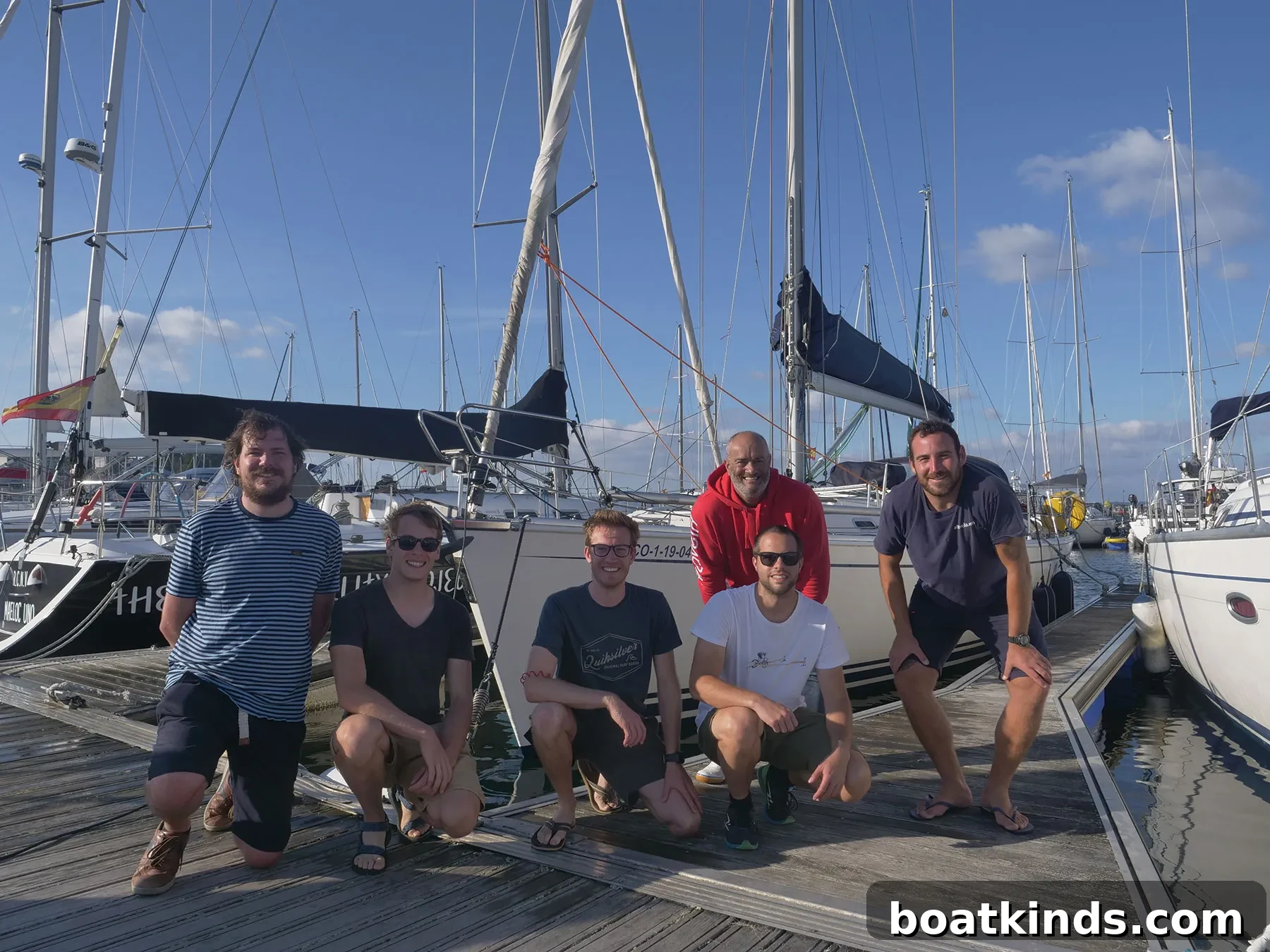
In April, Project Mahi’s 13-foot uncrewed surface vessel Mahi Two completed what is believed to be the first solely solar-powered Atlantic crossing by a craft of its kind. The vessel covered roughly 4,300 nautical miles over the course of six months, departing from Spain and arriving in Martinique. Remarkably, the last 700 nautical miles of the passage were completed after the team lost vessel-to-shore communications; the boat navigated to its destination autonomously.
This accomplishment is a concrete signal that solar-electric propulsion and onboard autonomy are maturing beyond experimental demonstrations. As Note put it, “People need to see that it works, that you can depend on it.” The successful voyage provides a practical example that could accelerate adoption of similar systems for wider maritime applications, from commercial data collection to recreational collision-avoidance and powertrains.
Design and Propulsion
Mahi Two uses a composite hull and a modified Torqeedo Cruise 2.0 pod drive. The team adapted the pod so it rotates as a single, sturdy unit rather than relying on a small, vulnerable rudder shaft. Note explained that minimizing exposed moving parts improves durability in heavy seas: “Our actuation is fully internal. It’s like the steering systems you have on board power vessels… Instead of having a rudder and shaft with a propeller on it, we only wanted to rotate the entire motor, the pod drive from Torqeedo, to eliminate one moving part.”
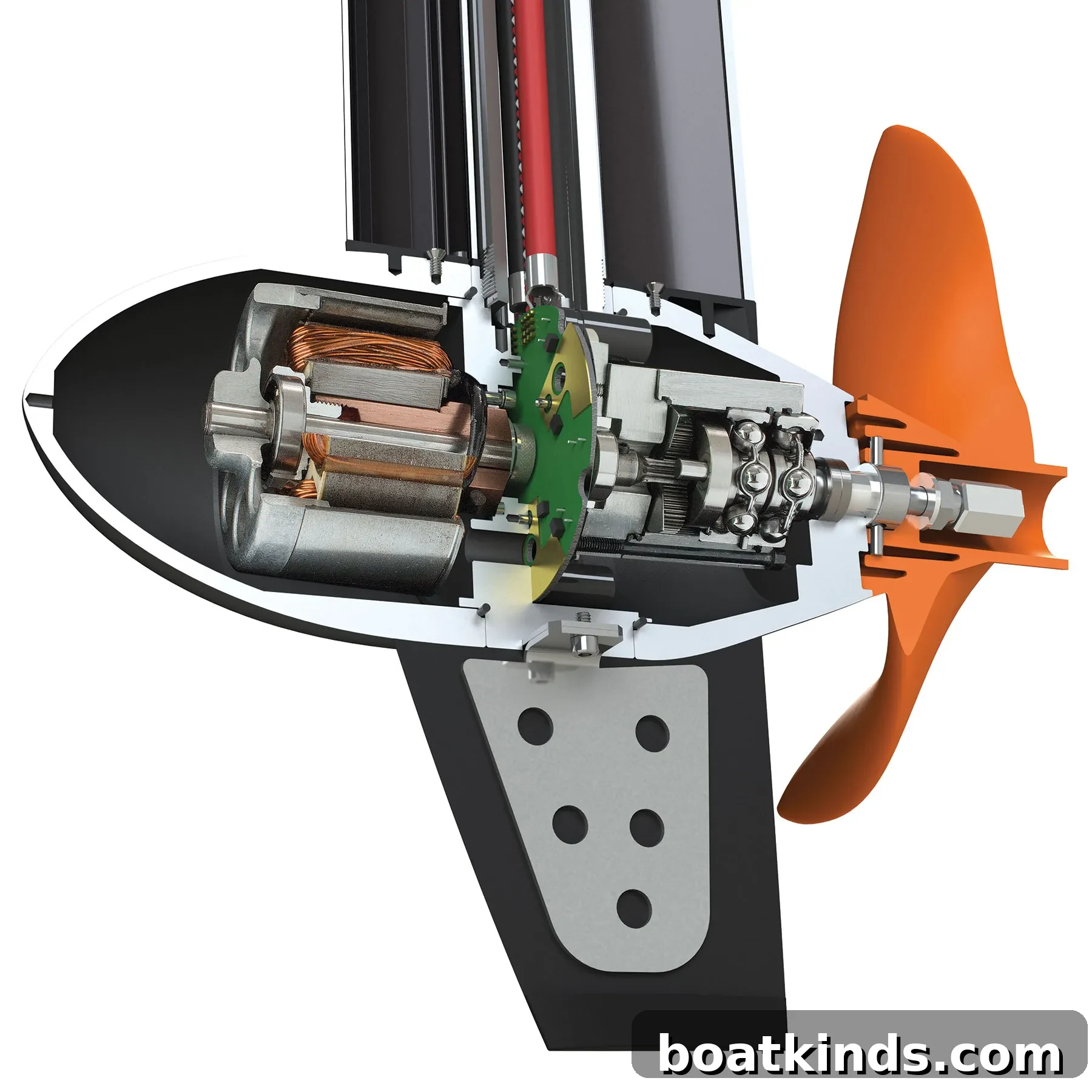
The propulsion system is powered by two 24-volt Torqeedo lithium-ion batteries, recharged by Solbian solar panels mounted on the vessel. That energy supports the pod drive as well as steering actuators, electronics, and bilge pumps. Project Mahi developed the software that integrates onboard steering, communication, hardware management, navigation and energy management, enabling the vessel to operate without human intervention for extended periods.
Autonomy and Safety Systems
Autonomous operation on long passages requires robust situational awareness. Mahi Two was equipped with GPS, AIS and an onboard satellite modem to communicate with shore. Note described the system’s approach to contingency planning: the vessel followed predefined waypoints and was capable of continuing its mission if contact with operators was lost. More importantly, the intelligence on board could detect nearby vessels and take evasive maneuvers as needed to avoid collisions.
When Project Mahi personnel recovered Mahi Two in the Caribbean, the team found the craft in good condition and were able to retrieve onboard data for analysis. That intact recovery offered valuable validation of both the hardware choices and the software’s ability to manage navigation, power and unexpected conditions over a long, autonomous voyage.
Industry Partners and Broader Implications
Torqeedo, a recognized name in electric and hybrid drives for recreational boats, participated in the Project Mahi effort to highlight the durability and practical potential of solar-electric propulsion for long-range, autonomous missions. Torqeedo units are already in use on hundreds of uncrewed surface vessels worldwide for tasks such as seafloor mapping, oceanographic surveys, sensor data harvesting and surveillance.
“Really, the story for Torqeedo is durability, and the potential for solar power to power vessels,” said Tess Smallridge, who handles marketing for Torqeedo. “Electric motors are quiet. They sometimes feel like they’re fragile and a little weird. This one just went 4,000 miles across the ocean for six months with no maintenance, no nothing, on its own.”
What This Means for Recreational Boaters
For sailors and recreational boaters, the technologies proven by Mahi Two point to meaningful improvements in convenience, safety and sustainability. Note, a lifelong sailor who cruises with his family aboard a Beneteau Oceanis 46, envisions collision-avoidance and situational-awareness systems that could be applied to pleasure craft. He also notes growing interest in electric auxiliary propulsion, such as outboard motors for dinghies, driven by the availability of practical alternatives.
As autonomous navigation, electric propulsion and solar energy integration become more mature and accessible, recreational boaters can expect systems that reduce maintenance, lower emissions and enhance safety. The Project Mahi crossing demonstrates that these technologies can function reliably on a long ocean passage—an encouraging sign for both commercial operators and leisure mariners considering electric and autonomous solutions.
This article was originally published in the June 2022 issue.