
Rediscovering Port Jackson: The Lost Harbor of Christopher Columbus
I had already combed through historical records as part of my research, but there came a moment when archival work had to be paired with a practical test: a run on the water with a depthsounder. So I packed a portable transducer and handheld depth unit and boarded a 28-foot tour boat run by CocoKite Tours in the Dominican Republic. With our modest equipment and a professional crew, the little vessel became a research boat for the day.
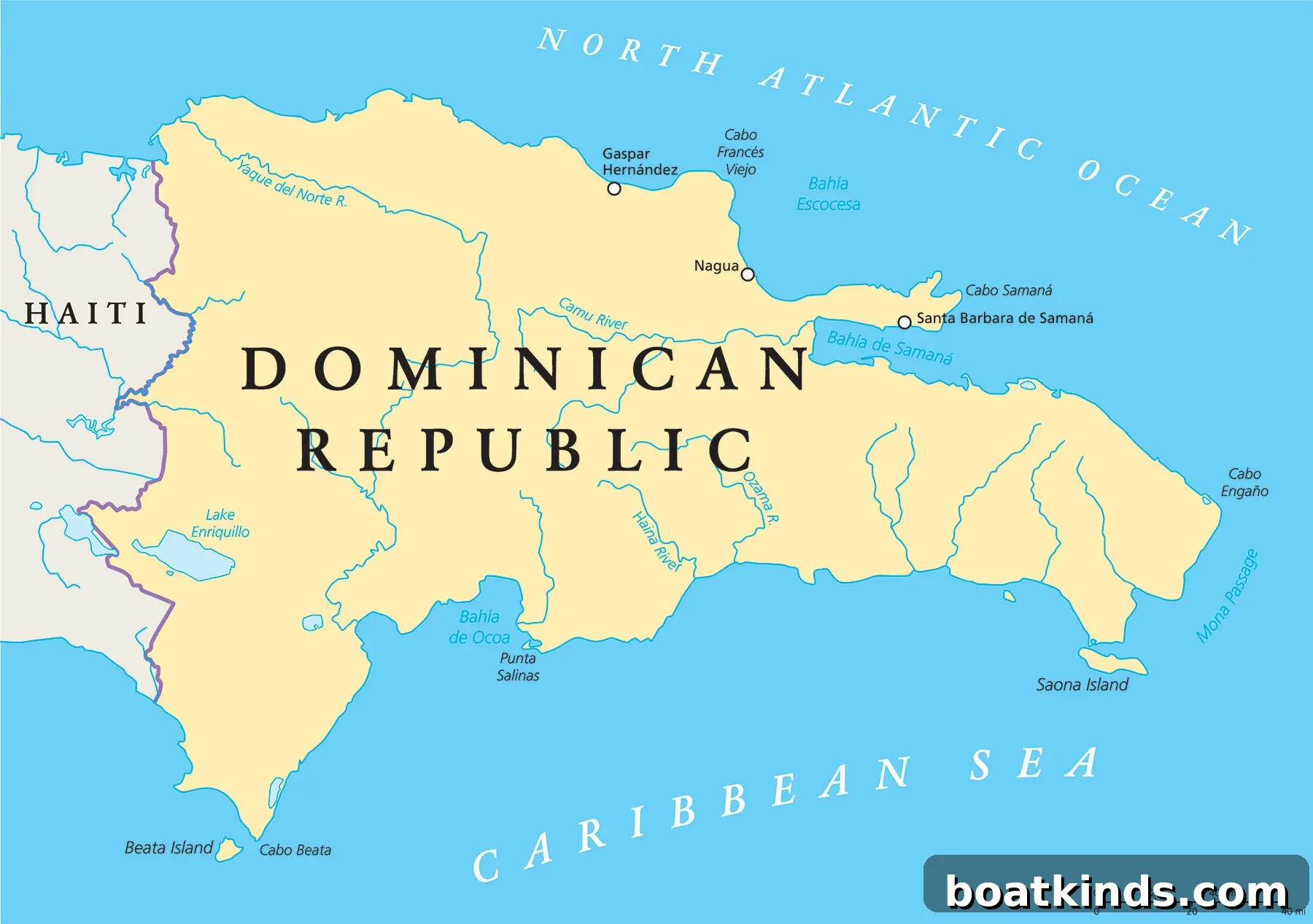
We roared westward, running close to the North Coast with local guide Francisco Paulino at the helm. Moving between breaking reefs that lay roughly 300 feet apart, Paulino eased the outboards into neutral so I could lower the transducer into the water. The handheld reported 27 feet — deep enough for a modern navy frigate to pass. Paulino opened the throttle and we slipped into the long, sheltered inlet.
As he nosed the center console across the calm harbor, the seabed deepened to about 40 feet before shoaling again. We eased within a couple of hundred feet of Jackson Beach and the sounder showed roughly 20 feet under the hull. For a history-minded sailor, that simple reading felt like a declaration: our makeshift expedition had found the place long suspected to be “the lost harbor of Christopher Columbus.” The CocoKite crew had led me to a sheltered anchorage that many cruisers pass by without noticing.
Locally, Port Jackson is a familiar spot for tour operators, but it has been effectively hidden from mariners over the centuries. Bruce Van Sant, an author I know who wrote A Gentleman’s Guide to Passages South in the 1980s, described these waters as treacherous. The North Coast of the Dominican Republic includes one of the finest hurricane holes in the region at Luperon Bay, located 88 nautical miles west of Port Jackson. Eastward, the next reliable refuge lies some 60 nautical miles away. Between Luperon and Samaná Bay, most anchorages are open to the north and exposed to the full fetch of the Atlantic; when long-period rollers arrive — sometimes generated by distant Atlantic storms — these semi-sheltered places can become extremely dangerous for small craft.
Historical accounts show this coastline was perilous even to the earliest European voyagers. Christopher Columbus lost his flagship Santa Maria on a reef off the northern coast of Hispaniola, yet in 1493 he and his remaining ships, Niña and Pinta, found a rare westerly breeze and steered eastward from the Luperon area. Lookouts soon spotted an island between two headlands, backed by rising mountains, and the men saw a dark, inky basin with a broad channel indicating five fathoms of depth. It would have been deep and wide enough for some of Spain’s larger ships. Columbus named it Puerto Santo — the Sacred Port — but chose not to enter, preferring not to waste the favorable wind and sailing past the harbor.
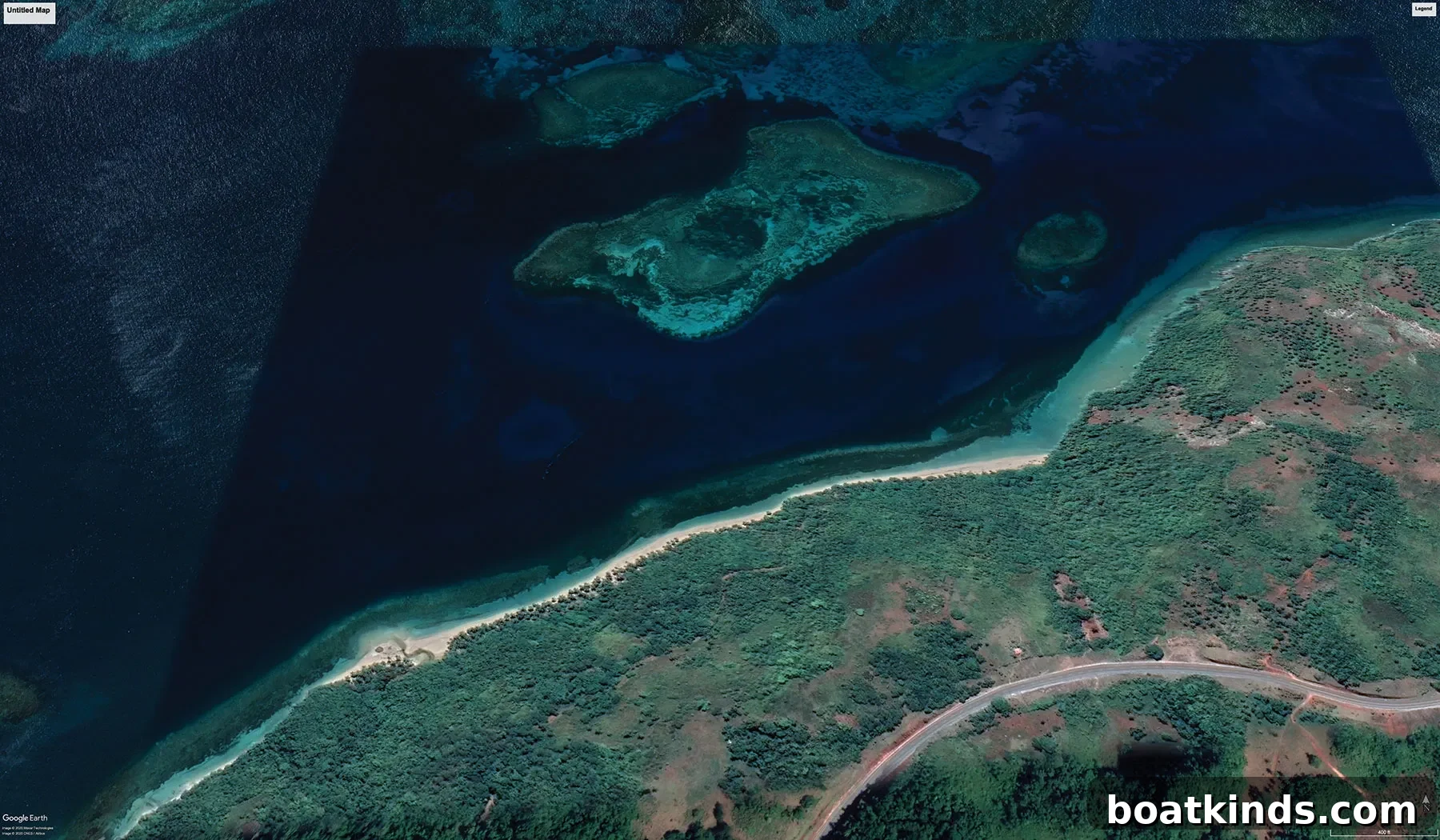
In the centuries that followed, the anchorage was used by others. French pirates and later merchants who shipped mahogany, coconuts and copra recognized the value of the protected waters on the island’s north side. The island Columbus had seen became known as Cayo Jackson, and the adjacent refuge took on the name Port Jackson.
The twist in the tale is geological. On August 4, 1946, a powerful earthquake reportedly measuring 8.1 on the Richter scale struck the area and generated a tsunami estimated at 12 to 16 feet. The event altered the coastline and submerged the 52 acres of rock and sparse vegetation that had been Cayo Jackson, leaving it buried beneath reef and sand three to five feet underwater. Cartographers, however, did not consistently update their charts: Cayo Jackson remained marked on some government charts for decades after it ceased to exist as an island.
That cartographic inconsistency created confusion for later mariners and researchers. As Bruce Van Sant related from his own attempts to locate Port Jackson, many navigators were looking for the island first and the harbor second. With charts that relied on a vanished reference point and with poorly charted reefs in the area, approaching the coastline without local knowledge was risky. In effect, a mapping error helped hide one of the New World’s earliest documented harbors from modern navigation and scholarship.
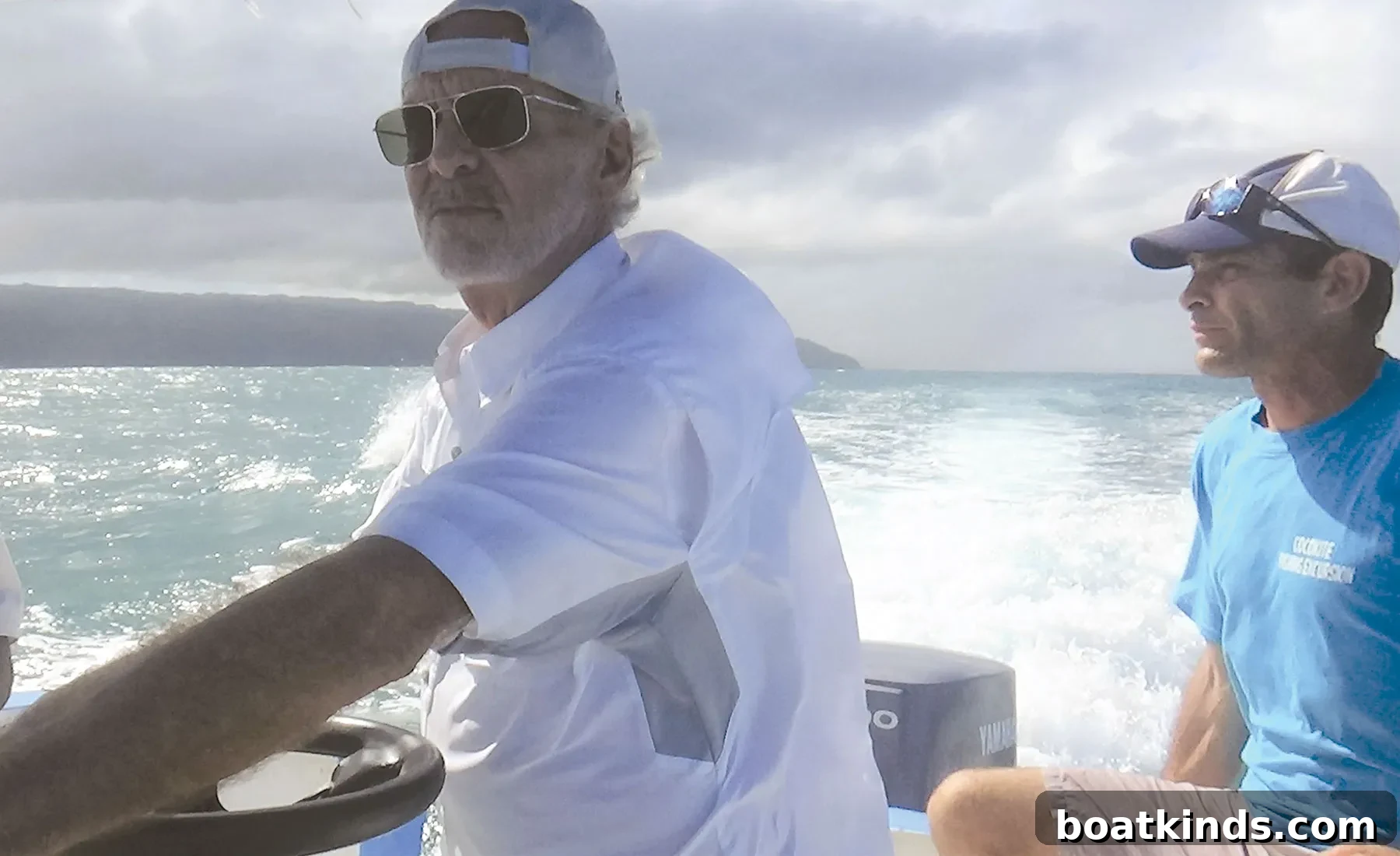
On the day we headed to Port Jackson, Patrick Florens, owner of CocoKite Tours, joined our trip. I asked Paulino to approach from Las Ballenas, approximately five miles east of the entrance, because older U.S. government sailing directions from 1918 and 1954 recommend that route. In practice, those directions proved imperfect: they still referenced an island that no longer existed. Rather than follow outdated notes, Paulino navigated the way he always does with guests, using local knowledge and experience to thread safe water through reefs and channels.
Columbus’s name is controversial today, and rightly so in many contexts. Still, from a purely nautical perspective I appreciate that he was the first European mariner to note the sheltered basin that would become known as Port Jackson. Finding it again felt like honoring an old navigational observation and returning useful knowledge to contemporary sailors. After hours of readings, local guidance and careful seamanship, we confirmed that the harbor Columbus once saw remains a viable, sheltered anchorage — if approached with the right charts, instruments and local experience.
This article was originally published in the November 2021 issue.