
How a Cable Seal Solved a Grand Banks 32 Mast Wiring Problem
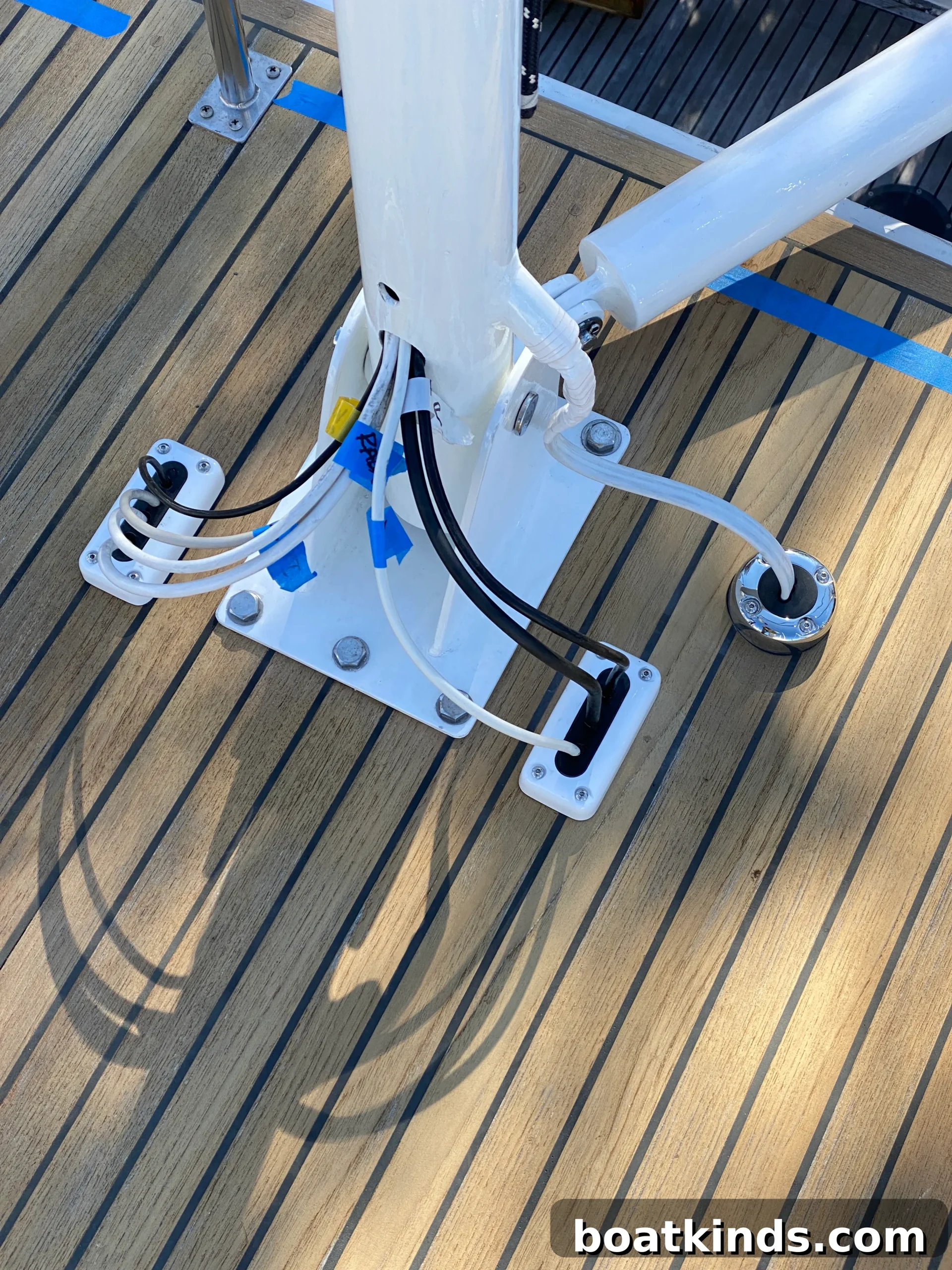
When Onne van der Wal upgraded the electronics on the mast of his 1986 Grand Banks 32, Snow Goose, he faced a common but frustrating marine problem: deteriorated wiring and corroded deck sockets. The old radar and anchor-light wiring were twisted and broken, and the original plugs and deck-mounted sockets had corroded beyond reliable use. At the same time, the new radar, FLIR and other electronics required several additional conductors to be run down to the two helm stations, which meant finding a robust, waterproof way to get multiple cables through the deck.
“Because I had so many more wires than before, four on each side, I needed to figure out how to get all those wires through the deck for all that instrumentation on the mast,” Onne says. “How do you get it through in a smart, safe way?”
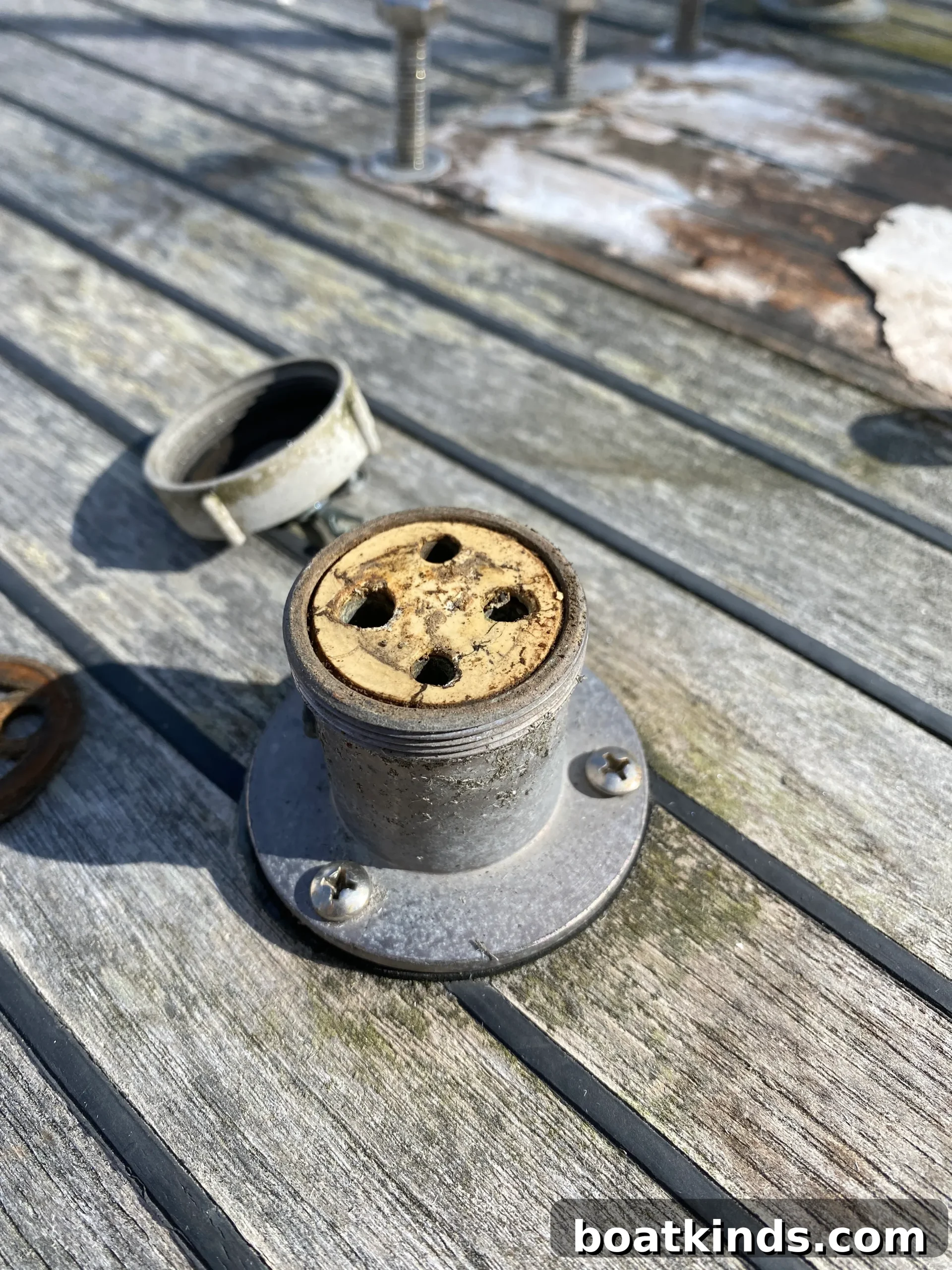
Unable to source direct replacements for the Grand Banks plugs and sockets, Onne continued searching for alternative solutions. While browsing the Seaview website for mast brackets, he discovered a cable seal product that looked promising. Rather than restoring the old plug system, he began to consider a modern sealed cable-entry approach that would simplify wiring, eliminate corroded connectors, and maintain the ability to lower the mast when needed.
Onne reached out to Ian Smith at Seaview (based near Spokane, Washington), who provided several cable seals to test. In his workshop he trial-fitted the seals and found the approach worked well. He then fitted them on Snow Goose and completed the mast rewire with confidence that the penetrations would remain watertight.
How the Cable Seals Work
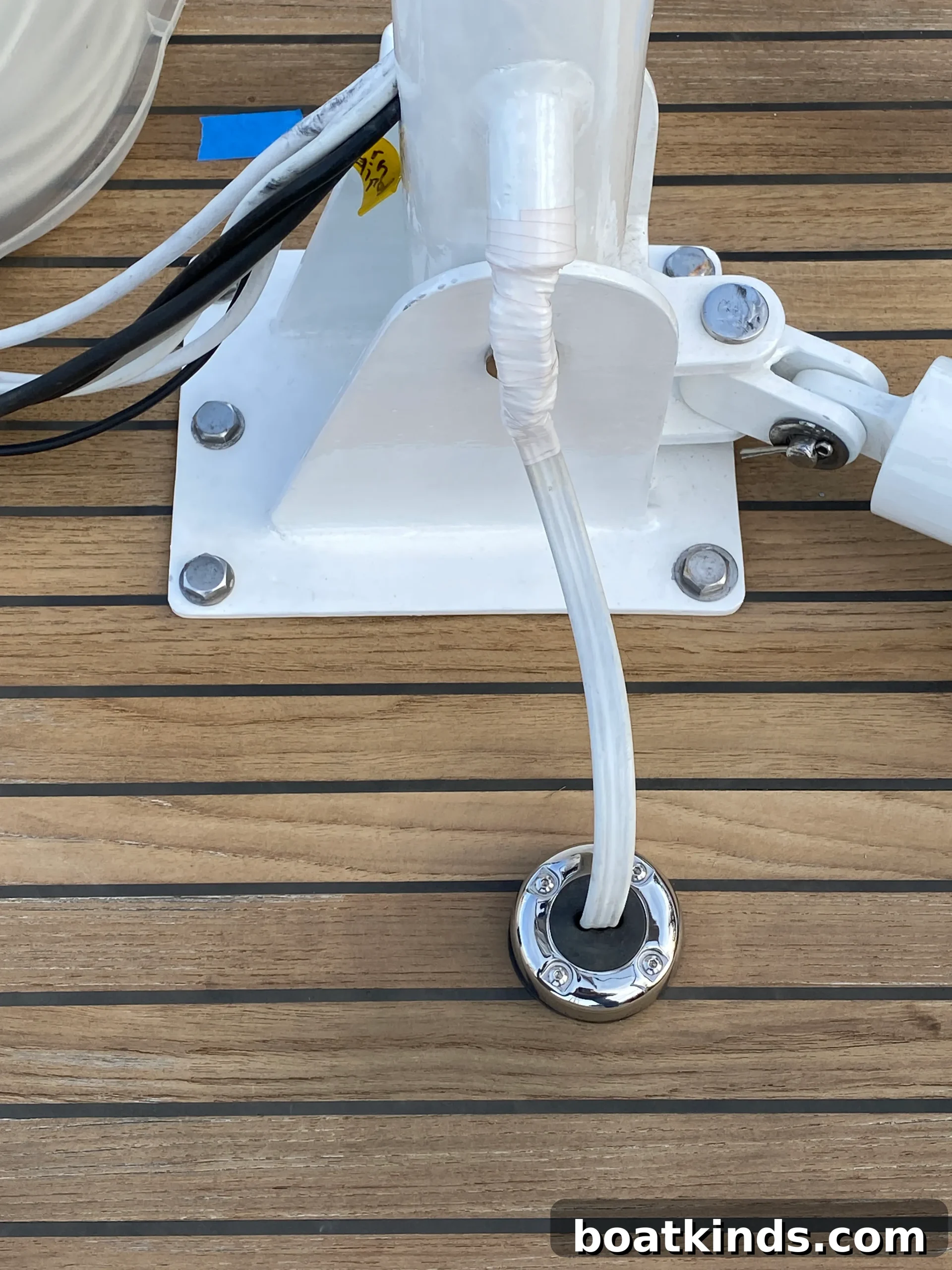
The cable seals use a straightforward compression principle to create a waterproof entry point. A threaded base is fastened to the deck with screws and a rubber gasket. The installation requires typical marine sealant on the screw threads, and one of the supplied drill tubes is used to make a precisely sized hole in the rubber plug for the cable bundle. When the cover is tightened down, the rubber plug compresses around the cables, forming a reliable, weatherproof seal.
Because each seal can accept multiple conductors, Onne was able to limit the number of deck penetrations. He installed three cable seals around the mast to accommodate a total of eight wires, which reduced clutter and lowered the chance of leaks compared with multiple individual fittings. Below deck he tied into existing wiring where appropriate, keeping connections dry and protected inside the vessel.
Installation Details and Practical Benefits
Onne praises the build quality and attention to detail of the seals and related hardware. The kit included the gasket, screws and drill guides, making the installation straightforward for a competent DIYer with a drill on board. The thread seals and gasket combined with careful screw installation eliminated corrosion-prone sockets and old electrical plugs that had failed on his boat.
Key practical advantages of the cable-seal approach include:
- Fewer deck penetrations because one seal accepts multiple wires.
- Strong, compression-based waterproofing that resists leaks.
- Reduced risk of corrosion compared with exposed metal plugs and deck sockets.
- Preservation of mast-lowering capability — Onne was able to retain his ability to lower the mast under bridges.
Performance and Final Result
After completing the installation, Onne checked for water ingress and reports there isn’t a drop of water coming through the seals. Routing and joining wires below deck where they remain dry has kept the system tidy and serviceable. The solution replaced aging, corroded connectors with a modern, durable method that is easier to maintain and less prone to failure in a saltwater environment.
Seaview’s cable-seal concept proved to be an effective alternative to original equipment replacement parts that were no longer available. For owners upgrading mast electronics or replacing unreliable deck sockets, the cable seal method provides a safe, watertight and practical solution for routing multiple wires through the deck.
Onne also documented the project in a DIY video that demonstrates his approach and installation steps for anyone considering a similar upgrade on their boat.