Lori King’s 24-Mile Open-Water Swim: Shark Sighting, Sea Life and a Potential First
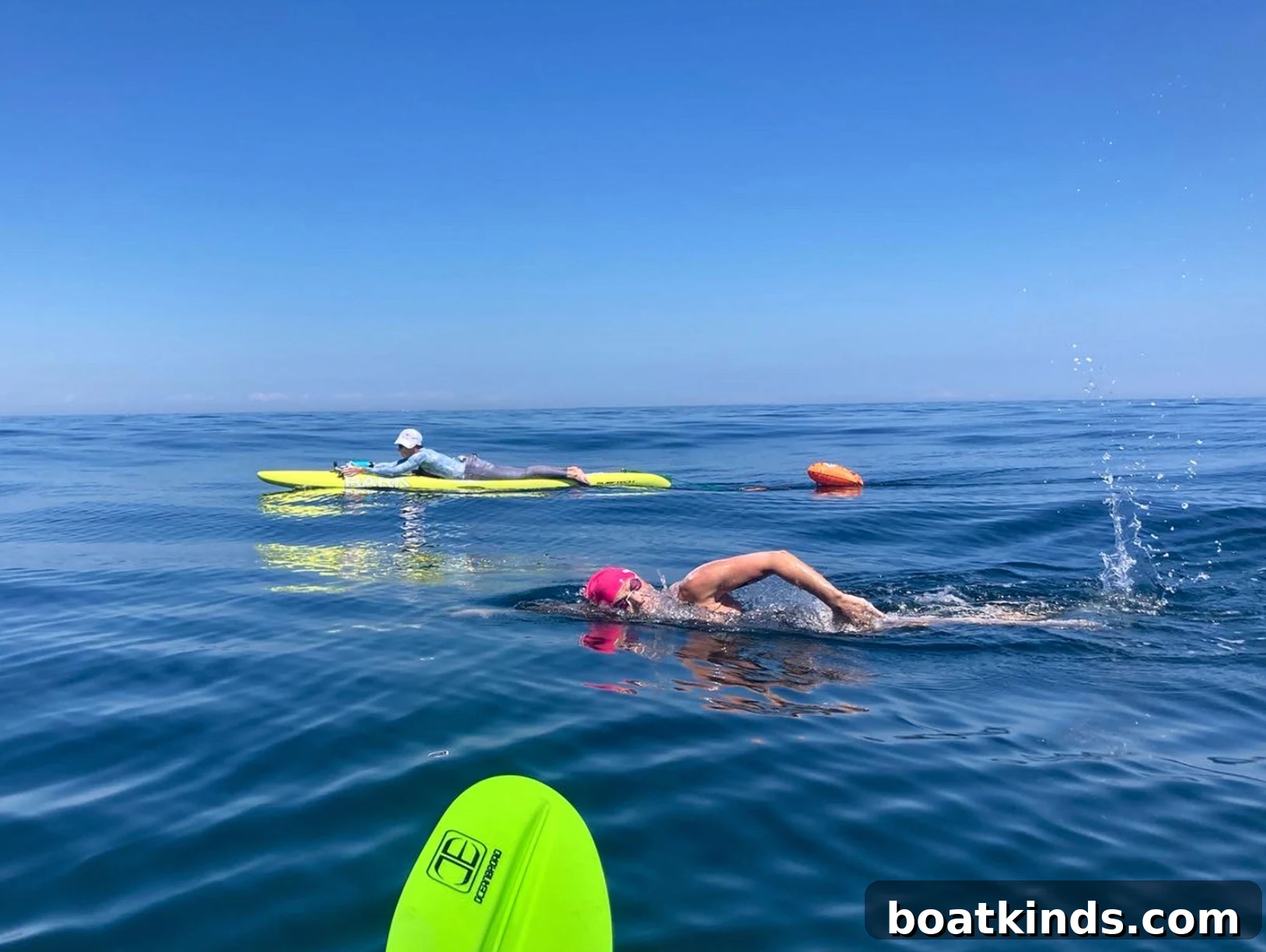
Lori King of Amagansett, New York, attempted a historic open-water crossing — a marathon 24-mile swim from Block Island to Montauk. During the effort, her support team spotted a shark fin near her position. King herself did not see the fin; she was focused on maintaining pace and conserving energy. Her support crew, however, immediately adjusted their formation to protect her, placing themselves between the swimmer and the animal.
How the Crew Responded
King was accompanied by a coordinated support group that included two boats, a kayak and a proneboard. They had been using a diamond formation to keep watch and provide shelter and supplies. When the shark fin appeared, the crew shifted tactically and formed as much of a physical barrier as they could between King and the shark, keeping her unaware of the specific danger so she could continue her effort without additional stress.
King later said she knew something unusual had happened, but she did not learn the details until after the swim. Her crew’s decision not to alarm her in the moment highlights a common open-water practice: protecting the swimmer’s focus and mental state while managing risks from a distance. The crew’s quick response and positioning were aimed at minimizing disruption and ensuring safe progress through the remainder of the crossing.
Other Challenges During the Crossing
In addition to the shark sighting, King faced multiple natural obstacles during the long swim. She encountered jellyfish, dolphins and even a baby squid, all of which are part of the varied marine life encountered in open-ocean swims. Cold water and muscle fatigue added to the difficulty; King suffered severe cramping that left her unable to kick with her right foot for roughly thirty minutes. Despite the pain and the impairment, she adapted her technique and continued forward.
The combination of distance, sea conditions, changing temperatures and the presence of marine animals made this effort a classic example of an extreme open-water marathon swim. Completing 24 miles in open ocean requires careful planning, an experienced support team, and the mental resilience to handle interruptions and physical setbacks.
Completion and Certification
King finished the swim in 8 hours, 39 minutes and 45 seconds. That time marks the culmination of her attempt and, pending official verification, could make her the first person to complete the Block Island to Montauk crossing. Official certification is an important step in validating open-water achievements; it confirms that rules and conditions were met and that the swim was supported and monitored according to accepted standards.
Until the result is formally certified by the appropriate marathon swimming authorities, the designation of “first” remains provisional. Certification typically involves verifying the route, the swimmer’s unaided progress, the role and conduct of the support team, and timing records.
Open-Water Swimming and Safety
Long-distance open-water swimming carries inherent risks, including cold water, unpredictable currents, marine life encounters and physical exhaustion. A well-prepared support crew is essential, not only for navigation and supplies but also for safety management. Support teams monitor conditions, manage feeding and hydration, and make tactical decisions such as formation changes to shield swimmers from potential hazards.
King’s swim illustrates the importance of teamwork, situational awareness and reserve mental strength. The decision by her crew to shield her without alarming her allowed King to preserve her focus and ultimately complete the crossing. Her experience also underscores how encounters with wildlife — whether sharks, jellyfish or dolphins — are part of the reality of open-ocean swims and must be managed carefully.
What Comes Next
As the certification process proceeds, observers will review logs, witness statements and timing data to confirm that King’s swim met the guidelines for an official marathon crossing. If validated, her achievement will be recorded as a landmark in long-distance swimming for the region and will serve as an example of effective prep, leadership and resilience in open-water endurance sport.
King’s swim is a reminder of both the beauty and the unpredictability of the ocean, and of the critical role a focused, capable support team plays in enabling remarkable human endurance feats.