
Hacker-Craft: Masterful Wooden Boats Built on Lake George Traditions
The Hacker Boat Company of upstate New York continues a lineage that reaches back to the earliest days of recreational powerboating in the United States. Building under the Hacker-Craft name, the company produces classic runabouts and vintage-style racers based on traditional designs—some tracing their origins to patterns more than a century old. Each vessel is carefully shaped from solid mahogany by highly skilled craftsmen, attracting owners who value the elegance and heritage of wooden boats, including celebrities, royalty and devoted enthusiasts. The brand’s roots trace to John L. Hacker, a pioneering naval designer once widely regarded as the Dean of American high-speed boat design.
Hacker made boating history by designing the first production powerboat to exceed 50 mph in 1911, and he soon followed with a design that topped 60 mph. His 1922 racing hull went on to win three consecutive Gold Cup World Championships and held a reputation as the fastest boat in the world well into the 1930s. Born in 1877, Hacker spent a 60-year career designing everything from skiffs to yachts, but he became best known for the runabouts and racers that established the Hacker-Craft name in 1908. The designs were popular among prominent figures of the era: Edsel Ford raced several Hacker hulls, and Henry Ford remained a lifelong friend of Hacker’s after meeting him in Detroit in 1911.
Many of Hacker’s early boats have been painstakingly restored and are now showcased in maritime museums or continue to ply lakes and rivers. Today the company is owned and managed by George Badcock and his daughter Erin, who serves as COO. Visiting their headquarters on Lake George feels like stepping into a time when boatbuilding was a hands-on craft and all structural materials were organic. Notably, Hacker-Crafts are still built to the exacting standards that long ago earned the marque the nickname “the Steinway of Boats.”
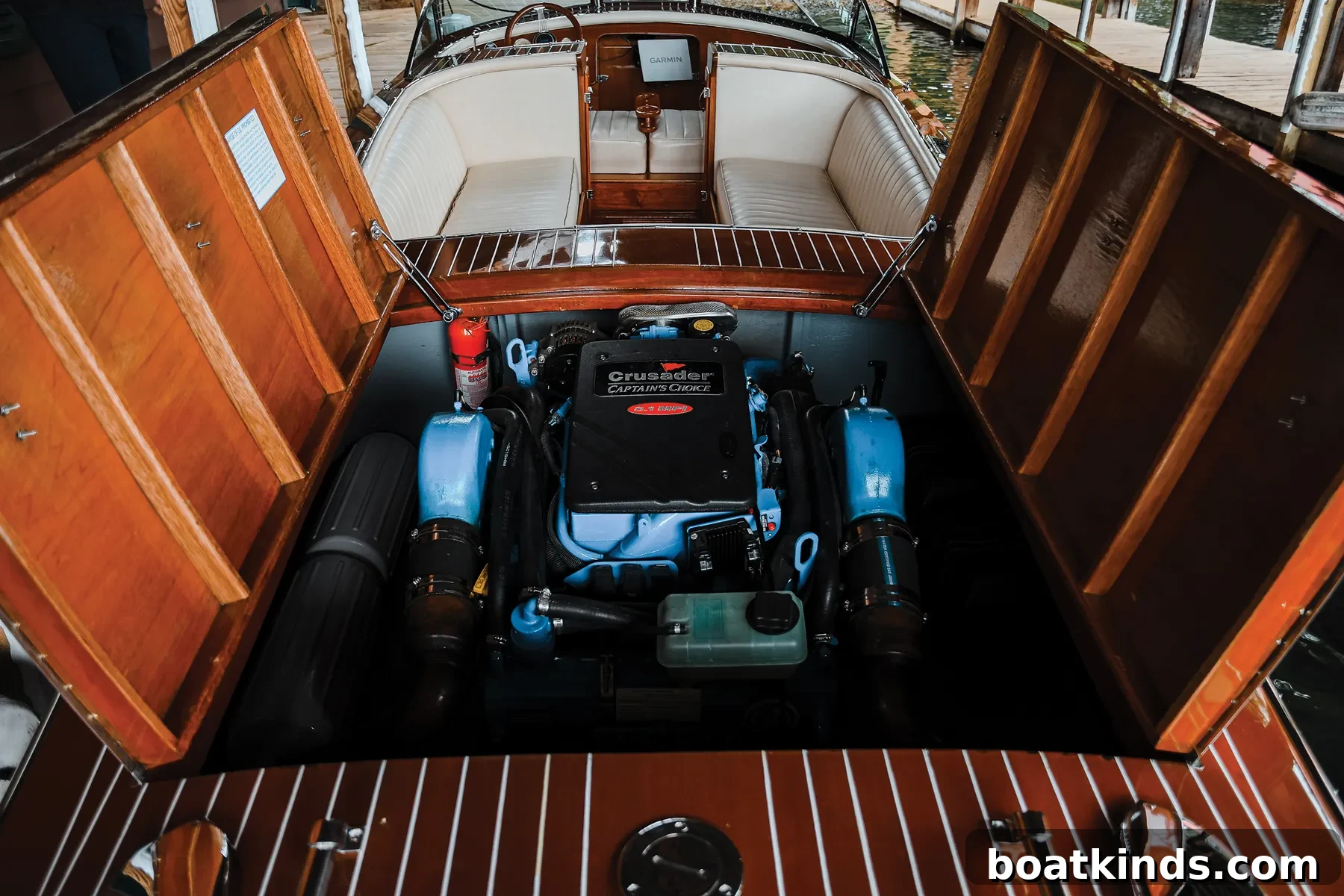
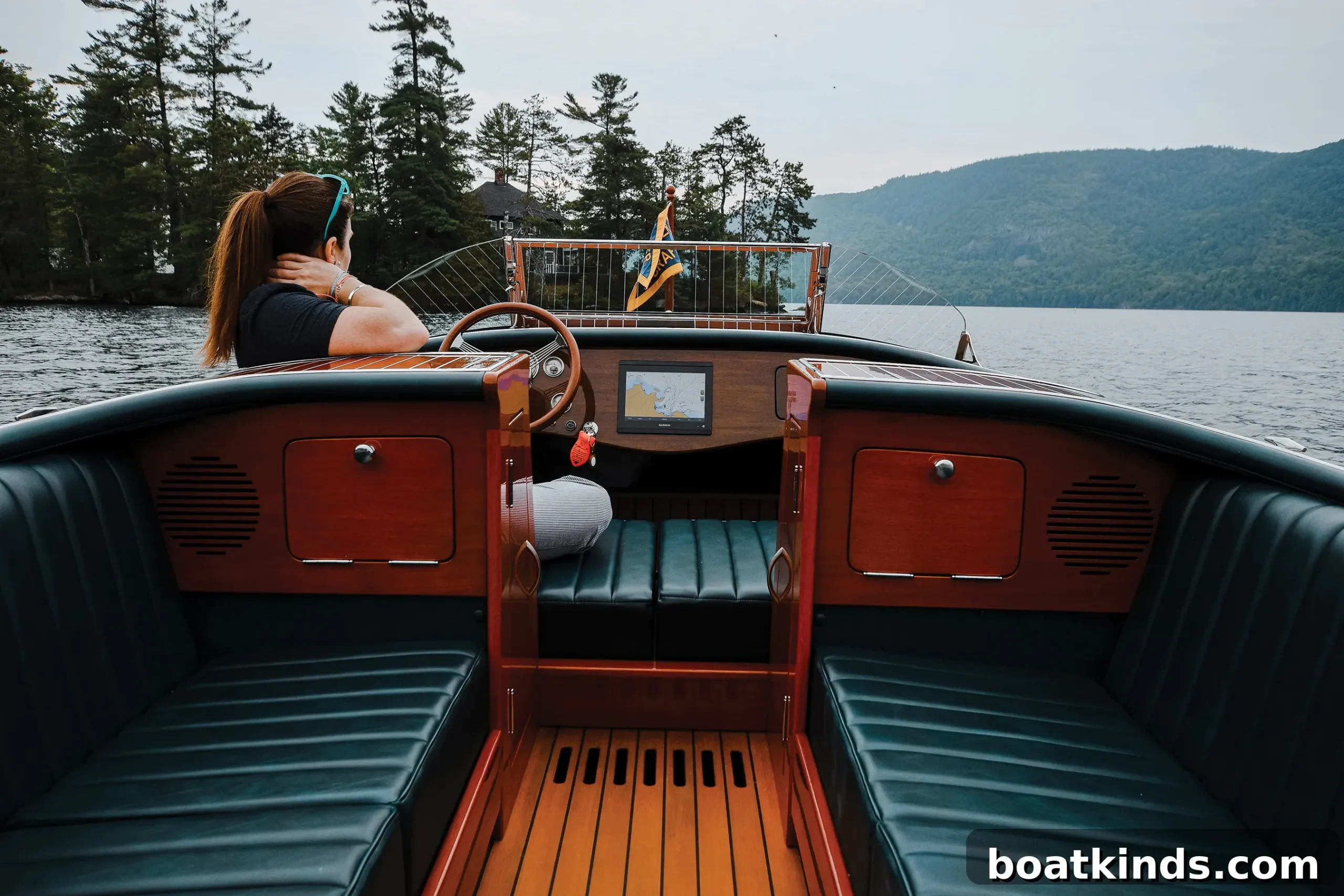
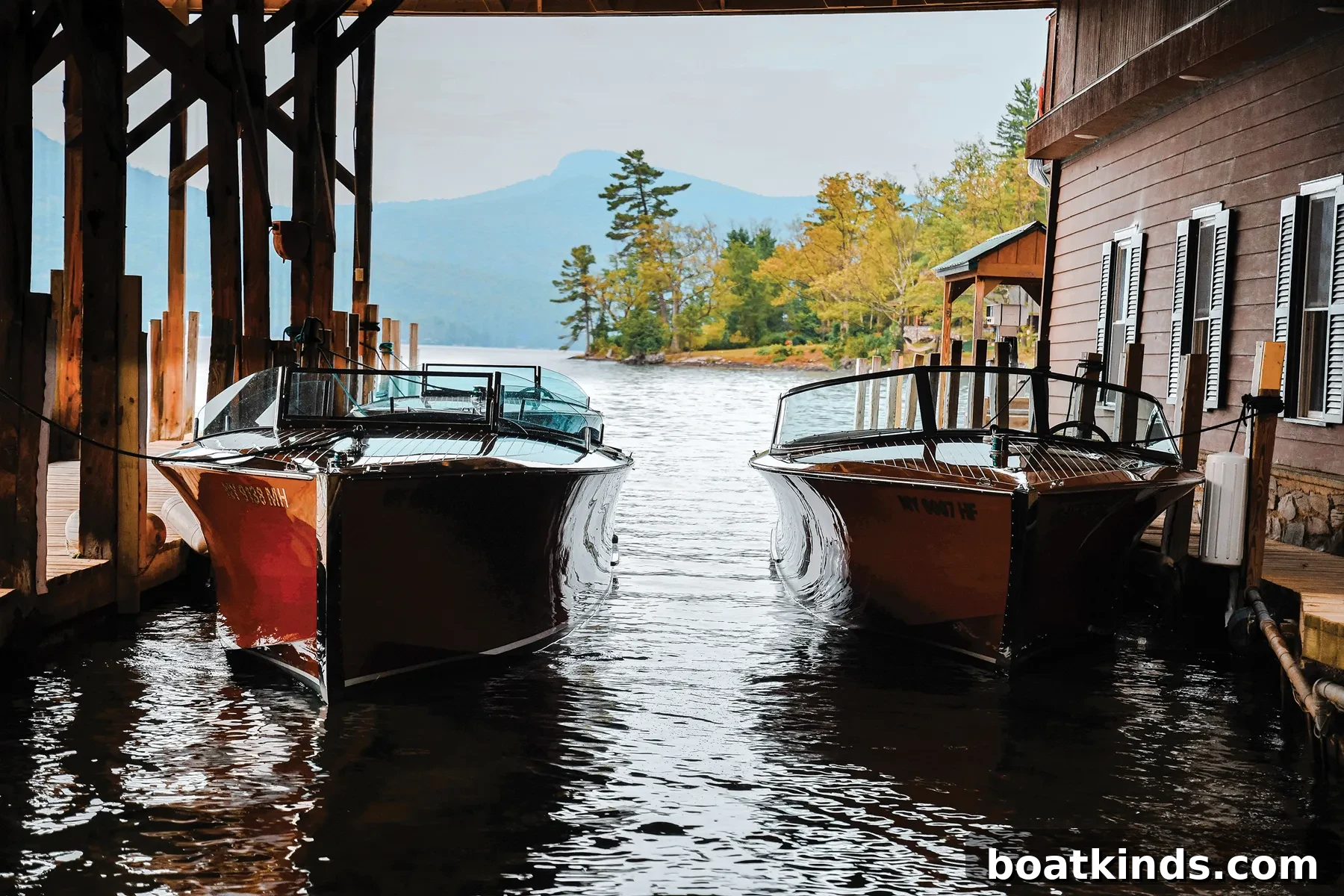
I met Erin Badcock at the Hacker-Craft test facility in the quiet lakeside hamlet of Silver Bay shortly after dawn. Under a covered slip, recent builds rested beside a building where boats have been fabricated since the 1950s. There was a classic 30-foot triple-cockpit Runabout that preserves the lines of Hacker’s original 1920s design, two new versions of the 30-foot Sportabout and a Sport model in for service. Each boat displayed the hallmarks of Hacker styling: flowing hull lines, intricate joinery, immaculate varnish and period hardware, while being powered by modern V-8 inboard engines that deliver performance equal to or better than many modern fiberglass boats.
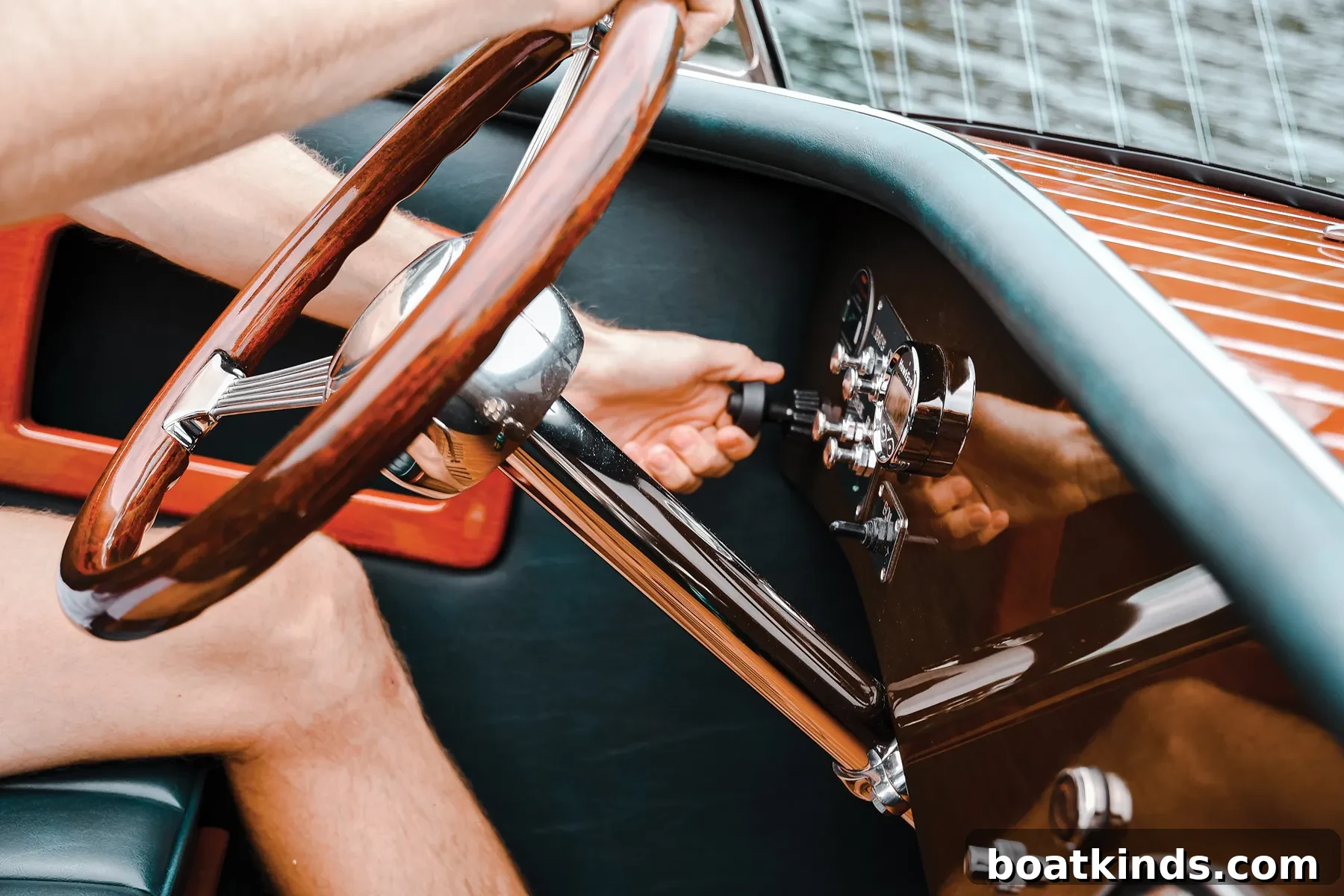
“Almost every boat we build is custom in some way,” Erin explained. “They start from standard frame sets, but skilled craftsmen finish each vessel by hand, so no two are exactly alike.”
While a handful of stock boats are kept for shows and the showroom, the majority are made to order with extensive customization options. Clients can specify length, engine type, cockpit layout, stain patterns and color schemes, upholstery, flooring, electronics and sound systems. Erin said the shop produces roughly 15 new boats annually, refreshes many customer boats and provides full restorations for vintage wooden boats in nearly any condition.
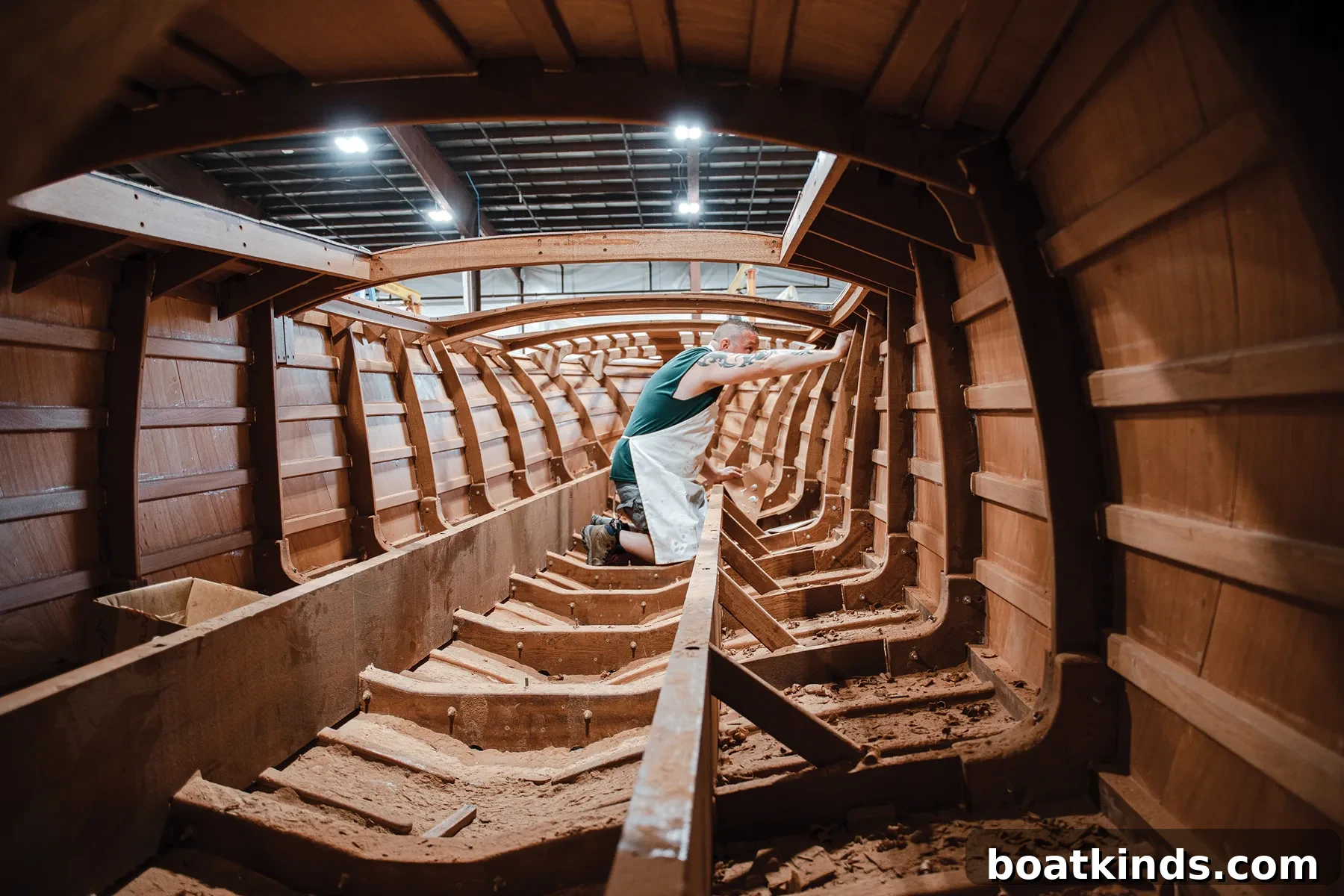
Inside the newer manufacturing facility in Queensbury—just south of Lake George—I watched restorations and new builds progressing side by side. A craftsman shaped the skeletal frame of a new 30-foot Gentleman’s Racer while another took measurements on a vessel more than 70 years old that needed a fresh running surface. The skills on display—timber selection, steam-bending, precise planking and hand-fitted joinery—differ sharply from the processes used in mass-produced fiberglass yards.
I spoke with a carpenter sanding the hull of a Sport model before it entered a dust-free booth for its final varnish. He described the repetitive, meditative nature of the work: “Apply a coat of varnish, sand it smooth, then repeat. I love the process. Each boat becomes a work of art when it’s finished.”
All varnish coats are applied by brush, never sprayed, which gives each hull a deep, glass-like finish that catches light as water streams along the sides under way. The hulls wear the original Hacker-Craft logo on the side, and the boat names on transoms are hand-lettered in 23-carat gold leaf—an example of the attention to traditional detail that defines each build.
Working with premium materials poses its own challenges. Hardware is designed to resemble pieces from the earliest models—windshield frames, ring-style cleats, floor shifters, ventilators and the signature cutwater at the bow—some cast domestically and others sourced overseas. High-grade mahogany is procured through a specialty importer who selects appropriate trees in Guatemala, supervises felling and milling, and ships the timber to the U.S. for kiln drying and final milling. That supply chain can take one to two years from order to delivery. Additional mahogany from the Philippines provides hull planking and cockpit trim.
Propulsion systems blend vintage style with modern capability: many Hacker-Crafts are equipped with high-performance V-8 and V-10 engines from suppliers such as Ilmore Engine Company, giving these classic hulls thrilling acceleration and reliable cruising performance.
“Hacker Boat Company serves a niche market, and our mission remains the same,” Erin said. “We want to build boats that honor the Hacker legacy.” The company’s Legacy Collection includes models from 23 to 35 feet—Sport, Runabout, Sportabout and Sterling—along with a hardtop commuter called the Bespoke. Gentleman’s Racer models, spanning 22 to 35 feet, capture the look and excitement of Hacker’s Gold Cup-era racers. Jeff Brown, the in-house marine architect, collaborates with each customer to turn their vision into reality.
New directions are also in development. The Evolution Collection will introduce the Monaco, a model Erin described as a forward-looking addition to the lineup. The company has begun building limousine tenders for yacht owners that convey a European aesthetic—akin to a Venetian water taxi—with variations including open forward helms, hardtop-covered midship compartments and classic commuter-style layouts.
John L. Hacker earned his place among the 20th century’s most influential boat designers. Seeing his name carried forward by craftsmen who still make wooden boats by hand, it’s easy to imagine he would be proud. Hacker-Craft boats remain visible on waterways worldwide, and their presence is as striking today as it was in the brand’s early golden era.
This article was originally published in the October 2022 issue.