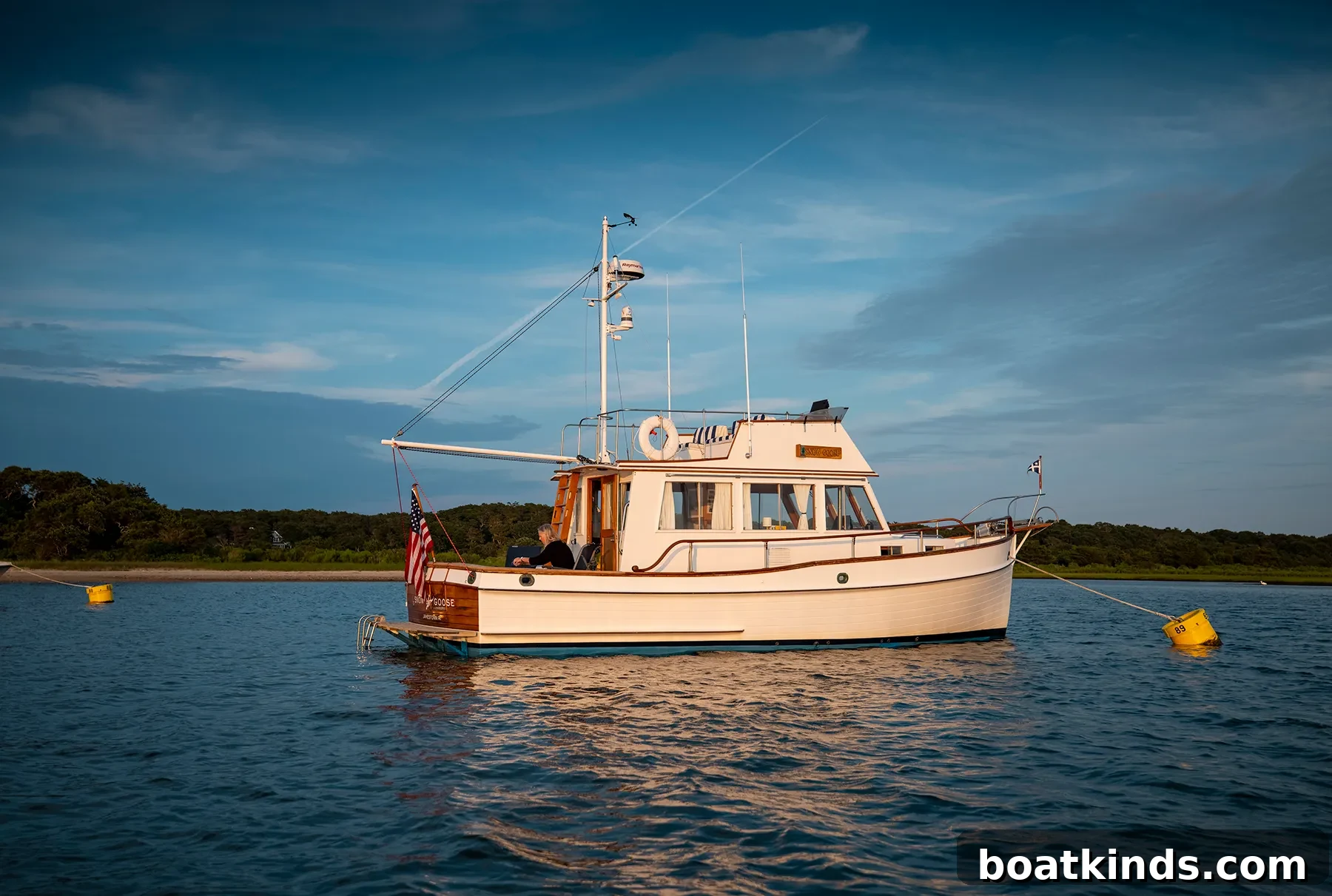
Before Onne and Tenley van der Wal cruised the Intracoastal Waterway aboard their 1986 Grand Banks 32 Snow Goose, Onne insisted on bringing the boat’s systems up to modern standards. His biggest concern was the electrical system, which he found inadequate for reliable cruising.
The original Grand Banks instruments included 12‑ and 110‑volt analog meters, but they provided limited information: the 12‑volt meter didn’t indicate current flow, and the 110‑volt meter only showed when shore power was present. Onne wanted precise data—how many amps were being used, what was charging, and what was draining—so he could manage power more intelligently while underway and at anchor.
Skilled as a machinist and comfortable with basic electrical tasks, Onne recognized this was a job for a professional. He met Mike Garretson of Sea and Land Yacht Works, based in Narragansett, Rhode Island, after spotting him locally. Mike inspected Snow Goose and was surprised to find the original 1986 wiring and aging battery cables. With battery cable insulation failing and one battery already dead, Mike proposed a complete DC-system redesign taking advantage of current components and best practices.
Mike recommended installing an Automated Charging Relay (ACR) system to manage power sharing between batteries, and designed a complete DC architecture to bring Snow Goose from its 1986 configuration up to current standards. The schematic was detailed and complex; after seeing it, Onne admits he felt overwhelmed. Mike encouraged him to study the drawing and follow each wire back to its source. Onne took that advice, created simplified sketches to map every connection, and used Mike’s master schematic as the reference.
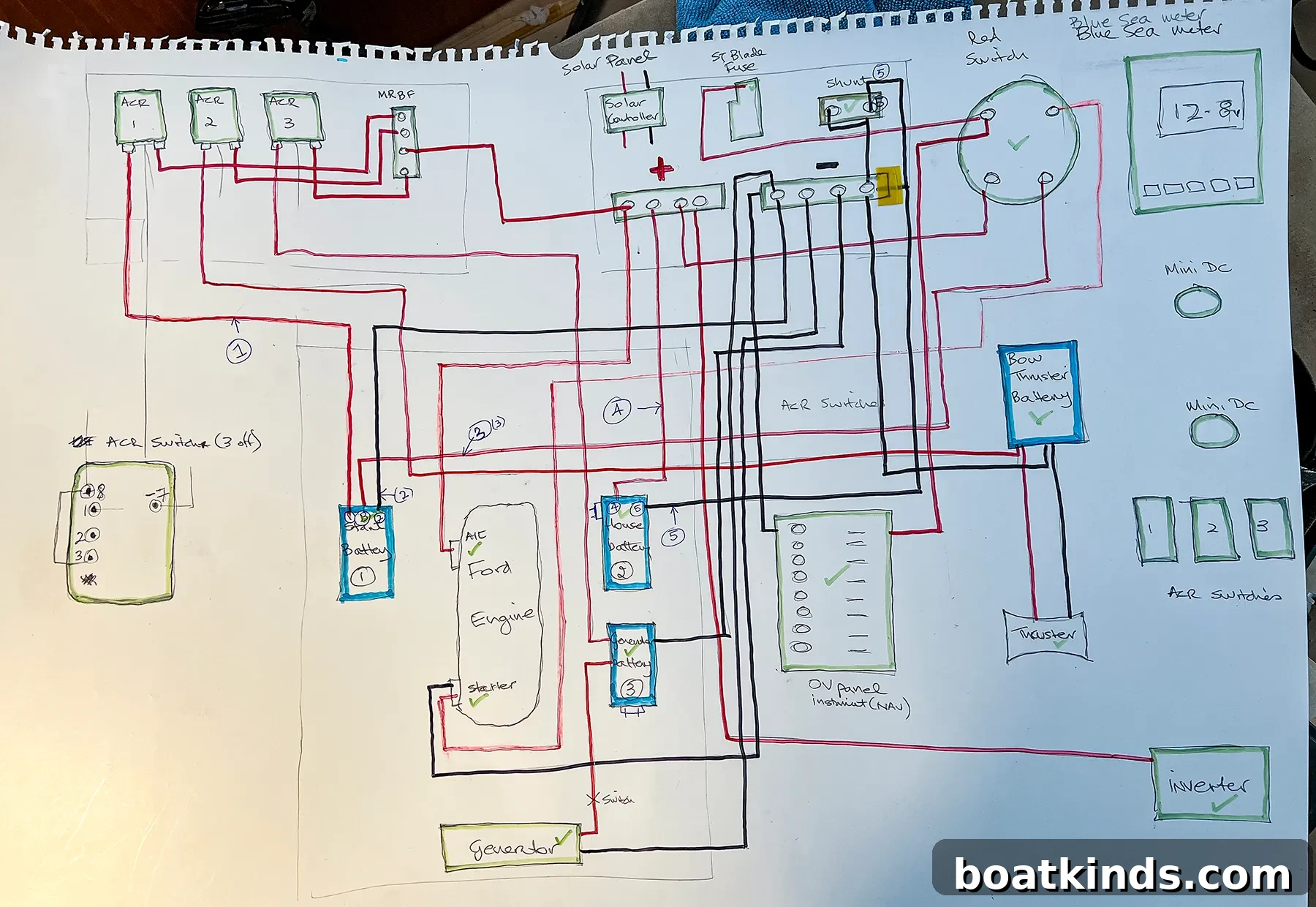
For energy storage, the plan called for three Lifeline AGM GPL‑4DL 4D batteries, each weighing about 95 pounds. Onne and helpers lowered the heavy cells into the engine room with ropes and positioned them securely below decks. Each battery was dedicated to a specific role—house systems, generator start, and main engine start—but the ACRs allow any battery to support another when needed.
Three Blue Sea Systems automatic control relays manage the connections between the batteries. A fourth, smaller automotive battery dedicated to the bow thruster is also tied into the relay network. The relays protect critical starting batteries by disconnecting them when voltage drops below a preset level, while allowing charging sources—shore power, the main engine alternator, the generator, or solar panels—to automatically charge all batteries when available.
The system logic makes power management straightforward in practice. At night Onne can leave all batteries connected. If the house bank begins to run low, the relays will isolate the engine and generator batteries so those banks remain preserved for starting. If he needs extra house power for a large load, he can manually include the generator or engine battery to supply it, while still protecting at least one starter battery.
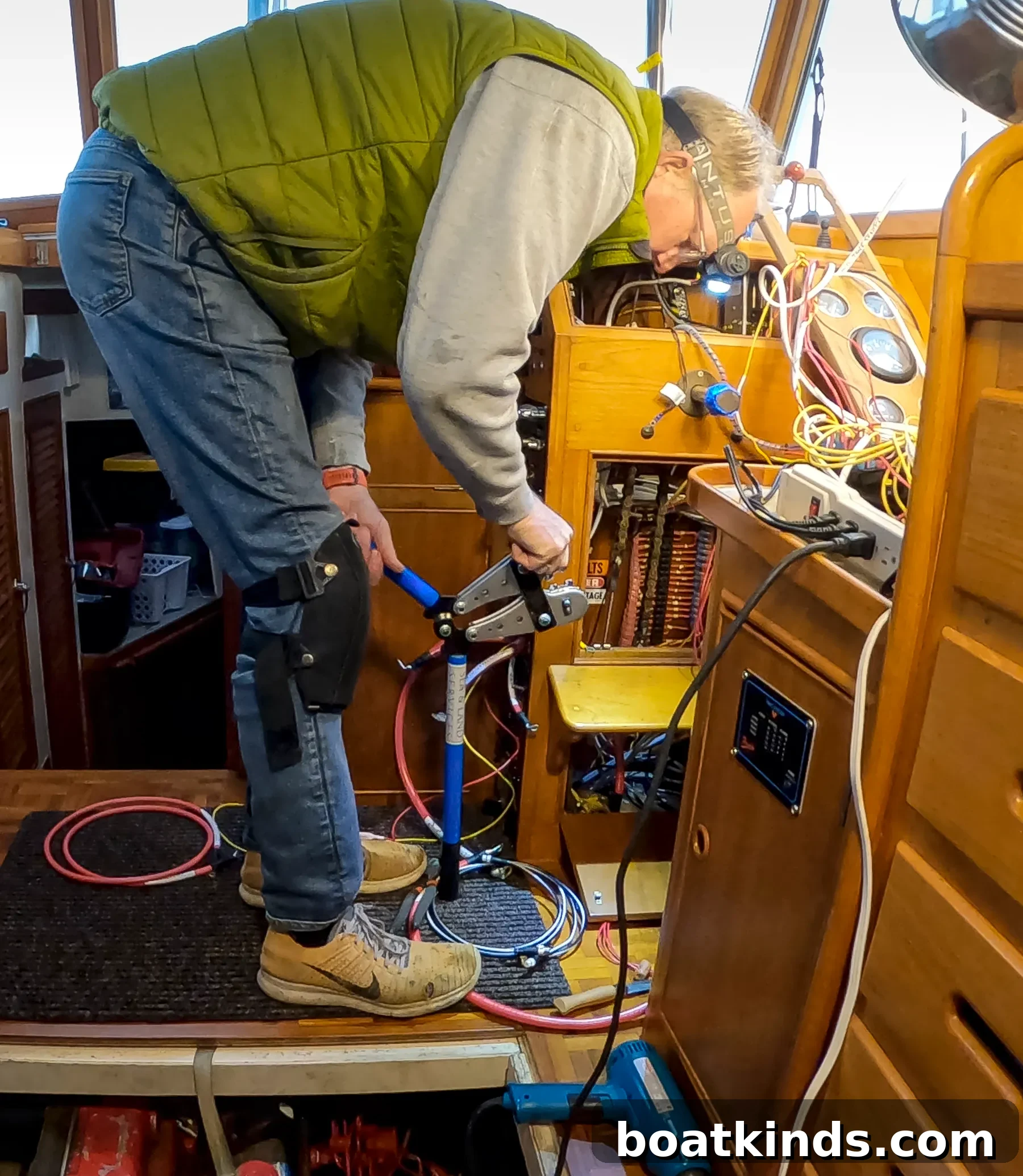
On a morning when the generator won’t start, as a fallback Onne can start the main engine to recharge batteries and then restart the generator if he plans to stay anchored. All wiring and component installation met American Boat and Yacht Council (ABYC) standards; Mike insisted on correct circuit protection and fusing throughout.
Although removing the old wiring was nerve‑racking—Onne remembers hesitating with a bolt cutter—the finished upgrade proved well worth the effort. When the system powered up, Onne was relieved and impressed by the performance and reliability gains.
To monitor the new electrical system, Onne installed a Blue Sea Systems M2 vessel systems digital monitor to track DC and AC voltages, monitor bilges and tanks, and provide system status at a glance. Because the M2 displays only two battery voltages, he added two Blue Sea mini DC voltmeters at the helm to keep tabs on all four batteries. The real‑time digital readouts show exact voltages and make it easy to see the impact of loads and charging sources immediately.
To ensure consistent charging while cruising, Onne also added solar panels. Having had positive results with soft solar panels on his 1972 Pearson 36—enough to keep a refrigerator running—he arranged a larger installation on Snow Goose. Working with Ham Ferris of Ferris Power Systems, Onne measured the foredeck area and ordered panels that fit the space precisely. Mike recommended wiring the panels in parallel so if one panel is shaded the other continues charging.
Onne typically sees 10 to 11 amps from the panels during effective sun hours. Even a few hours of that output each day provides significant charging capacity to maintain battery state of charge and keep refrigeration running. As a result, the generator is now used mainly when they want hot water; Onne can run the generator about 45 minutes to heat water to piping hot.
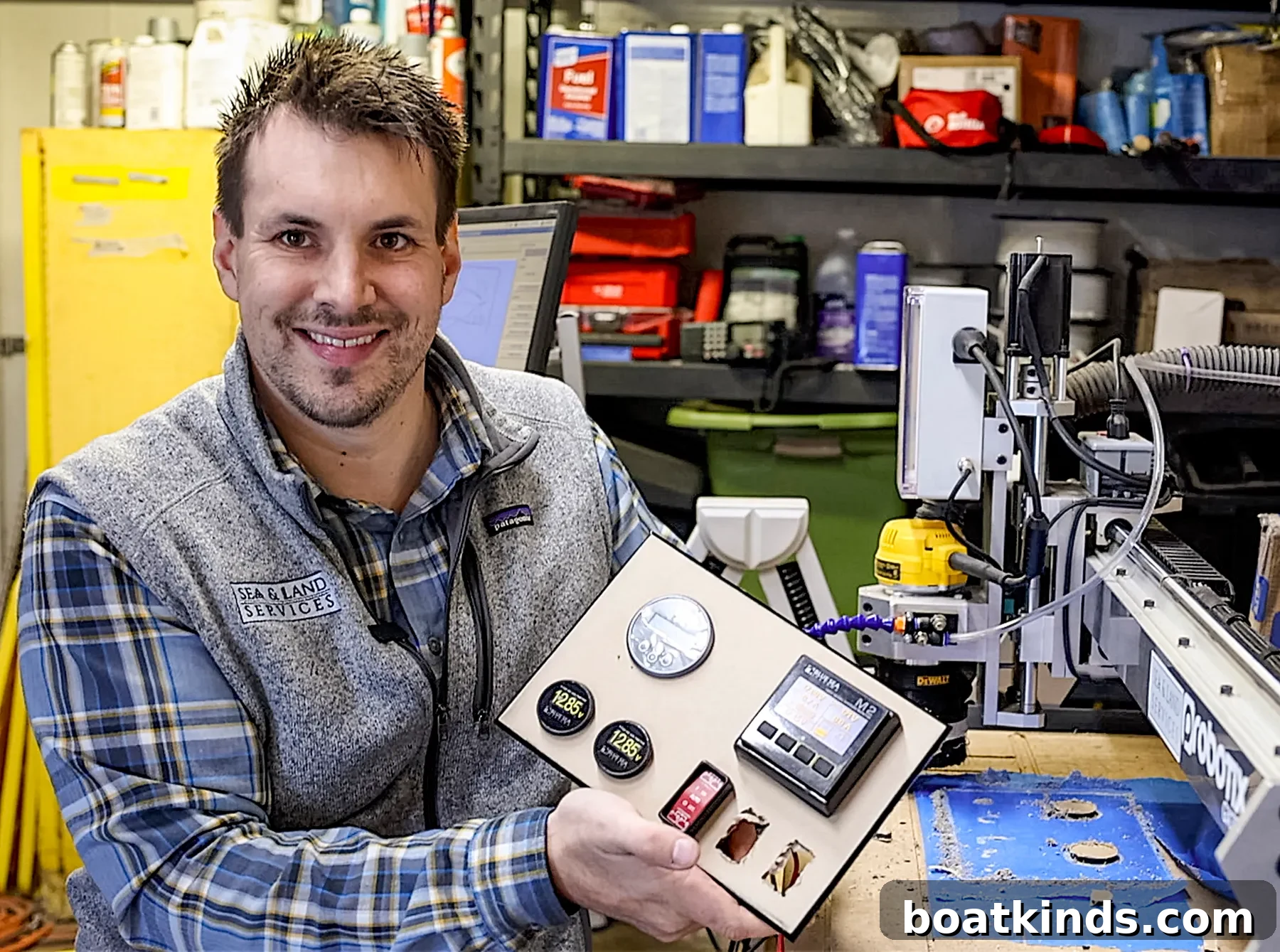
To tidy the helm, Mike cut an acrylic panel with his CNC cutter to house the new LED monitors and to cover the holes left by the old analog gauges. Onne credits Mike’s engineering background and attention to detail for the success of the project.
“There is no way I could have done it without Mike,” Onne says. “I was overwhelmed at first, but he believed I could learn it, and the upgrade has made a big difference. It’s so much nicer than what I had.”
This article was originally published in the December 2022 issue.