
The National Oceanic and Atmospheric Administration (NOAA) has issued its official outlook for the 2023 hurricane season, and the agency expects above-average activity. NOAA forecasts 12 to 17 named storms (sustained winds of 39 mph or higher) for the season. Of those, five to nine could become hurricanes (sustained winds of 74 mph or higher), and between one and four may reach major hurricane strength (Category 3 or higher, with sustained winds of 111 mph or higher). With that forecast in mind, boat owners and marina operators should plan ahead to reduce damage and ensure safety.
Preparing Your Boat Before a Storm
Preparation before a storm is the most effective way to protect your vessel and limit loss. Capt. Nik Foster of Sea Tow emphasizes checking your marine insurance policy first. Confirm whether your policy covers recovery, transport, storage, and storm-related damage. Knowing what your insurance covers will help you decide whether the boat should remain in the water, be hauled out, or be moved to a safer location.
How you secure the boat depends on where it will ride out the storm—trailer, lift, dock, or mooring. Take these practical steps:
- Inspect and replace lines, straps, and chafing gear. Use heavier, storm-rated dock lines or chafe protection where lines pass over cleats or pilings.
- If your boat is on a trailer, deflate the trailer tires slightly and anchor the trailer with heavy blocks or tie-downs. A properly secured trailer reduces the chance it will be tossed or shifted by surge.
- For boats on lifts, secure the boat to the cradle and secure the cradle to the pylons. Simply tying the hull to the lift is not sufficient.
- Remove the drain plug on lift boats. If heavy rain fills the hull, the additional weight can overwhelm the lift and cause failure; removing the plug prevents the boat from becoming a water-filled bathtub.
- Charge batteries and verify the bilge pump operates on battery power. A working bilge pump and charged batteries are critical if power to the dock is lost.
- Clear loose items from the deck and cockpit—remove electronics, cushions, sails, and other gear that can be damaged or become projectiles.
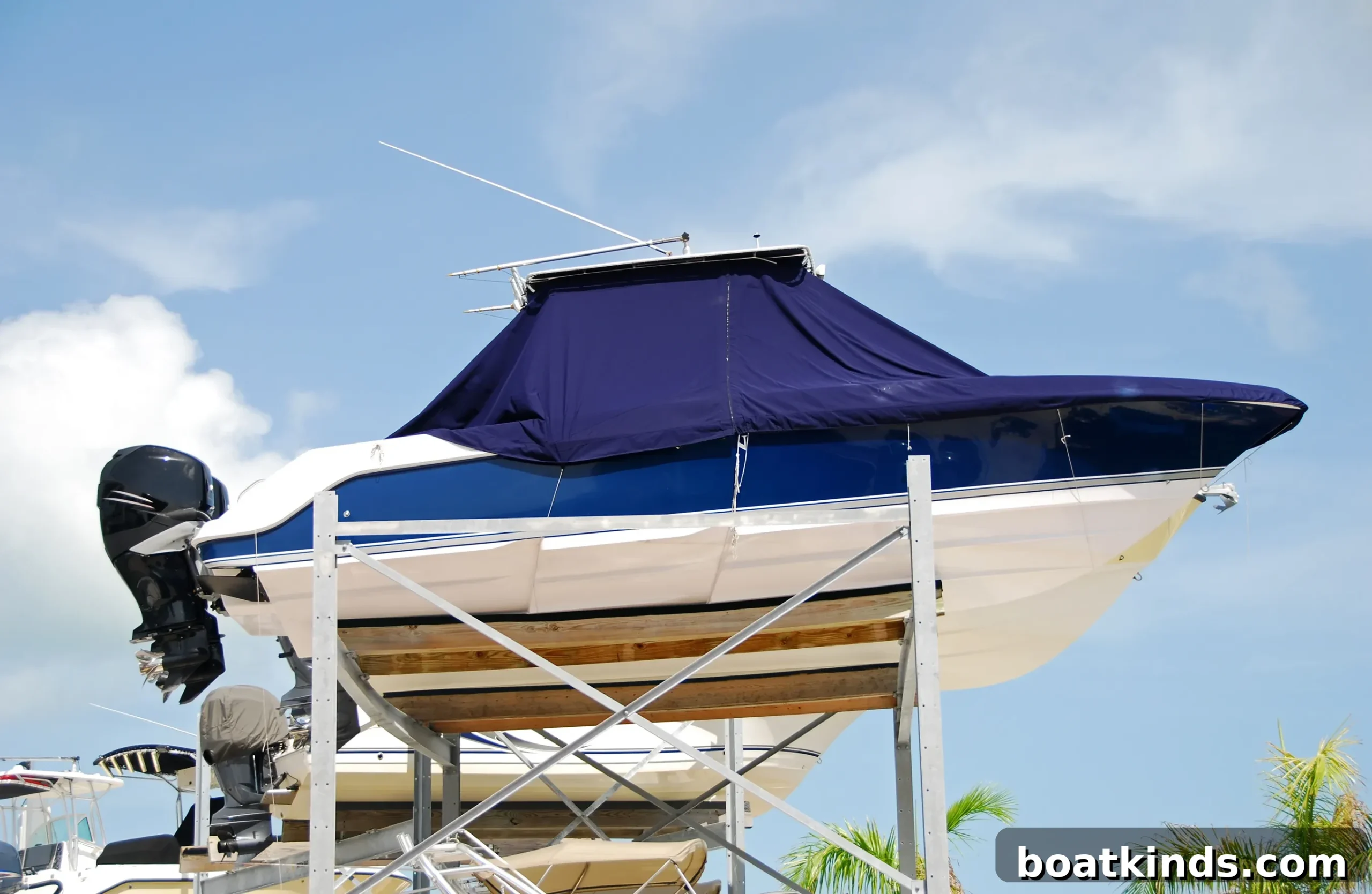
Securing Docks and Moorings
When leaving a vessel at the dock or on a mooring, take extra precautions to prevent swing and breakaway. Use thicker, heavier lines, and consider double- or triple-wrapping cleats with spring lines to keep the bow and stern under control. For moorings, check that mooring pennants, shackles, and anchors are in good condition and rated for storm conditions. Removing sails, canvas covers, and other wind-catching items reduces strain on rigging and mooring gear.
If authorities order an evacuation, disconnect dock power to prevent exposed live wires or electrical hazards in floodwaters. Secure shore power cords and document the condition of the boat and dock before leaving.
Safety During a Storm
During a hurricane or severe tropical storm, personal safety must come first. Follow evacuation orders and seek shelter on land. Keep tuned to NOAA Weather Radio, local emergency broadcasts, and official advisories for updates. Modern weather technology has improved situational awareness, but boaters should still carry a VHF radio and have a plan if caught on the water. Essential items include drinking water, life jackets for every person aboard, and a plan to avoid shallow or exposed waters where strong winds and storm surge can be especially dangerous.
What to Do After the Storm
Once authorities say it is safe to return, prioritize family and personal safety before assessing vessels. When you inspect your boat, do so cautiously—watch for submerged hazards, unstable docks, fuel or oil leaks, electrical hazards, and floating debris. Document any damage with photos and notes and report claims promptly to your insurance company. Many insurers coordinate with local recovery and salvage services, so contact your insurer before contracting work to avoid unexpected costs.
Even if your boat appears intact, check batteries, bilge systems, electrical components, and hull integrity. Rinse saltwater from engines, electrical fittings, and other sensitive areas as soon as feasible to prevent corrosion. Replace any waterlogged cushions, electronics, or gear, and repair chafed lines and hardware before returning to regular use.
Final Recommendations
Storm season requires a mix of planning, timely action, and practical seamanship. Capt. Nik Foster advises boat owners to prepare early, confirm insurance coverage, reinforce mooring and dock lines, and ensure bilge and battery systems are ready. Taking these steps not only protects your property but also helps reduce risk to neighboring boats and marina infrastructure. With proper preparation and a clear safety plan, boaters can significantly reduce the impact of hurricanes and tropical storms on their vessels and communities.