
Since its founding in 1970, Sabre Yachts has built its reputation on cruising yachts. Based in Raymond, Maine, Sabre focused solely on sailboats until 1989, when it introduced the Sabreline 36 Fast Trawler — the company’s first Downeast-style powerboat. In 2003 Sabre launched a sister brand, Back Cove Yachts, to meet growing customer demand for single-engine Downeast cruisers. By 2013 Sabre had transitioned its entire production to powerboats, expanding its offerings while retaining the traditional cruiser DNA that defines both brands.
Over the decades, both Sabre and Back Cove have evolved alongside advances in marine construction and propulsion. Today Sabre produces express and flybridge cruisers from 38 to 58 feet, typically equipped with Volvo IPS pod drives, while Back Cove focuses on models from 35 to 41 feet that use both outboards and diesel inboards. Despite these modernizations, both lines continue to emphasize comfortable, well-appointed cruising boats designed for real-world use.
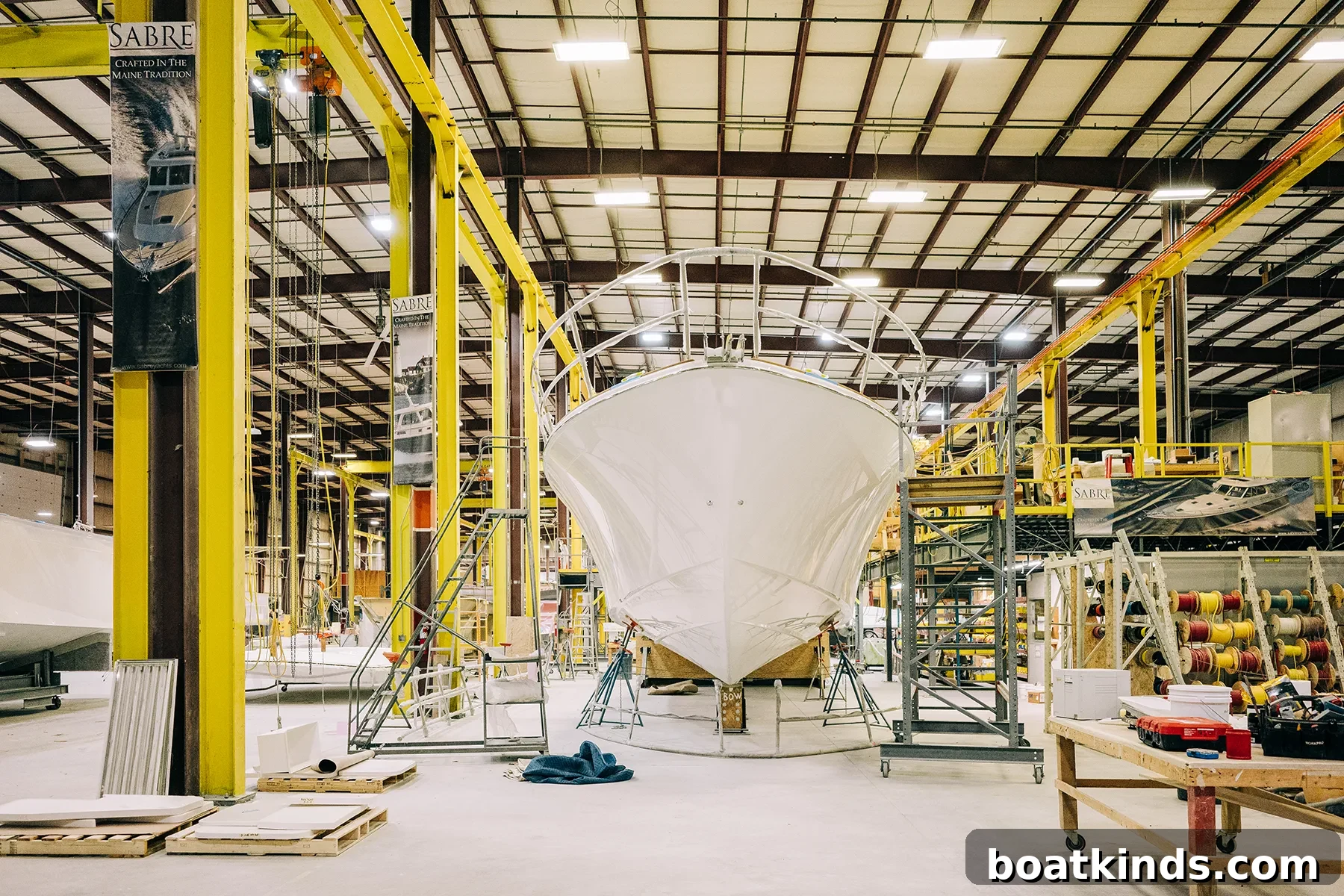
“We haven’t tried to be everything to everyone. You’re not going to see an image of a Sabre with rod holders on it, pretending that we’re a fishing boat,” says Aaron Crawford, CEO of Sabre and Back Cove. “We know who we are, and we focus on being the best at supporting our customers in the cruising lifestyle.”
Crawford has been part of Sabre for 14 years and previously worked across the recreational marine industry, including time with the naval architecture firm Sparkman & Stephens. He collaborates closely with Kevin Burns, vice president of design and product development for both brands. Burns, who served in the U.S. Coast Guard and ran offshore supply vessels earlier in his career, has been with the company for 18 years. Together they discuss how cruising has changed, how Sabre and Back Cove respond to customer needs, and what defines a successful cruising boat today.
Soundings: How has the pastime of cruising in powerboats changed over the years?
Kevin Burns: In the past, buyers fit neatly into narrow owner profiles: day-boaters, weekenders, loopers, long-range cruisers. Today those lines have blurred. Modern owners want flexibility — a single boat that can handle entertaining, extended trips, and quick day excursions. Where there used to be a handful of distinct buyer types, now there are hundreds or thousands of individual preferences and priorities.
Aaron Crawford: I agree. Individual use profiles vary widely. Time constraints and speed play a big role: sailing cruisers once measured journeys in days, but powerboats cruising at 24 knots expand a boater’s range dramatically compared with 9 or 10 knots under sail. That changes how owners plan trips and how they expect their boats to perform.
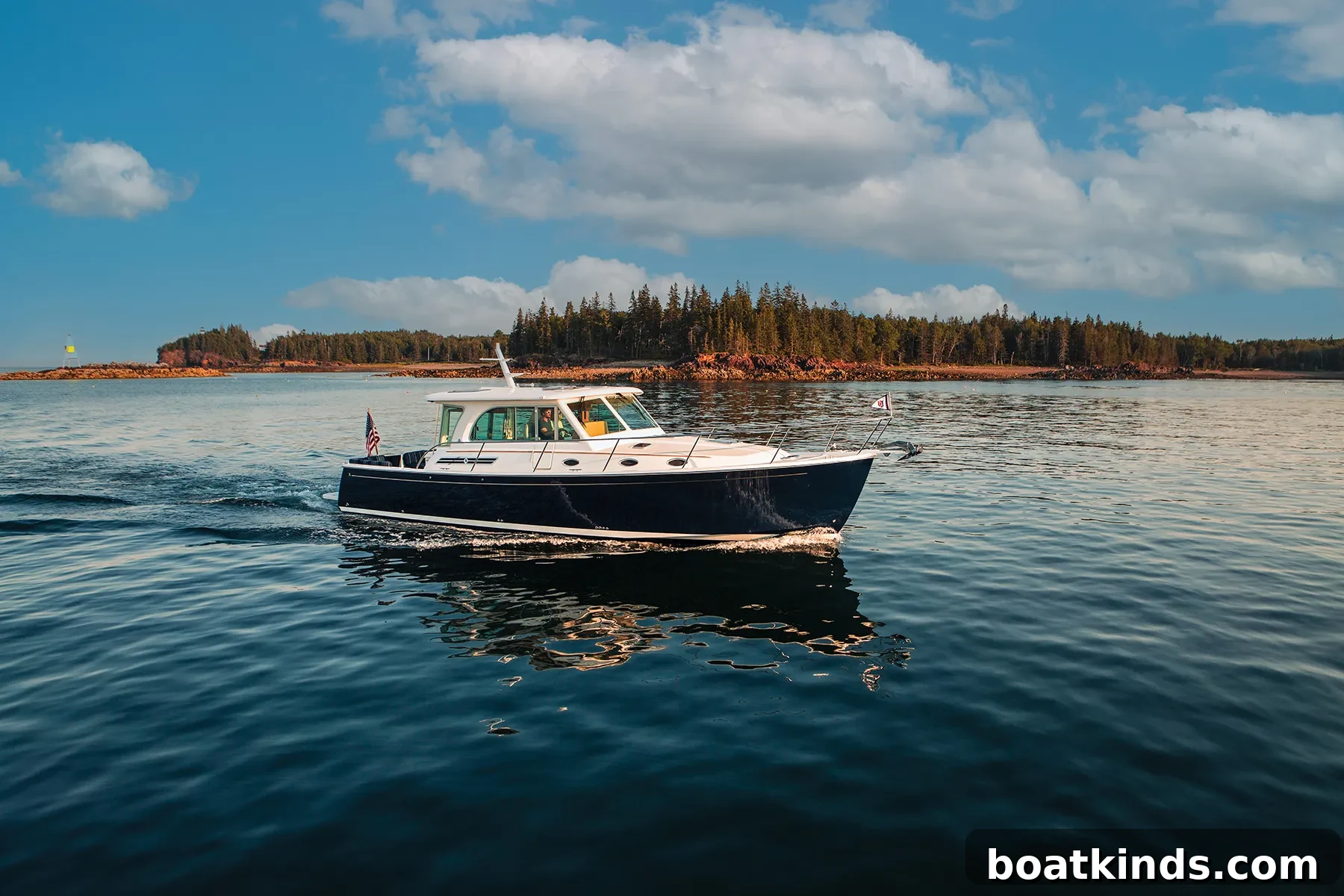
Soundings: How are your brands responding to the demand for so many use profiles?
AC: Sabre operates as a semi-custom builder. Small, meaningful changes — storage for bikes or golf clubs, a dedicated coffee station, or an alternate layout — are often requested and can be integrated into the design. Those personal touches matter to buyers and help a boat better match an owner’s lifestyle.
Soundings: What impact did the COVID-19 pandemic have on the cruising market?
KB: The pandemic reinforced what many owners already felt: time on the water with family is extremely valuable. It also brought many casual boaters into a more committed relationship with boating. People who once visited the marina infrequently became regulars and invested in larger, more capable cruisers.
Soundings: Are you seeing more demand for onboard offices since COVID?
AC: Yes. On the new Sabre 43, for example, a lower lounge converts easily into an office or an extra berth. We’ve also adapted staterooms into dedicated workspaces when owners want that. Connectivity is a priority: all new Sabres come with onboard Wi‑Fi and digital switching, and many owners add satellite internet options like Starlink for reliable remote work. That capability expanded cruising windows for many owners — the boat can become a mobile second home where work and leisure blend.
Soundings: What about Back Cove?
KB: Back Cove owners typically don’t need a full-fledged office, but they do want to be able to work comfortably around the boat. Requests for strategically placed outlets and charging stations are common. Today’s layouts consider where people naturally want to set up a laptop or charge devices, and we design with those use cases in mind.
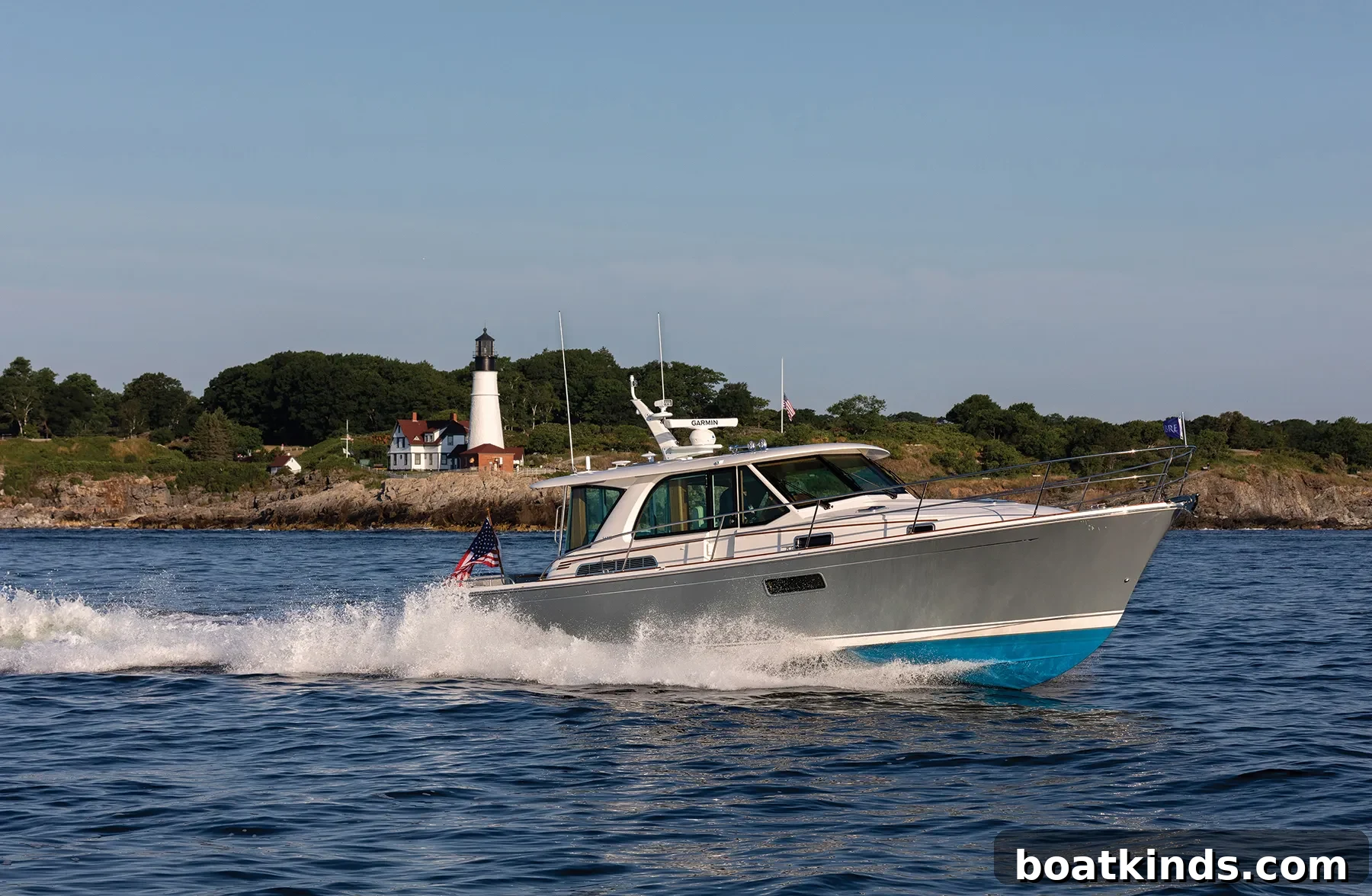
Soundings: Are you seeing demand for greater onboard power usage?
AC: Absolutely. Many owners want to anchor away from shore power and run refrigeration and other systems without firing up a generator. The key is advanced power management: a networked electrical system that optimizes battery use and load distribution. As battery technology improves, owners will increasingly be able to stay off-grid longer without relying on generators or shore power.
Soundings: Are owners taking their boats to more remote destinations?
KB: Yes — we see Sabre and Back Cove boats voyaging to places like the Pacific Northwest and Alaska, as well as Newfoundland, the U.S. East Coast, and even across to Europe. Owners are increasingly cruising year-round and using boats as seasonal second homes, traveling north-south to extend their cruising seasons.
AC: Over the last seven to ten years there’s been a notable shift: more owners are cruising in both directions and treating the boat as a home away from home. That influences how they outfit and use their boats.
Soundings: Have you altered range or other design parameters to support these cruising trends?
KB: Fuel infrastructure generally supports our needs, but we do target a practical cruising range. For new models we plan around a 300- to 350-mile range at high cruise speed. Designs like the Back Cove 41 and 372 were created with Looping in mind; they can achieve much longer ranges at reduced speeds, making them suitable for extended passages when owners slow down for efficiency.
Soundings: Back Cove adopted outboard propulsion about a decade ago. Is outboard demand still growing?
KB: Definitely. Outboard engines and their engineering have advanced substantially in reliability, power, and compactness, which drives demand. Many newer buyers grew up powerboating rather than sailing; they’re comfortable with outboard systems and local service networks, so outboard-powered cruisers appeal to them as they step up to larger, more capable boats.
Soundings: How will you retain the new boaters who joined during the pandemic?
KB: We retain owners by listening and adapting. That means taking new ideas seriously while staying true to our identity: we design and build boats that reflect how our customers actually use them, rather than chasing every trend. Remaining responsive to owners’ evolving needs — whether it’s connectivity, power management, or custom storage solutions — is how we keep people in the Sabre and Back Cove families.
This article was originally published in the April 2024 issue.