
A deadly collision at the east breakwater in Old Saybrook — a site that has seen several serious incidents over recent years — has reignited local calls for changes to how the jetty is marked and protected. Marine officials, meanwhile, stress that boaters must respect existing aids to navigation and stay within the federally marked channel at the mouth of the Connecticut River where it meets Long Island Sound.
On the night of Labor Day, shortly after 9 p.m. under dark skies, a 31-foot vessel struck the east-facing jetty and capsized. Local reports describe the boat as suffering “significant damage” after hitting the breakwall. Three people aboard, ages 24, 25 and 34, were killed, and six others were injured, several with serious wounds. Authorities have said they are investigating the circumstances, including whether excessive speed was a factor.
This event is the fourth recorded boating incident at the breakwater in roughly five years. Past accidents include one in July 2020 attributed to operator inattention, a steering-mechanism failure in April 2021, and a high-speed crash that injured several people on Labor Day 2023. The recurring pattern has amplified community concern over safety at the river entrance.
More than 500 residents and boaters have now signed a petition titled “Light Up the East Wall,” which is promoted on a local Facebook page with about 2,700 followers. Many participants identify themselves as friends or family of people affected by the most recent crash. Petitioners are urging additional aids to navigation and improved lighting along the breakwater, arguing the structure was built over a century ago when vessels were smaller and far less powerful than today’s boats.
“Many of us have chosen to run outside the eastern breakwall where there is ample water and it feels safer for smaller craft than negotiating the turbulent zone between the breakwaters,” the petition states. “Boaters use their boats at all hours now. Whether you’re returning from fishing or from an evening trip, the daytime beacons aren’t enough.”
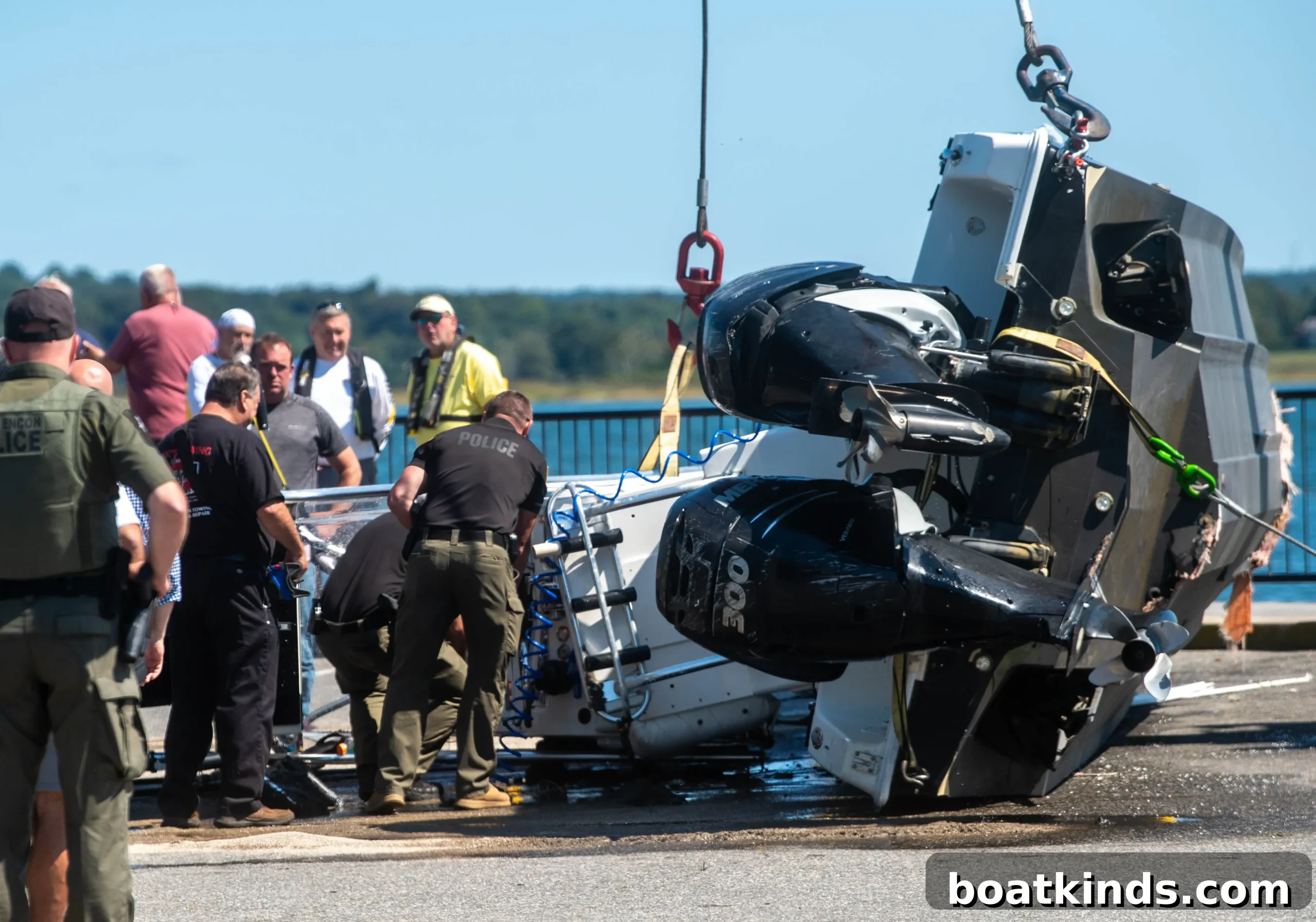
Local mariners and Coast Guard officials acknowledge that some boaters are cutting outside the marked channel, but they caution that adding lights or more markers is not a simple fix. In certain conditions—fog, heavy rain, or rough seas—additional lighting can create confusing reflections and false targets. The Coast Guard emphasizes that the established aids to navigation are adequate when they are used correctly.
“We have all the aids to navigation out there,” said Lt. (jg) Hunter Medley, public affairs officer for Coast Guard Sector Long Island Sound. “If you follow that scheme, you’re fine. Mariners should be following the proper aids to navigation scheme.” As part of the investigation into the latest crash, the Coast Guard’s Aids to Navigation Team inspected the channel and confirmed that all aids were on station and functioning.
Matt Lynch, manager at TowBoatUS Old Saybrook and harbormaster for nearby Old Lyme, explained why some operators leave the channel. Boaters often take the route outside the breakwall to avoid slowing down for the no-wake zone near shore. “If you want to skip that no-wake zone, you can go to the shallower waters to the east,” Lynch said. “A lot of people use that as a shortcut.”
Speed remains a central concern. Even on the Facebook page advocating for changes at the breakwater, commenters noted that entering narrow channels at high speed is dangerous and that lights alone might not prevent such accidents. Lynch, who has navigated the channel numerous times, said he would never recommend excessive speed at night: “I don’t think there’s any situation at night where you should be going in excess of 50 knots. I haven’t seen the report on this one, but it was faster than I’d be going.”
Lynch also pointed out that the breakwater is clearly marked on all standard nautical charts and appears on modern chartplotters and radar. “The breakwater is on every chart,” he said. “It shows up on our chartplotters and on radar—even at high tide it registers as a solid target. This one sits a few feet above the water even at high tide.” The Coast Guard likewise confirmed the presence of the two lighthouses marking the federal channel and noted they were in good working condition.
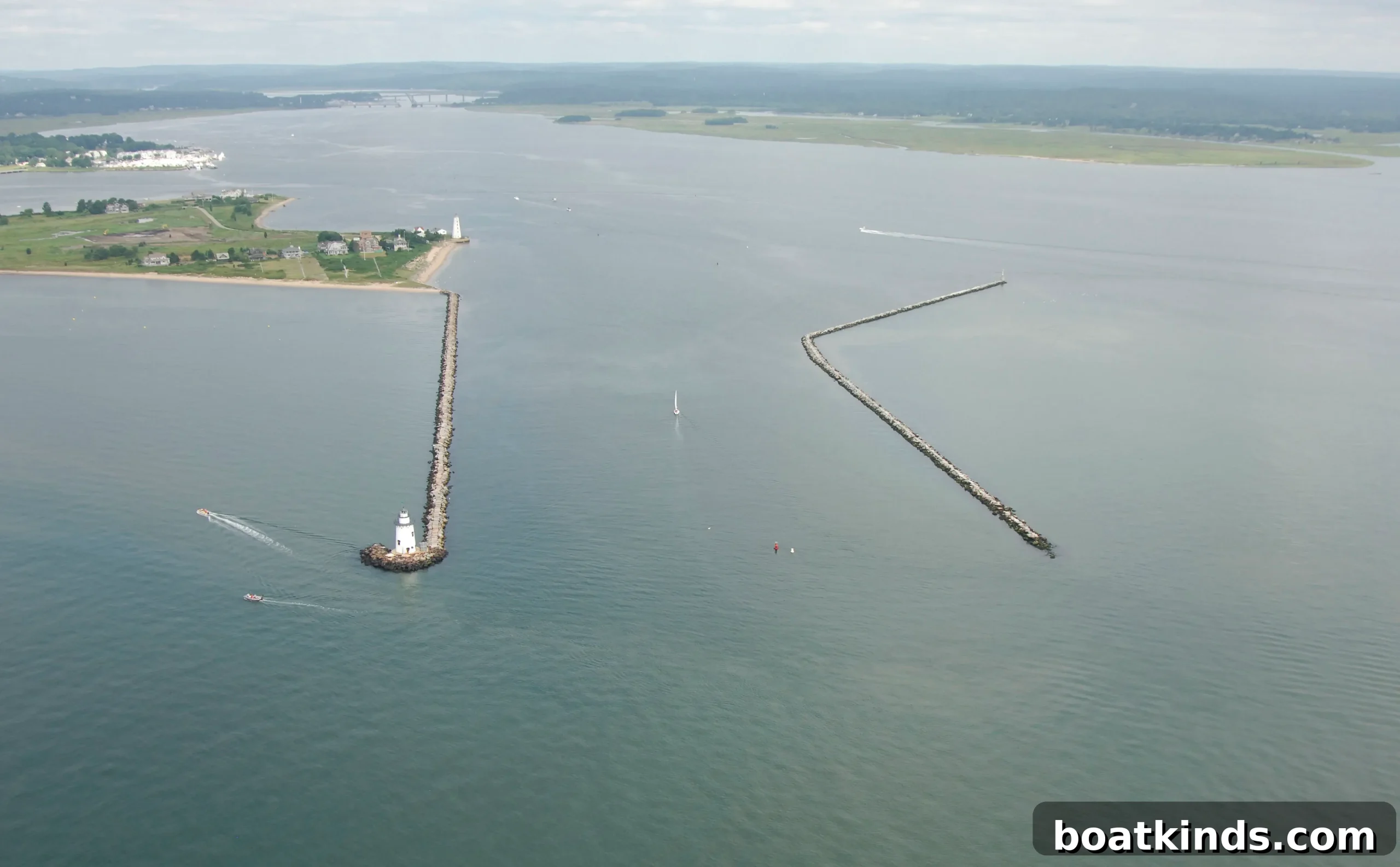
Despite the official assurances, grief and frustration are palpable among shoreline residents and the boating community. Many recall scrambling to help after the recent crash, and some say the tragedy has deepened calls for safer navigation measures at the river mouth. The debate now centers on whether improved physical markers or a stronger emphasis on compliance and safe seamanship will best reduce future accidents.
“When hearing of this accident, I immediately reached out to my son to be sure he was home safely from fishing that afternoon,” one community member wrote on social media. “He was, but when he heard his friends were involved he went out on the river trying to help locate them. No words can express the sadness our shoreline community feels at this time.”
This article was originally published in the November 2024 issue.