
Why Marylanders Love the Blue Crab: Memories, Methods, and Mouthwatering Meals
Being born in Maryland practically comes with a minor expertise in blue crabs. It may sound bold, but the blue crab is woven into daily life around the Chesapeake Bay. In my experience, there’s a distinct culture around how these crustaceans are caught, cooked, and eaten—strong opinions and all.
A Family Tradition: Crabbing as a Bond
My fascination with crabs began in 1976 when my father gave me William Warner’s Pulitzer Prize-winning Beautiful Swimmers: Watermen, Crabs and the Chesapeake Bay. The book opened a door to a world my dad and I stepped into together. The best memories I have of him come from long, sometimes wet, often muddy days on the bay hauling in crabs and learning the rhythms of the water.
Our first real outing was in July 1977. We stayed up late baiting a 1,000-foot trotline with chunks of smelly eel—three hundred pieces tied on with a knot my dad showed me. He preferred traditional methods over wire traps or chicken necks on a string, insisting we do it like the watermen. That first trip was a trial by fire: the line never sat right, I was pinched repeatedly, and jellyfish made the work miserable. One sting to the eye ended the day early and we limped home with only a dozen crabs.
By the end of that season, though, we had become a practiced team. My dad steered the skiff with the precision of someone who knew exactly how fast to run the line. I learned to scoop the baited hooks at the right moment and worked out where to stand so the crabs could be brought aboard without losing a finger. Those long summer days, surrounded by marshes and white sand beaches, became the backbone of our bond. Some families spent weekends at camp; we spent them crabbing.
Trotlines, Traps, and the Art of Catching
Crabbing doesn’t require a fancy boat or elaborate gear. The basic essentials—twine, bait, a net and patience—will get you started. Trotlines are a traditional method that can yield a large number of crabs when set correctly; shorter trips and simpler pots or traps work well too. Whether you’re on a 50-foot cruiser or a weathered 12-foot skiff, the fundamentals are the same: locate good water, present attractive bait, and bring them in carefully.
Cooking, Picking, and the Social Ritual
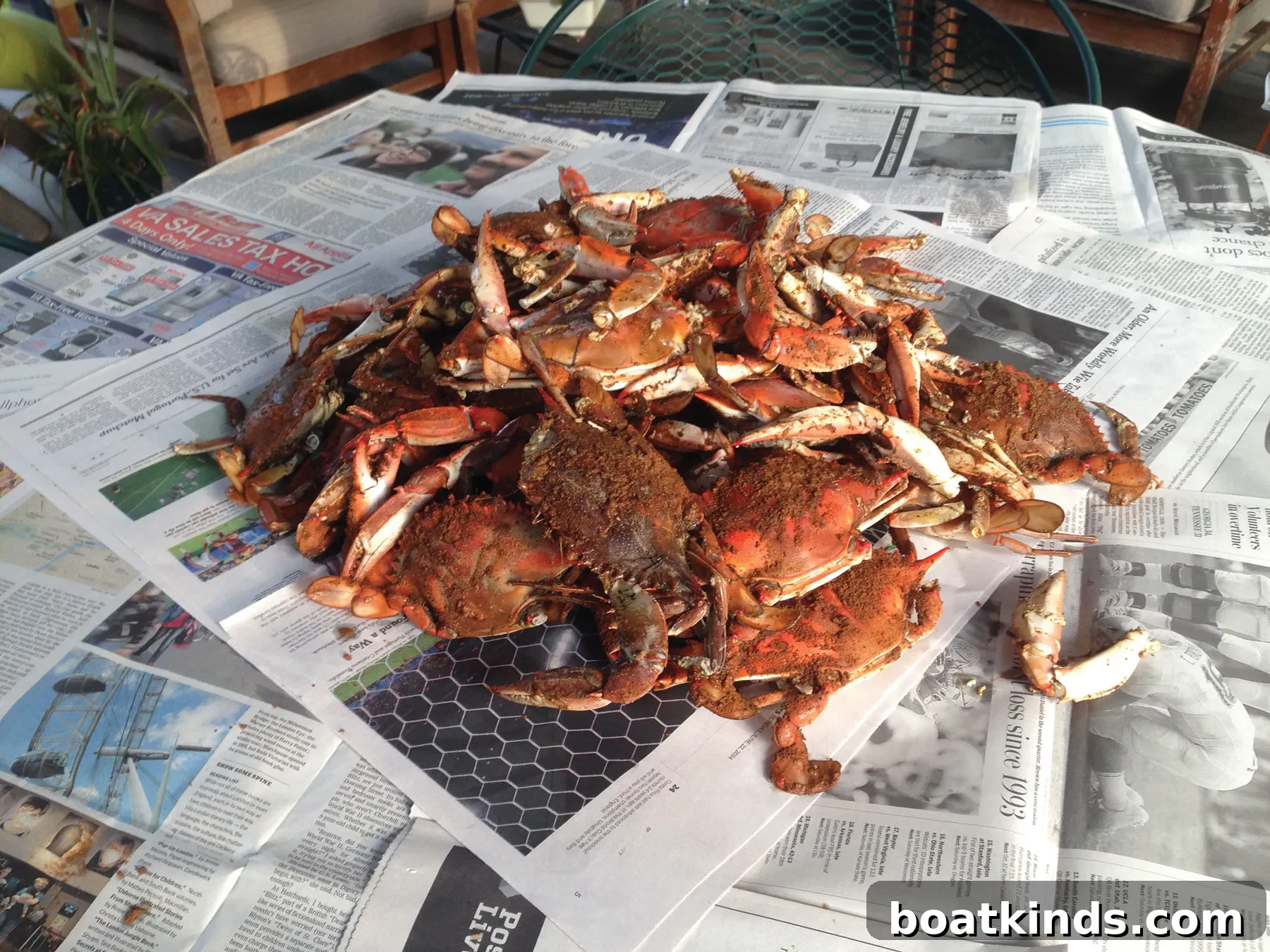
Once we had a bushel or so, the cooking ritual began. My dad was always the master of ceremonies, stacking the steamed crabs into the steamer and showering them with Old Bay seasoning while trying to avoid nips. We’d spread newspapers across the patio table, pile on the steaming crabs, and let friends and neighbors join as the sun went down. Picking crabs can be tedious for some, but for us it was a convivial, almost meditative ritual—fingers stained with seasoning, laughter, and the quiet satisfaction of a job well done. Often we continued long after guests had left, only stopping when it was time to go inside.
Blue Crabs Beyond Chesapeake Bay
You don’t need to live on the Chesapeake to catch and enjoy blue crabs. They thrive along a wide stretch of the Atlantic and Gulf coasts—from Massachusetts down toward the Mexican border—and can be pursued in many kinds of inshore waters. A simple online search for “how to catch blue crabs” will point you in the right direction, but hands-on practice, local knowledge, and a little patience are what turn beginners into regular crabbers.
For me, crabbing is more than the food on the table. It’s a series of memories stitched together by smell, salt, and the steady work of a trotline. Even now, when I think of my father, I’m back on the skiff watching the baits rise and fall, thinking about the next pull of the line and the next shared dinner. That is why the blue crab means so much to Marylanders—and why it’s worth learning how to catch, cook, and pick them the right way.
This article originally appeared in the September 2020 issue.