
Goodwin Sands: The Shifting Shoal That Devours Ships
A hidden menace waits in one of the world’s busiest shipping areas—a treacherous shoal that has claimed countless vessels and lives over the centuries. Its origin remains uncertain, but its effects are undeniable: ships of all kinds have been lost, crews have perished, and wrecks continue to appear and disappear as the sand shifts.
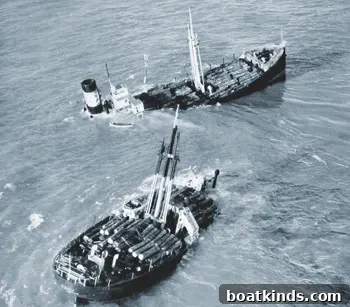
The danger lies in a narrow stretch of sea between Kent, England, and Calais on the continent. Just to the south are the Dover Straits, among the busiest shipping lanes on Earth. Those waters are already hazardous—strong tidal currents sweep between England and Europe, winds and tides generate fierce seas, and fog can suddenly reduce visibility—but traversing them has been essential for seafaring for centuries. Superimposed on these hazards is Goodwin Sands.
Goodwin Sands is a sandbank roughly ten miles long, lying about five miles off the Deal coast in Kent. “Roughly” is the operative word: it constantly changes. Storms, shifting currents and the simple nature of sand make the bank’s borders drift; channels open and close without warning. To the unaware, parts of the shoal at low tide can look like a benign, attractive beach, but as the tide returns the sand can turn into deadly quicksand, swallowing vessels and people alike.
The softness of the sand does not make the shoal any less deadly. During the Great Storm of 1703, at least 13 man-of-war ships and some 40 merchant vessels were lost on or near the sands; contemporary reports cite 2,168 lives and 708 guns lost in that event alone. Estimates suggest more than 1,000 wrecks lie in the area, and the true number is likely higher. Goodwin Sands has no preference: merchantmen, warships, sailing ships and modern motorized vessels have all been claimed.
Longstanding stories illustrate how quickly a ship can disappear. The 1,000-ton Ogle Castle reportedly sank in about an hour in the 19th century. The SS Violet is said to be the first steamship wrecked there, in 1857. Even a German U-boat once ran aground while charging its batteries; it was chased onto the sands and eventually surrendered. The submarine has reappeared from time to time as the sand shifts, only to be swallowed again—a reminder that the shoal both preserves and destroys.
Some losses seem almost eerie in their repetition. The first SS Mahratta, a Brocklebank Line vessel launched in 1891 that served as a troop ship during the Boer War, foundered on Good Friday, April 9, 1909, while steaming from Calcutta to London. Her survivors and much of her cargo were saved, but after 24 hours exposed to the sea her back gave way and she became a permanent part of the sands. The second SS Mahratta, launched in 1917 and owned by the same company, ran aground on Oct. 9, 1939, near the first wreck and likewise broke in half the following day. Salvors discovered the second ship was resting on top of the first—two tragedies stacked by the shoal’s shifting nature.
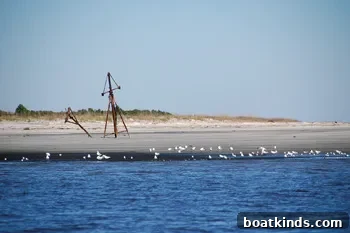
When the sand moves it can act like quicksand as water rises. Tidal ranges in the area can reach as much as 16 feet, and currents in some places reach 5 knots. Many wrecks are reported to have grounded at low tide, when the shoal can be exposed and survivors might walk ashore thinking they are safe. But as the tide returns the sand softens and the water flows back over the shoal, and both ship and people can be drawn down—not just beneath the water but beneath the sand itself.
Coastal communities have long contended with Goodwin Sands. There are countless stories of brave rescues and of salvage attempts that succeeded or failed. Lightships have been stationed to warn mariners; one was lost in a storm along with its crew. Because the shoal moves, marking it is difficult, and even skill and caution cannot eliminate the danger entirely. In the past there were accusations—occasionally leveled at coastal residents—of “wrecking,” but the sea has usually been the greater culprit.
Parts of the shoal are dry at low water, which has drawn tourists, treasure hunters, historians and researchers. For a time an occasional cricket match was held on the sands at low tide; that tradition ended in 2003. In 2006, a film crew documenting that event had to be hastily rescued when the tide turned, leaving equipment to the sea—an instructive reminder that the sands can trap the unwary in minutes.
Visitors who have walked the sands at low tide often describe them as firm and deceptively solid. Yet those who have raced an incoming tide say the “island” seems to come alive as water returns: puddles and rifts form, surfaces become mushy and sucking, and you can hear the roar of water moving through the sand. The area contains deep, water-filled depressions called “swillies,” dunes and rivulets—all features that can turn from harmless to lethal as the tide flows back in.
How Goodwin Sands formed is a matter of debate. Some legends say it was once an island owned by an Earl named Godwin, protected by sea walls that later failed; historical references and local lore point to low-lying islands long ago. Many experts, however, argue the shoal is a natural feature created by tides, storms and wave action piling loose sediment where underlying layers—such as bedrock chalk—cause accumulation. Whatever its origin, the shoal is a striking example of how coastal processes can create a powerful and persistent maritime hazard.
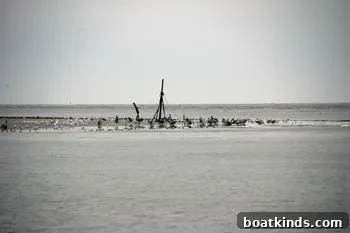
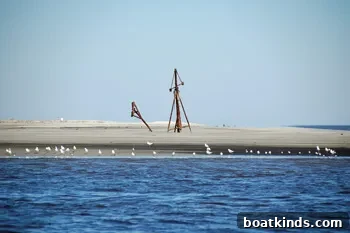
The shoal’s behavior is not unique to England. While cruising near Ponce Inlet in Florida, some mariners have watched a stranded sailboat’s bow pulpit protrude briefly above the sand; within months the hull was buried by shifting sediments. Similarly, on Jekyll Island in Georgia a mast and booms seen high on the beach were not art or a monument but the remains of a shrimp boat now buried beneath the sand. Tourists walk above these wrecks, unaware they are traversing decks and wheelhouses entombed below—until the next storm or tidal shift reveals them again.
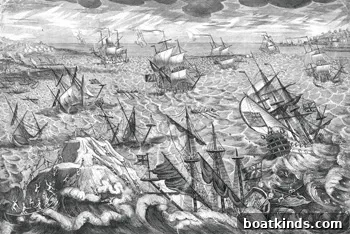
Off the U.S. East Coast, the so-called Graveyard of the Atlantic—stretching around the Outer Banks of North Carolina—tells a similar story. Cape Hatteras and Frying Pan Shoals are notorious ship killers where wrecks sometimes reappear after storms. Often a wreck revealed by shifting sand is relatively well preserved, its frames and fastenings protected by the same sediment that once smothered it. These are places where sea and land interact so forcefully that they leave little room for human error.
Goodwin Sands remains a compelling mixture of history, legend and natural power. Its shifting banks have shaped maritime life and lore around the English Channel for centuries, offering lessons in the unpredictability and potency of coastal forces. For mariners and shore communities alike, it is a reminder that the sea is always changing—and that respect, vigilance and local knowledge remain essential where sand and tides meet.
This article originally appeared in the February 2016 issue.