
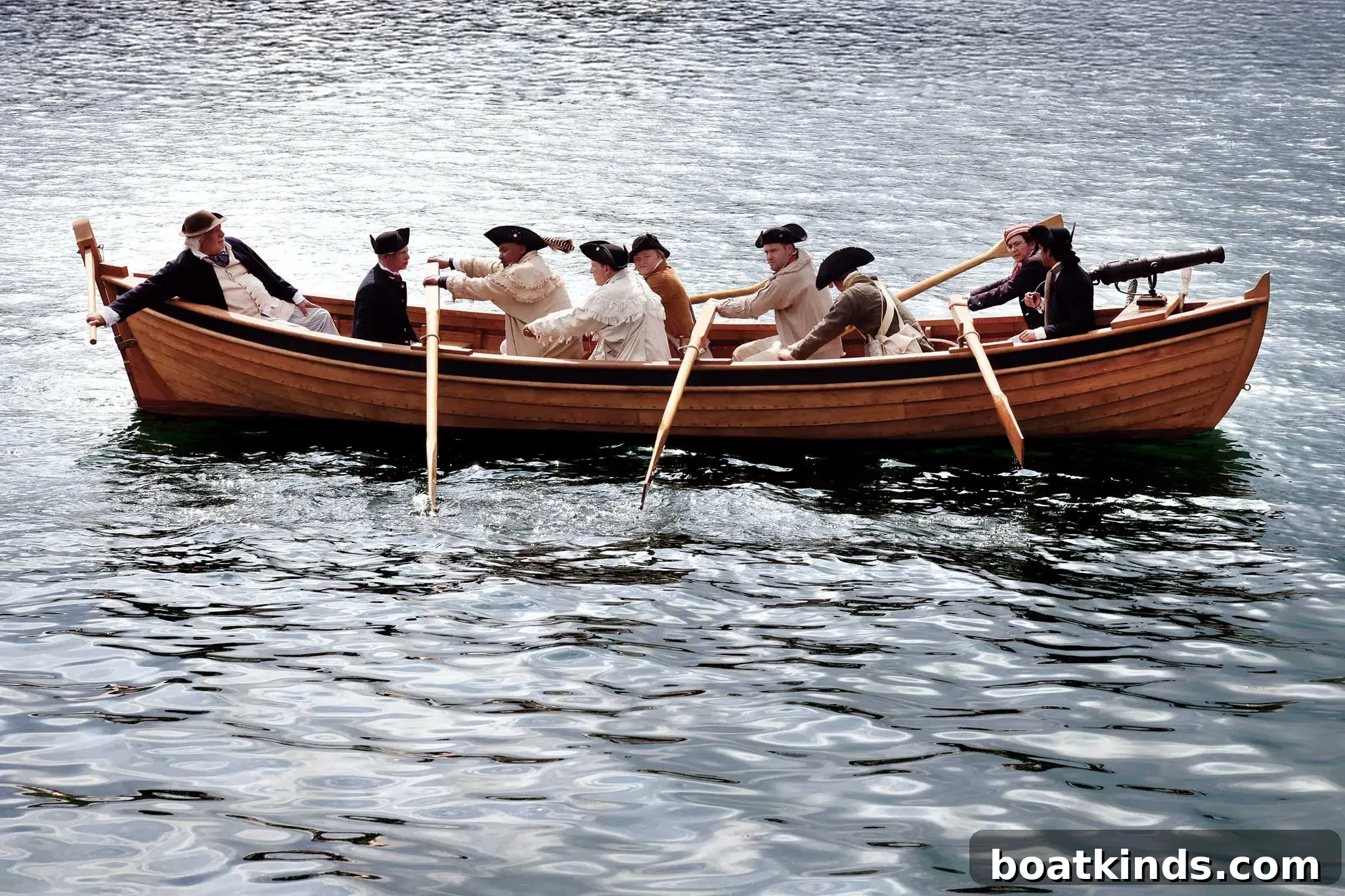
Photography by Debbie Egan-Chin
During the American Revolution, Caleb Brewster spent much of his time in whaleboats on Long Island Sound—skirmishing with British forces and, crucially, carrying secret messages between Long Island and Connecticut as part of George Washington’s Culper Spy Ring. To mark the United States’ 250th anniversary, volunteers in Port Jefferson, New York, have launched a 24-foot, 6-inch replica whaleboat named Caleb Brewster, honoring the Long Island native whose perilous crossings helped secure American independence.
After nearly three years of construction, members of the Long Island Seaport & EcoCenter (LISEC) Bayles Boat Shop took the new whaleboat out for sea trials this spring.
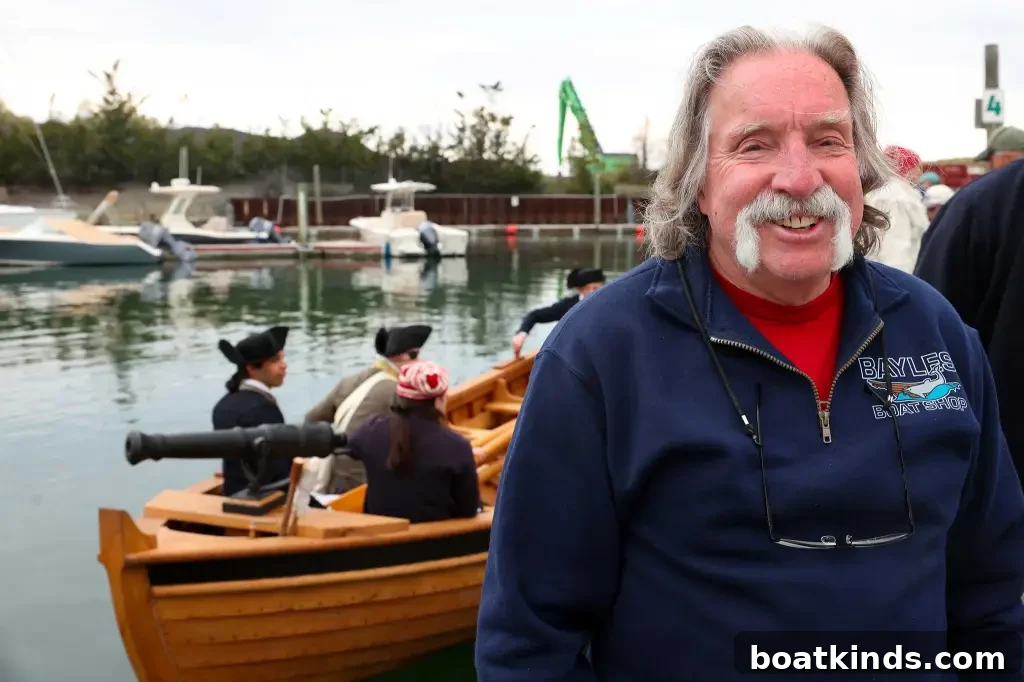
“It went very well,” said John Janicek, LISEC treasurer and project lead. He reported only expected issues for a new lapstrake boat—some water coming aboard, though less than anticipated—and initial awkwardness rowing with 16-foot oars. “Once the crew synchronized, the boat proved responsive and quick,” Janicek said. “Space is tight with five rowers and a tillerman, but she moves well.”
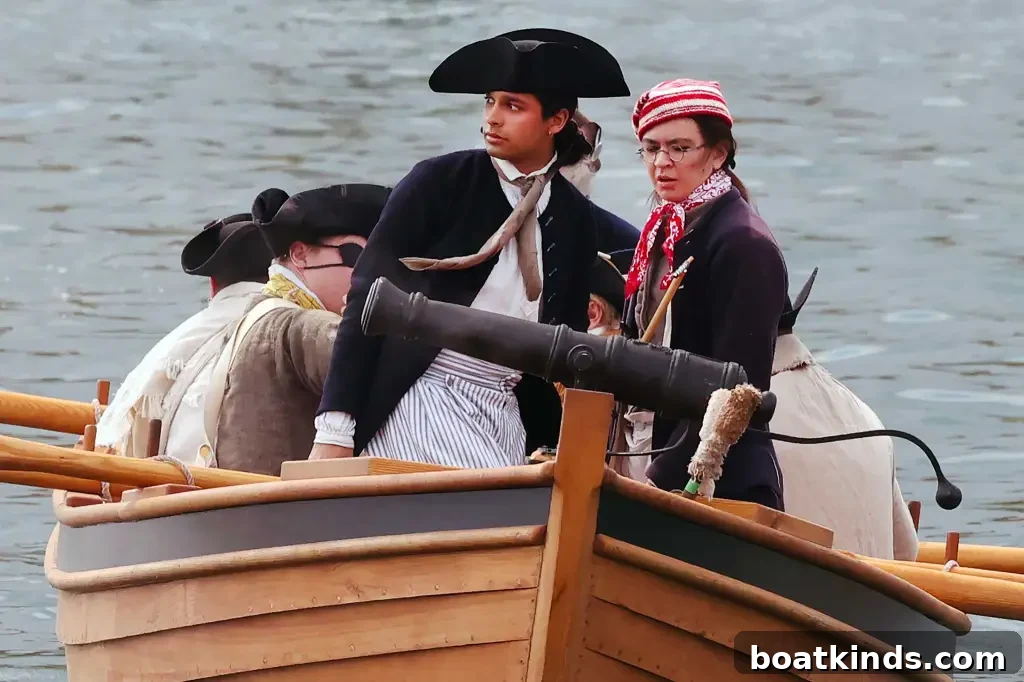
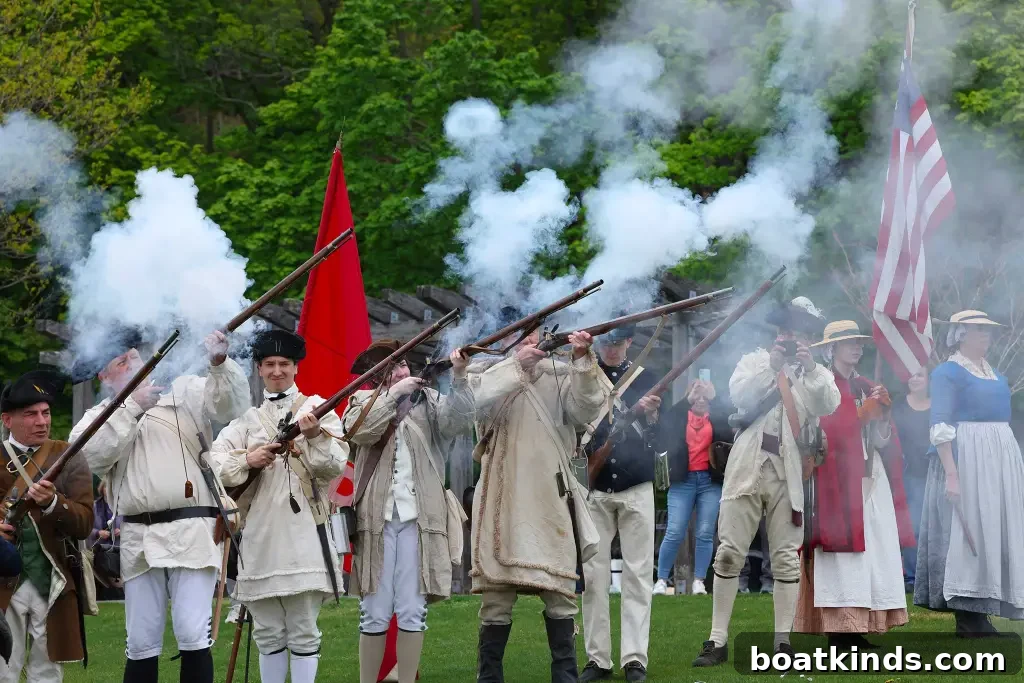
The christening was held near Bayles Boat Shop, the community woodboatbuilding and restoration workshop in the Port Jefferson Village Center. Janicek read a poem about the Caleb Brewster written by volunteer Bob Gallagher, who passed away in December, and placed a sprig of green on the bow as a good-luck symbol to ensure the vessel’s safe returns. The ceremony included a toast to past and present sailors, and Janicek broke a bottle of Madeira over the bow. A few days later the official unveiling featured reenactors from the New York 3rd Regiment rowing the whaleboat in full Colonial military dress.
The event ran smoothly overall, though there was a brief delay when the slow match intended to ignite the bow swivel cannon wouldn’t stay lit, postponing the salute by about ten minutes.
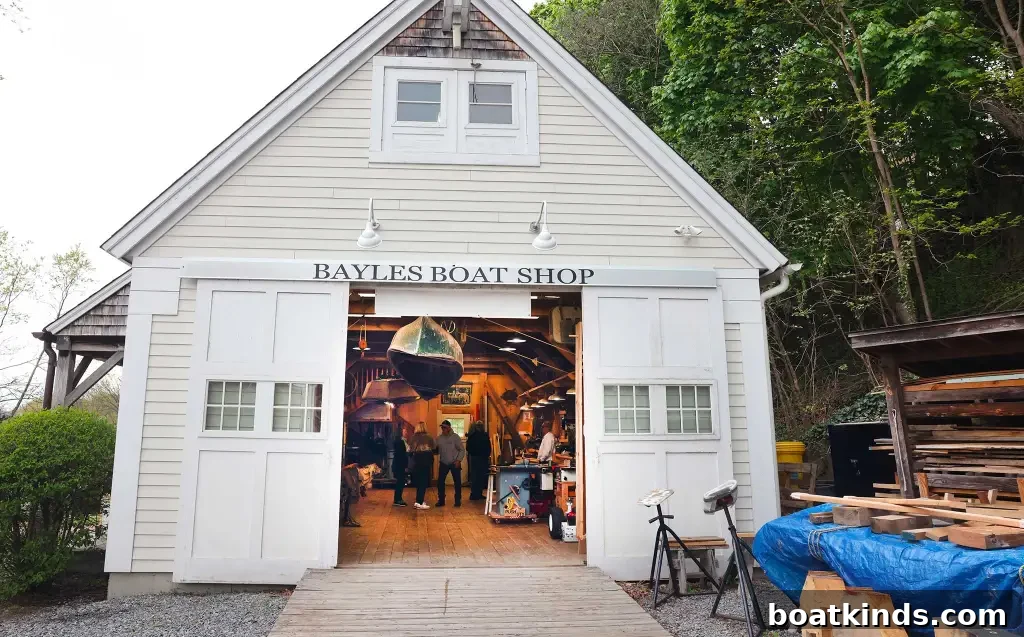
ANATOMY OF A WHALEBOAT
Whaleboats originated with Native American designs on Long Island’s South Fork by the early 1700s for offshore whale pursuit and later served on larger ships for deep-water whaling. Typically 25 to 30 feet long, these boats were light, strong, double-ended and easily rowed or sailed—qualities that made them ideal for wartime tasks. During the Revolution, both Patriots and British used whaleboats for raids, scouting, capturing prisoners and mounting surprise attacks. Many were equipped with a bow-mounted swivel cannon and used muffled oars for stealthy approaches.
“This project mattered for two reasons,” said LISEC president Len Carolan, a retired physical-education teacher from Port Jefferson. “It brought together about 30 volunteers from diverse backgrounds to learn and work together, and it preserved an important piece of Revolutionary War maritime history on Long Island Sound.”
Caleb Brewster served as the Culper Ring’s primary courier on the Sound from 1778 until the end of the war in 1783. The ring, organized by Benjamin Tallmadge, included Abraham Woodhull (Samuel Culper Sr.) and Robert Townsend (Samuel Culper Jr.). Intelligence gathered in New York and on Long Island was relayed across the Sound by Brewster to Tallmadge—making the Culper Ring one of the most effective Patriot intelligence operations of the war.
Work on the Caleb Brewster wrapped up inside LISEC’s boat shop last winter. On a cold February day—when Port Jefferson Harbor was frozen and the temperature hit 29 degrees—volunteers installed rail caps and the keelson while warming themselves around a potbelly stove fueled with wood offcuts Janicek jokingly called “our mistakes.”
The boat shop sits on the former Bayles shipyard, land that was almost turned into a village parking lot before LISEC’s founders convinced officials to preserve the harborfront as a park and community center. The village ultimately gave LISEC a portion of the property. “We had help from a timber-framing guild from Massachusetts and staged an old-fashioned barn-raising to build the shop,” Janicek said.
A donated Comet sloop hangs in the loft, under restoration for resale, and a Lightning dinghy is being refurbished outside—projects that were temporarily set aside while volunteers focused on the whaleboat. LISEC has roughly 85 members, though active builders average 20 to 30 volunteers, many of them retired.
Janicek, a retired engineer from Fairchild Republic, joined the shop about a dozen years ago after his wife learned about it. He had previously built an Adirondack guideboat and frequently rows in the harbor. Ralph Antignano, who retired from contracting four years ago, joined after friends invited him to volunteer. He helped with lofting and creating templates, noting the project preserves both Revolutionary War heritage and traditional wooden-boatbuilding skills.
Jay Lippert, a retired Fire Island National Seashore ranger who has boated all his life, made wooden cleats and described the work as hands-on craftsmanship: “We sand and plane by hand, steam planks to fit the form. It’s a blend of modern tools and old-school skills.”
THREE YEARS AND 30 VOLUNTEERS
Port Jefferson Village historian Chris Ryon proposed the whaleboat project about four years ago, and it has since become a symbol of the community—so much so that the village incorporated the boat’s image into a new local logo. Volunteers consulted with Mark Sternberg, curator at the Drowned Meadow Cottage Museum and an expert on the Culper Ring, to ensure historical accuracy.
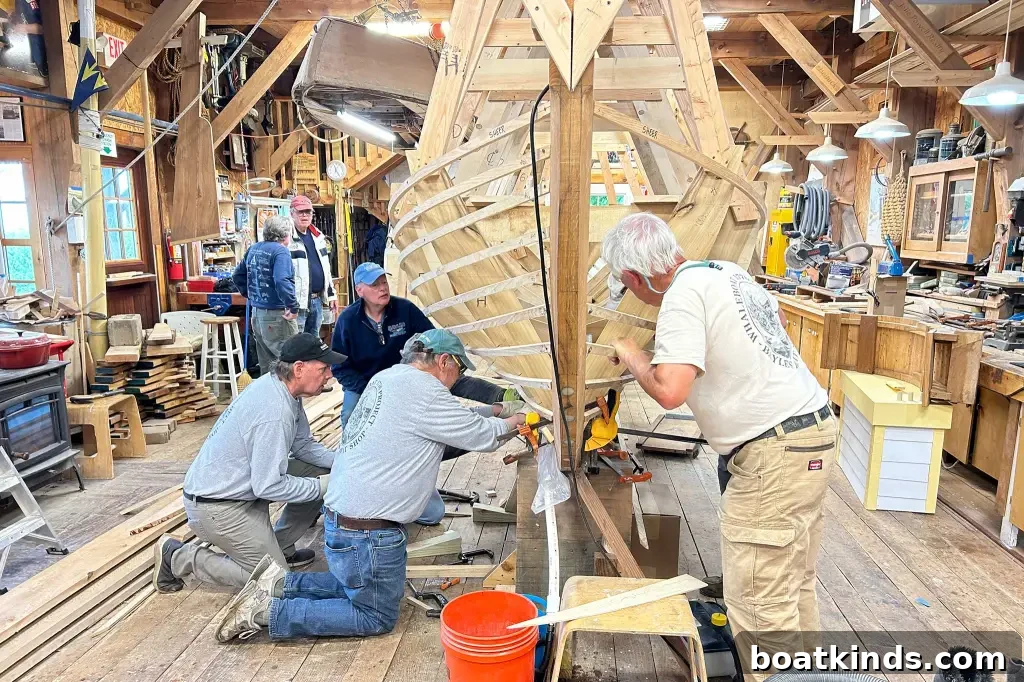
The design is based on plans by the late naval architect and historian William Baker of MIT, who also worked on the Mayflower II. Baker produced a 24-foot, 6-inch whaleboat plan for Darien, Connecticut, during the U.S. bicentennial; LISEC used that scaled design for the Port Jefferson replica. While historical whaleboats could reach 30 feet, Baker’s dimensions fit the space and resources available to the builders.
Volunteers logged an estimated 400 to 500 hours per month for nearly three years—far longer than initially projected—because the team had limited prior experience lofting and planking a boat of this size. “We expected to finish planking in three or four months; it took almost eight,” Janicek said. “We’re all volunteers and many were learning as they went.”
LISEC spent nearly $60,000 on materials, and with occasional help from a professional shipwright, the total cost rose to about $90,000. The village contributed a $5,000 seed grant and the balance came from corporate sponsors, businesses and individual donors.
All primary structural timbers are white oak sourced locally—Len Carolan’s son, who runs Terrapin Sawmill in Setauket, set aside suitable timbers. Planking used Eastern white cedar from Ned Crosby and Sons in Cape Cod; the team took roughly 700 board feet. American ash provided the thwarts and five oars, while Sitka spruce from M.L. Condon Company supplied the mast. The oars weigh about 27 pounds each, which proved a challenge for reenactors handling them during the unveiling.
Construction combined traditional techniques with modern materials: copper rivets and fasteners were set with power tools and West System epoxy was used where appropriate. Above the waterline, inside and out, the hull received a protective coating of pine tar and linseed oil—commercially sold as Salty Dog—that recreates the old-time mixture. Antifouling paint was applied to the bottom because the whaleboat will stay afloat for the boating season. The sail and rigging were made by Matt Bartells in Boothbay Harbor, Maine, to preserve an authentic appearance.
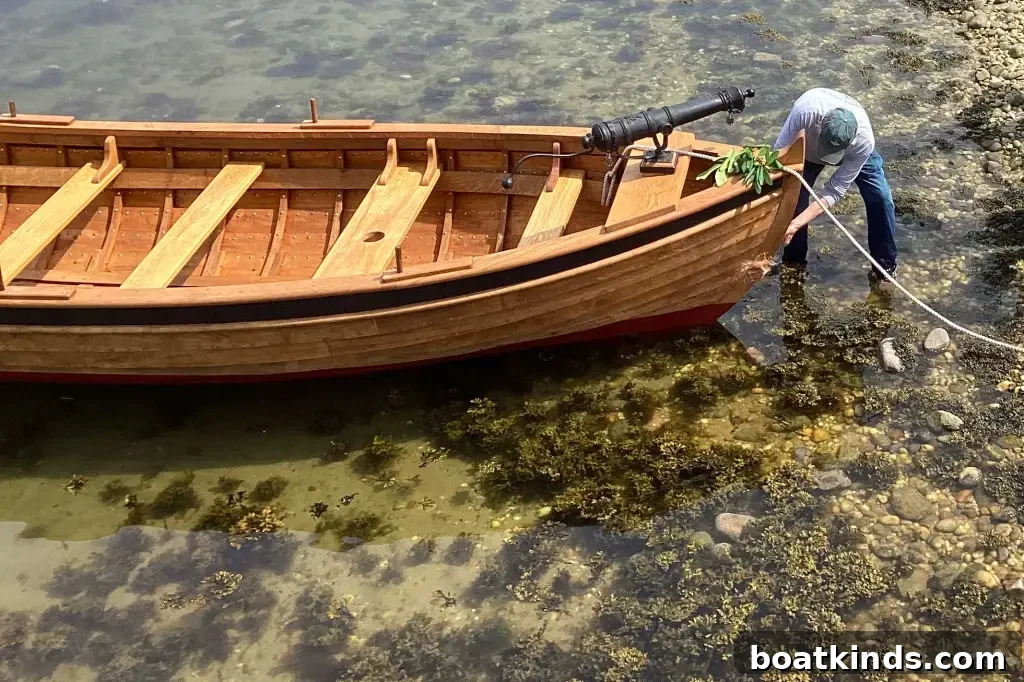
The 34-inch swivel cannon, fabricated in Ontario by Jim Hamm, cost $2,000. Janicek recalled a lighthearted moment transporting the piece across the border when a customs agent asked if they had anything to declare. “I told him we had a replica Revolutionary War muzzle-loading cannon,” Janicek said. The agent was intrigued and inspected the cannon before waving them through.
The Caleb Brewster will remain on the water for the season as a seaworthy tribute to the dangerous runs its namesake made across Long Island Sound, when delivering timely intelligence could change the course of a revolution. For the volunteers who dedicated thousands of hours to build her, the launch was a proud achievement. For Port Jefferson residents, the boat is a living symbol of local heritage and a direct link to the critical role Long Island played in winning American independence.
This article was originally published in the July 2026 issue.