
Investigation into the Sinking of the Perini Navi Bayesian off Sicily
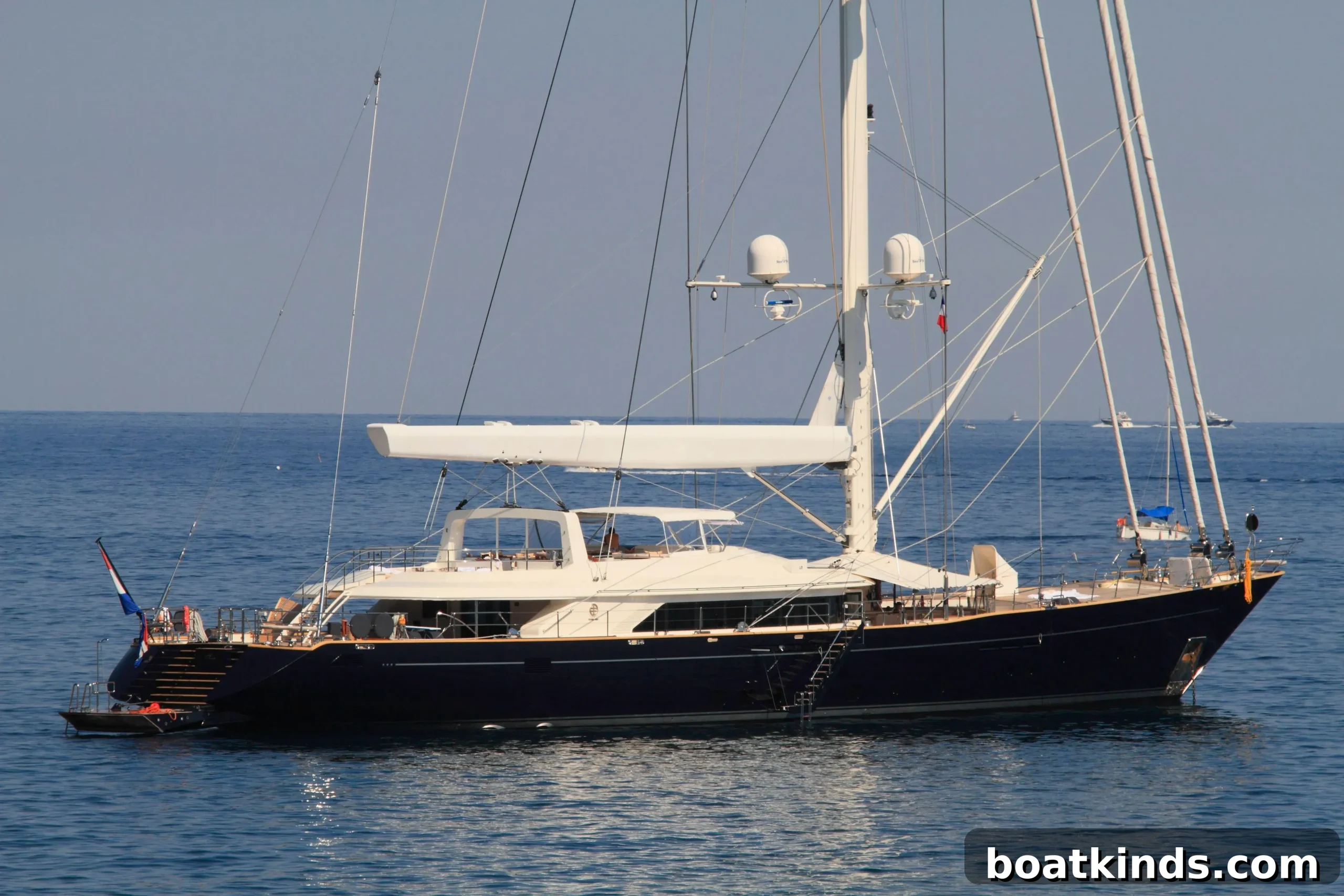
Controversy continues over the sinking of the 184-foot Perini Navi yacht Bayesian, which foundered off the coast of Sicily in August. The 2008 build from the celebrated Italian shipyard Perini Navi was an award-winning design, featuring a 237-foot mast and a lifting keel. For years the yacht had appeared robust enough to handle rough seas, which is why the disaster drew intense attention worldwide—among the dead were a British technology executive, a prominent attorney and the chairman of Morgan Stanley International.
Eyewitness accounts described sudden, violent weather that tossed debris across the pier and left survivors clinging to life rafts. A nearby vessel’s captain reported more than a dozen survivors holding onto rafts while his crew worked to avoid colliding with the stricken yacht. Those dramatic scenes focused scrutiny on why a large, well-equipped yacht seemed unable to withstand the conditions it encountered.
Was the Bayesian adequately prepared for the forecast? A yacht of that size would typically carry modern meteorological instruments and often relies on professional weather-routing services. Chris Parker of Marine Weather Center, a marine forecasting and routing service, says the loss is tragic but not unique. “There’s an old saying about the Mediterranean: it either doesn’t blow at all, or it blows really, really strong,” he notes. Localized, rapidly developing storms and violent squalls are a known hazard in the region.
Parker’s post-event analysis points to an unusually potent low-pressure system centered near Corsica. That system produced widespread, significant weather across Italy and into surrounding waters, with elevated atmospheric moisture and instability. In particular, Parker cites high precipitable water values and a CAPE index—convective available potential energy—of a little over 2,000. CAPE quantifies the potential for buoyant, convective updrafts; values in the low thousands signal a meaningful risk of strong squalls and thunderstorms, though they do not guarantee extreme events.
Another critical factor was large wind shear in the vertical profile—Parker observed wind shear exceeding 50 knots. Wind shear is the change in wind speed and/or direction with altitude; when strong, it can promote phenomena such as tornadoes, waterspouts and microbursts. Radar and sounding data suggested that winds in the mixed layer aloft reached roughly 60 knots. “There is always the potential that the maximum wind in the mixed layer will reach the surface,” Parker says, which can expose vessels to bursts of much stronger wind than surface forecasts imply.
After reviewing available observations, Parker favors the microburst hypothesis rather than a waterspout. A microburst is a strong, downward rush of air from higher altitudes that hits the surface and spreads out horizontally. Unlike a rotating waterspout, a microburst produces predominantly straight-line winds that accelerate outward from the impact point. Parker reasons that directional wind shear—rotation with height—was minimal during the event, making a tornado or waterspout less likely. The combination of vertical wind shear and moderate instability, however, supports the possibility of an intense, localized downdraft.
When high-velocity air descends and strikes the surface it cannot continue downward, so it fanned out as powerful horizontal gusts. Those gusts can arrive with little warning and produce sudden, extreme wind loads on structures and vessels. Even with CAPE just above 2,000—enough to raise concern but not always a clear predictor of catastrophic microbursts—conditions were ripe for severe, localized convection that would challenge any vessel’s seamanship and systems.

Parker says that a careful forecast and readiness plan likely would have reduced risk. He suggests that, with the data available, prudent advice would have been to prepare for 40‑knot squalls and scattered thunderstorms. Preparing for that level of wind and seas—reefing sails, reducing topside windage, securing gear and moving to safer anchorage or port—may not have prevented a freak microburst, but it would have increased the crew’s margin for survival and control.
The broader lesson for captains and owners is to respect rapidly changing conditions and the Mediterranean’s reputation for sudden extremes. Advanced forecasting and routing services add value, but crews must act on guidance and maintain constant vigilance. Identifying risk factors—high moisture, elevated CAPE, and significant wind shear—and responding conservatively remain core practices for safe navigation.
The sinking of the Bayesian is being examined from many angles: structural questions, seamanship, and the meteorological circumstances that combined to produce a deadly event. While it captured public attention because of the yacht’s size and the prominence of some victims, the incident underlines a universal truth for mariners: weather can escalate quickly, and preparedness saves lives.
This article was originally published in the November 2024 issue.