
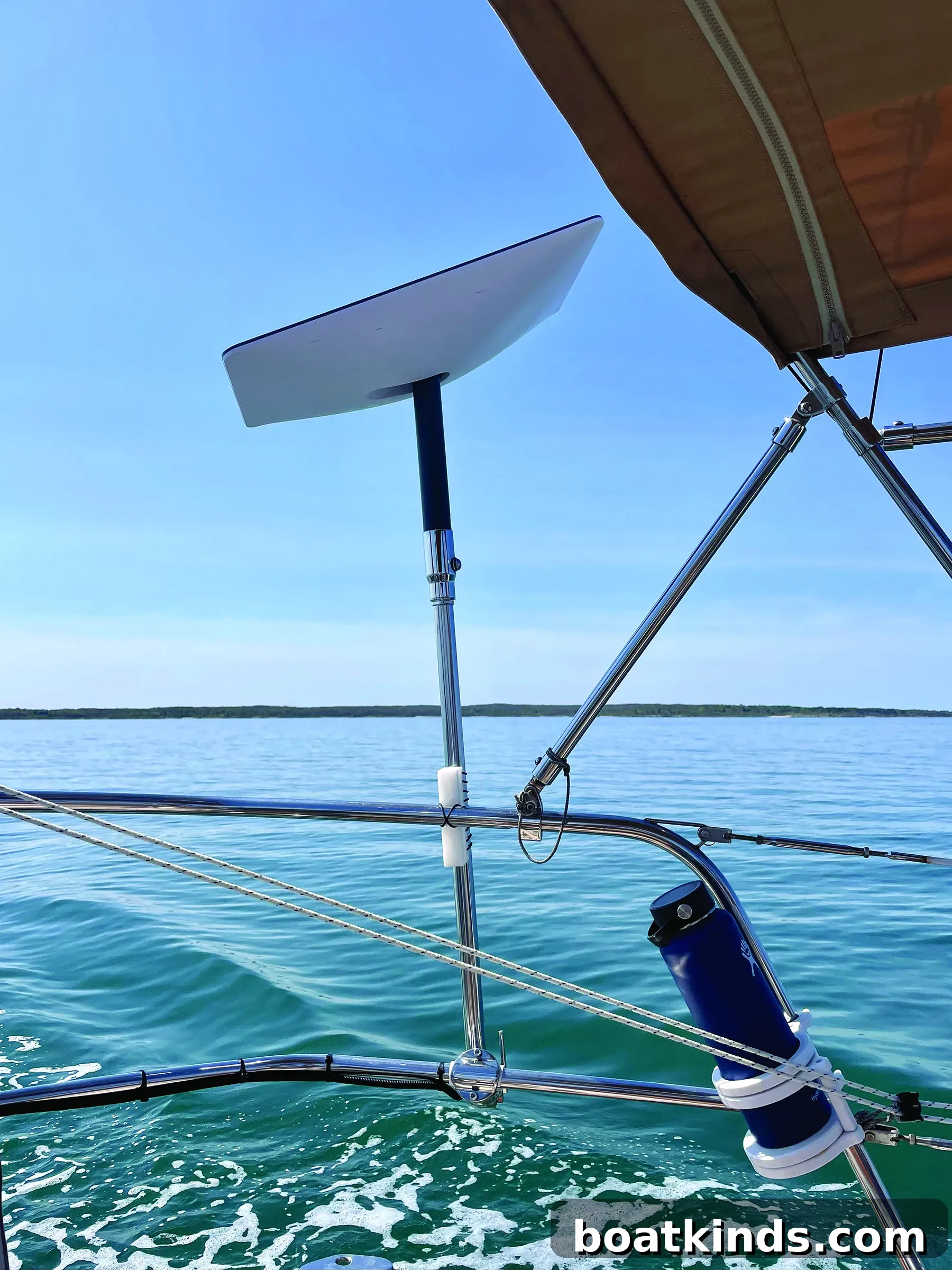
A shadow has been cast over Starlink antennas in the cruising community. Many boatowners discovered they could use SpaceX’s RV Starlink plan—priced around $150 per month—instead of the advertised maritime plan that carries a much higher price tag (reports have cited marine options near $5,000 per month). The RV kit, with its smaller, cheaper antenna, wasn’t meant for offshore use, and running it from a boat technically violated the service terms. It was only a matter of time before Starlink took notice and began enforcing restrictions.
When Starlink did respond, their action brought relief to many sailors. For a moderate increase in subscription fees, owners may now continue to use the equipment they already have across land and sea. That change means many cruisers can keep the antenna they bought without immediately switching to the costly maritime package.
My wife Alex and I live aboard our 36-foot Morris Justine and are on a multiyear cruise. Until recently we relied on cellular data where available and an Iridium GO! satellite unit for basic connectivity and weather information when beyond cell range. That approach worked, but had two major drawbacks: international phone service was expensive, and we often had no internet at all outside cell coverage.
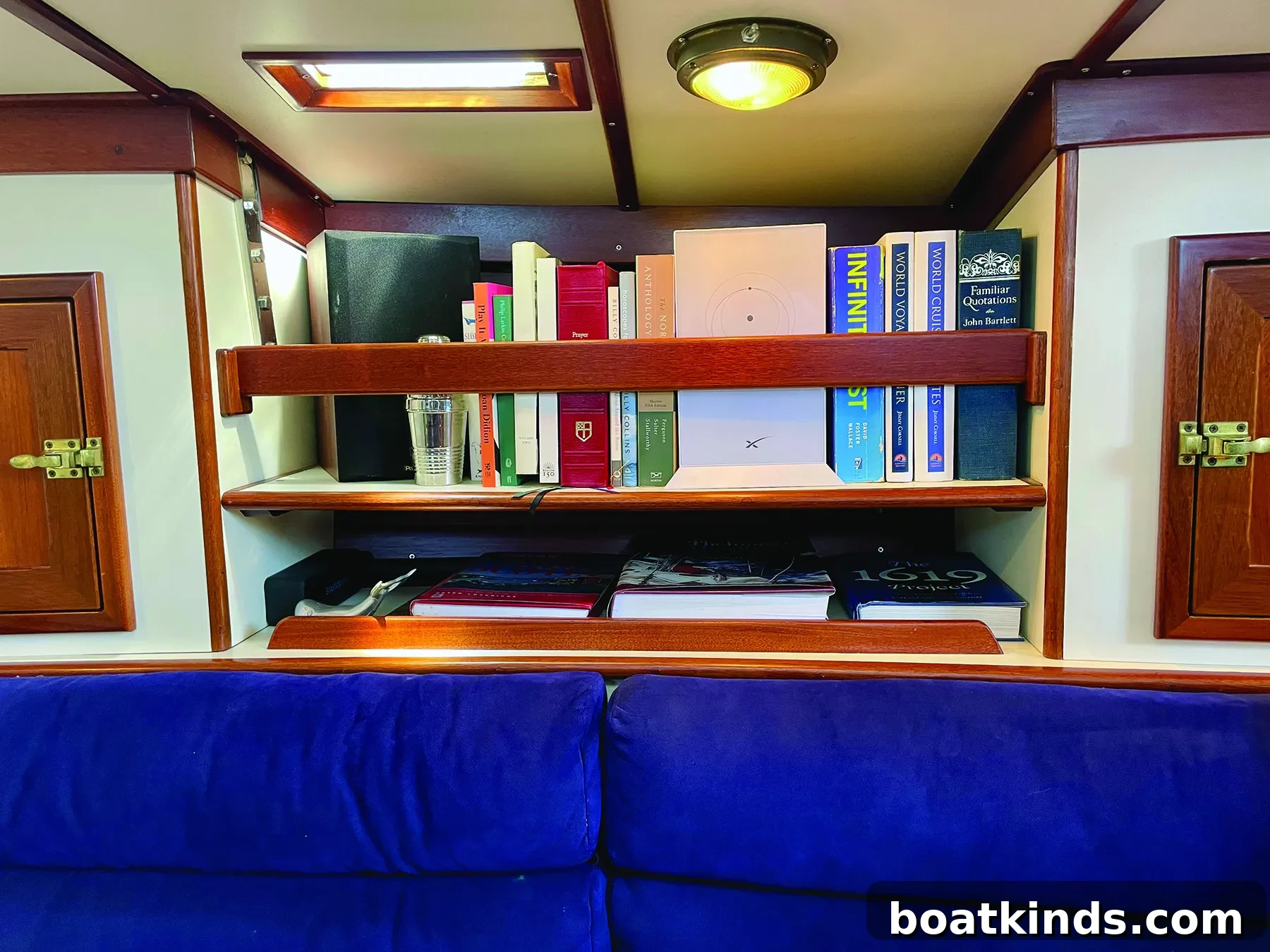
Starlink promised to solve both problems, so earlier this year we installed the system on our boat. For roughly the same cost as international service for our phones, we now enjoy high-speed internet much of the time. The package isn’t flawless—connections occasionally drop, and the power draw is substantial—but overall the experience has been impressive and transformational for life at sea.
Physically, the system uses a belowdecks router connected by a single cable to an abovedecks antenna. Devices aboard connect wirelessly to the router, and Starlink is managed from a smartphone app. The so-called “Dishy McFlatface” antenna is available in two main sizes. The smaller antenna (about 12 by 20 inches) has a lower hardware cost—roughly $600—and consumes approximately 50–75 watts. The larger model (about 20 by 22 inches) raises hardware cost to around $2,500 and draws roughly 110–150 watts. U.S. service pricing varies by plan and region; at the time of writing, unlimited service in the U.S. runs about $250 per month regardless of antenna size.
Installation Tips
The RV/household hardware can be adapted to a boat, but it often requires practical modifications and a willingness to tinker. The cruising community has shared many inventive solutions to make Starlink usable offshore. If you’re comfortable with hands-on projects, several straightforward adjustments can improve performance and reliability aboard a vessel.
Power: Avoiding DC–AC–DC Losses
Starlink is designed to plug into AC power, so most boats use an inverter to feed mains power from the house battery bank. The system then internally converts that AC back to 48V DC to run the antenna. That double conversion is inefficient and increases overall power consumption. Many cruisers have rewired their units to run directly from 12V or 24V DC battery banks to reduce losses. Those changes usually require cutting into the unit and adding parts, which voids the warranty, but the result is lower continuous draw and better integration with onboard power systems.
Cable and Connector Issues
The cable between antenna and router uses a proprietary, bulky plug that’s awkward to pass through deck or bulkhead openings. A common approach is to cut the connector off one end, run the cable through the hull, and then reattach or splice the connector afterward. Again, this eliminates warranty coverage but provides a neater, watertight installation and avoids large feeder holes.
Mounting on a Boat
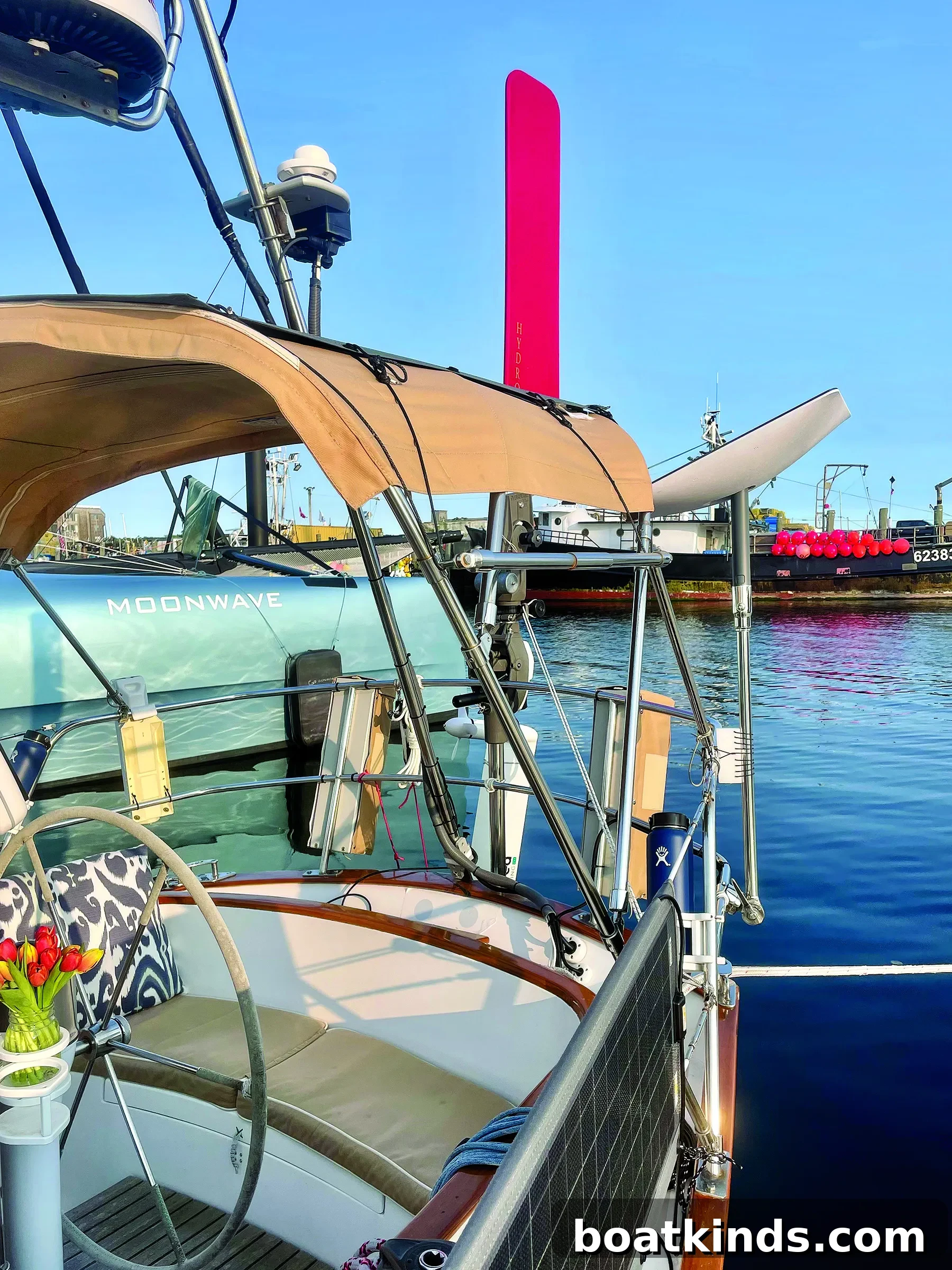
No Starlink-supplied mounts are designed for marine use, and purpose-built marine mounts are still limited. Many cruisers adapt fishing-rod holders or custom brackets to secure the antenna, though these solutions vary in robustness and aesthetics. On our boat we improvised a mount on the pushpit, lashed in a small stand-off block and positioned Dishy just aft of the Bimini. It’s not pretty, but it’s secure and functional. Over time many owners refine their mounts or buy marine-specific parts as they become available.
Motors and Orientation
Both antenna sizes include internal motors that orient the dish toward satellites. The larger antenna can be purchased without motors and set to a fixed, upward-facing position. Many sailors find the non-motorized “straight up” orientation works well for the smaller antenna too, especially as the satellite constellation grows. Motors were originally intended mainly for initial setup on fixed homes; frequent boat motion can confuse automatic alignment and interrupt service. Some cruisers disable the motors to avoid constant reorientation—an invasive modification that involves drilling and internal access to unplug a motor lead. This voids the warranty and triggers app warnings but can reduce failure points and lower windage.
Performance, Cost and Capacity
Starlink delivers impressive speeds where network capacity allows, but congestion is already emerging as more users adopt the service on land and at sea. To manage load, Starlink offers priority and standard tiers. Currently a small allotment of priority data (about 50MB) may be included; after that, users fall back to standard service where speeds are “best available.” Continued satellite launches should alleviate some congestion, but there is no guarantee how performance tiers and pricing will evolve. Sailors may have an advantage when cruising in very remote areas with less local demand, but heavy usage zones could see noticeable slowdowns.
Durability at Sea
Whether the small, motorized antenna can tolerate long-term marine exposure remains uncertain. The large, flat motorless antenna is the only Starlink model explicitly approved for in-motion maritime use, but its higher cost, greater power draw, and larger footprint make it impractical for many boats. Until a compact, rugged, DC-powered marine antenna becomes widely available, prudent seamanship suggests removing or stowing the dish before severe weather and lowering it before fitting any protective covers.
Starlink is evolving rapidly. We keep our Iridium GO! as a reliable backup for critical communications, while enjoying the benefits of high-bandwidth internet for navigation, weather, and media. With thousands more Starlink satellites planned—estimates have mentioned a full constellation in the tens of thousands—the service will keep changing the way cruisers connect, though some side effects, like increased skyglow, are already affecting astronomers and stargazers.
This article was originally published in the February 2024 issue.