
How Inuit Knowledge Led to the Discovery of HMS Terror
Listening to local knowledge and applying unconventional thinking is how diver and researcher Adrian Schimnowski and his team located HMS Terror, one of the two ships lost with all 129 crew members while searching for a Northwest Passage in 1848. The disappearance of both ships, the deaths of everyone on board and later evidence of desperate survival measures made the Franklin Expedition one of the most enduring mysteries in Arctic exploration history.
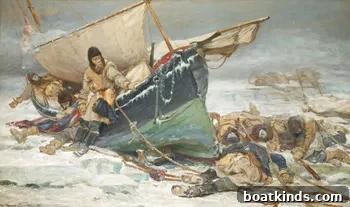
The search had concentrated for four seasons on waters west of King William Island, but the three-masted Terror — a sturdily built vessel with a double-planked hull, a 20-horsepower steam engine and a steel-sheathed bow — remained elusive. Schimnowski decided to change course, guided not by conventional assumptions but by the memories and oral traditions of the Inuit communities around King William Island. Their stories described people who had looked west across what they call Terror Bay at sunset and seen the silhouette of a sailing ship.
One important lead came from a crew member, Sammy Kogvit of Gjoa Haven. Years earlier, while fishing in Terror Bay, Kogvit and a friend spotted something protruding from the ice: a mast. Kogvit photographed it, but the camera was later lost, and his friend tragically drowned in a snowmobile accident. Because Inuit traditionally avoid turning oral reports into firm claims without corroboration, Kogvit kept quiet about the sighting until he joined the research vessel Martin Bergmann and met Schimnowski, who took the tip seriously.
Parks Canada had already assigned the Martin Bergmann, operated by the Arctic Research Foundation, to search Erebus Bay. Archaeologists believed HMS Erebus, the expedition flagship, might have drifted there after becoming trapped north of King William Island in 1846. Acting on Kogvit’s recollection and Inuit oral history, Schimnowski diverted to Terror Bay on the island’s south side. His reasoning: Inuit place great weight on landscape markers. In a treeless environment, every reliable landmark becomes a navigational memory handed down through generations.
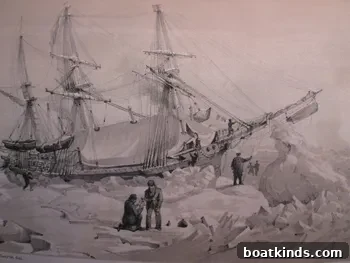
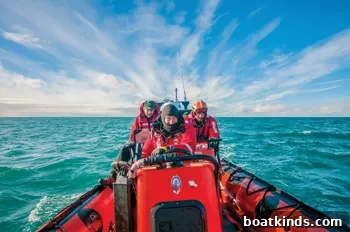
On Sept. 3, using side-scan sonar from a small 16-foot aluminum launch, the Bergmann crew surveyed Terror Bay for two hours without result. They were tired and hungry and nearly called off the search for the season. As they hauled the launch back on board and repositioned the research vessel about 1,300 feet west of its original track, they ran a depth-sounder to map a safer channel. The equipment scanned a 30- to 40-foot swath — and the vessel passed directly over the wreck.
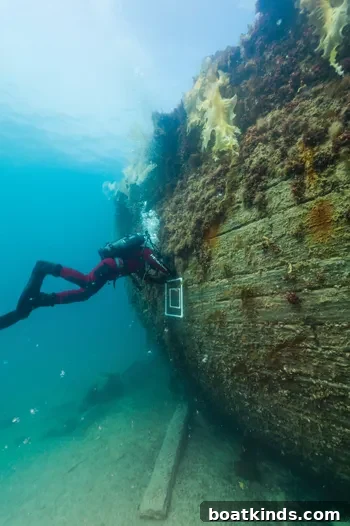
There, resting level on the seabed in roughly 80 feet of water, lay HMS Terror, almost perfectly intact. The ship’s position opens new possibilities about the expedition’s final days. It suggests the crew may have refloated one or both vessels and sailed them south after being immobilized in ice for at least two years.
The Franklin Expedition endured severe Arctic conditions: years with little or no summer thaw, prolonged exposure to storms, and relentless pack ice. Schimnowski, who grew up in Churchill on Hudson Bay and is familiar with extreme northern weather through his father’s work as a meteorologist, notes that storms in those latitudes can bring winds over 140 knots and waves reaching 40 feet. In such an environment, survival depends on intimate knowledge of the surroundings and adapting to conditions.
The surprisingly good state of preservation of the Terror suggests several possible scenarios. The crew may have anchored and secured the vessel after losing many men to exposure and starvation, they may have prepared to scuttle her to conserve resources, or they may have consolidated survivors onto HMS Erebus and sailed south before ultimately abandoning ship.
Earlier, in September 2015, Parks Canada’s research vessel Investigator discovered HMS Erebus in Queen Maud Gulf, some 62 miles south of the Terror site. The Erebus lay in about 36 feet of water and had been stripped of provisions and most usable gear, as if the crew had left with the intention of traveling overland. Historians believe the men were attempting to reach Chantrey Inlet and the Back River route toward Hudson’s Bay Company trading posts on the mainland.
The discoveries of both wrecks result from years of intensive Parks Canada-led expeditions involving sonar mapping and remotely operated vehicle surveys across hundreds of square kilometers of Arctic seabed. These modern efforts complement a long history of searches that began soon after the ships vanished. Between 1848 and 1854, more than 30 official searches were launched, including a dozen major expeditions in 1850 alone.
The first clear physical evidence of the expedition’s fate came in 1859 when Lt. William Hobson of the steam yacht Fox, chartered by Lady Jane Franklin, found a handwritten message placed beneath a pile of stones at Victory Point on King William Island. The note reported that both ships had become trapped in ice north of the island in late 1846 and remained stuck through two winters. It recorded the death of Sir John Franklin on June 11, 1847, and stated that on April 22, 1848, 105 survivors had abandoned ship and set out on foot down the west side of the island.
None of those men survived. Between 1859 and 1949, searchers recovered the skeletal remains of at least 30 men on southern and western King William Island and on the nearby mainland. Many of these finds were surface discoveries rather than formal burials, underscoring the harsh and chaotic nature of the final days.
Oral accounts passed to early searchers by Inuit included reports of cannibalism among the desperate crew. Subsequent archaeological and scientific analyses have supported these accounts: skeletal remains exhibit knife marks consistent with disarticulation, and some bones show signs of being broken and “pot polished,” likely from boiling to extract marrow. Research by archaeologist and skeletal biologist Simon Mays has been central in reassessing these remains and their implications.
Earlier theories blamed scurvy, tuberculosis or lead poisoning from tinned provisions, but skeletal analyses indicate disease levels among Franklin’s men were comparable to those of other contemporary Arctic expeditions. The story is therefore complex: a combination of environmental hardship, diminishing supplies and deteriorating physical condition appears to have driven the crew to extreme measures.
The ships themselves were robustly constructed for polar service. Both the Erebus and the Terror had been converted from Royal Navy bomb vessels, with heavy framing to withstand a mortar’s recoil and reinforced for Arctic voyages. Their hulls were double-planked and fitted with steam engines and steel-sheathed bows; they carried triple-strength sails. Both had well-established polar service histories prior to the 1845 expedition.
Sir John Franklin was an experienced Arctic explorer, and his second-in-command, Captain Francis Crozier, commanded HMS Terror. Crozier had captained the Terror during James Clark Ross’s Antarctic expedition and would likely have taken command after Franklin’s death. Schimnowski emphasizes Crozier’s reputation as a respected and capable leader and suggests the crew may have attempted more than a simple seaside abandonment of the ships.
As teams plan further dives and surveys of both wrecks, researchers hope to recover artifacts or documents that clarify the decisions made by the expedition’s leaders and the final movements of the crew. Schimnowski is clear about the significance: whatever is found next has the potential to reshape our understanding of the Franklin Expedition and to rewrite a chapter of Arctic history.
This article originally appeared in the February 2017 issue.