
Steamboat Excursions on the Thames: Leisure and Travel in the 1890s
A century ago the steamboat was everywhere — a hardworking presence in harbors, a freight carrier on the high seas, an essential passenger vessel and an instrument of exploration and progress.
But the steamboat was also a vehicle for pleasure. This photograph, taken in the 1890s on the Thames River near New London, Connecticut, captures the recreational side of steam navigation: a crowded dock, passengers dressed in their holiday finest, and a sense of collective anticipation for a day on the water.
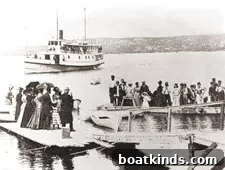
The parasols, white summer dresses and Sunday hats — even the children dressed up for the occasion — identify this as a leisure outing, likely scheduled for a weekend or holiday. The dock is heavily laden with people and belongings, suggesting the popularity of the steamer excursion, a seasonal ritual that stood alongside other summer traditions like ice‑cream socials and picnics.
Excursion steamers were a familiar sight from the Chesapeake Bay up the Eastern Seaboard and across the Great Lakes to San Francisco Bay. In the 1890s, day and overnight trips “upon the salt water” grew increasingly common as summer travel expanded. For many, a steamer trip offered a refreshing alternative to travel by horse and buggy along dusty roads, providing comfort, scenic variety and the company of friends and neighbors.
The larger excursion steamers were impressive vessels: luxurious, often exceeding 250 feet in length, with evocative names that spoke to pride and performance. Historical accounts from the era mention ships like Providence, noted for its opulence; Pilgrim, called the “Iron Monarch of the Sound”; and the speedy Yale, famed for reaching 24 knots. These flagship boats attracted crowds and gave coastal towns a sense of civic and commercial vitality.
Equally important, though, were the smaller country steamers, like the Julia pictured here. These workaday boats served local communities, linking towns, villages and seasonal resorts. They ferried families, business groups and social clubs to celebrations ranging from Independence Day festivities and ethnic holidays to weddings and community outings. For many passengers, the appeal lay not only in the destination but in the experience itself — the leisurely pacing of the voyage, the fresh sea or river air, and the continuous panorama of shoreline scenery.
Riders on these steamers often described the trip in evocative terms: a chance to enjoy “the stately white mansions set among the trees,” to watch small harbors and villages glide by, or to see church spires and treelines slip past as the boat moved steadily along. Excursions created opportunities for socializing, for observing the landscape, and for reconnecting with friends and family in a relaxed setting that felt removed from everyday chores.
The popularity of excursion steamers also reflected broader social and economic changes of the late 19th century. Improved steam technology, expanding rail connections, and growing disposable income for urban and rural families combined to make leisure travel more accessible. Local lines and larger coastal operators alike scheduled regular outings during the warm months, and communities planned events around steamer timetables.
Although the heyday of the excursion steamer was tied to a particular era of transport and social life, the images and memories it left behind continue to evoke the rhythm of a time when travel could be both practical and celebratory. Small vessels like the Julia carried more than passengers; they carried a seasonal culture of recreation and a shared appreciation for the waterways that connected American towns and cities.
This article originally appeared in the April 2010 issue.