
National Coast Guard Museum in New London — Exhibits, Funding, and Visitor Experience
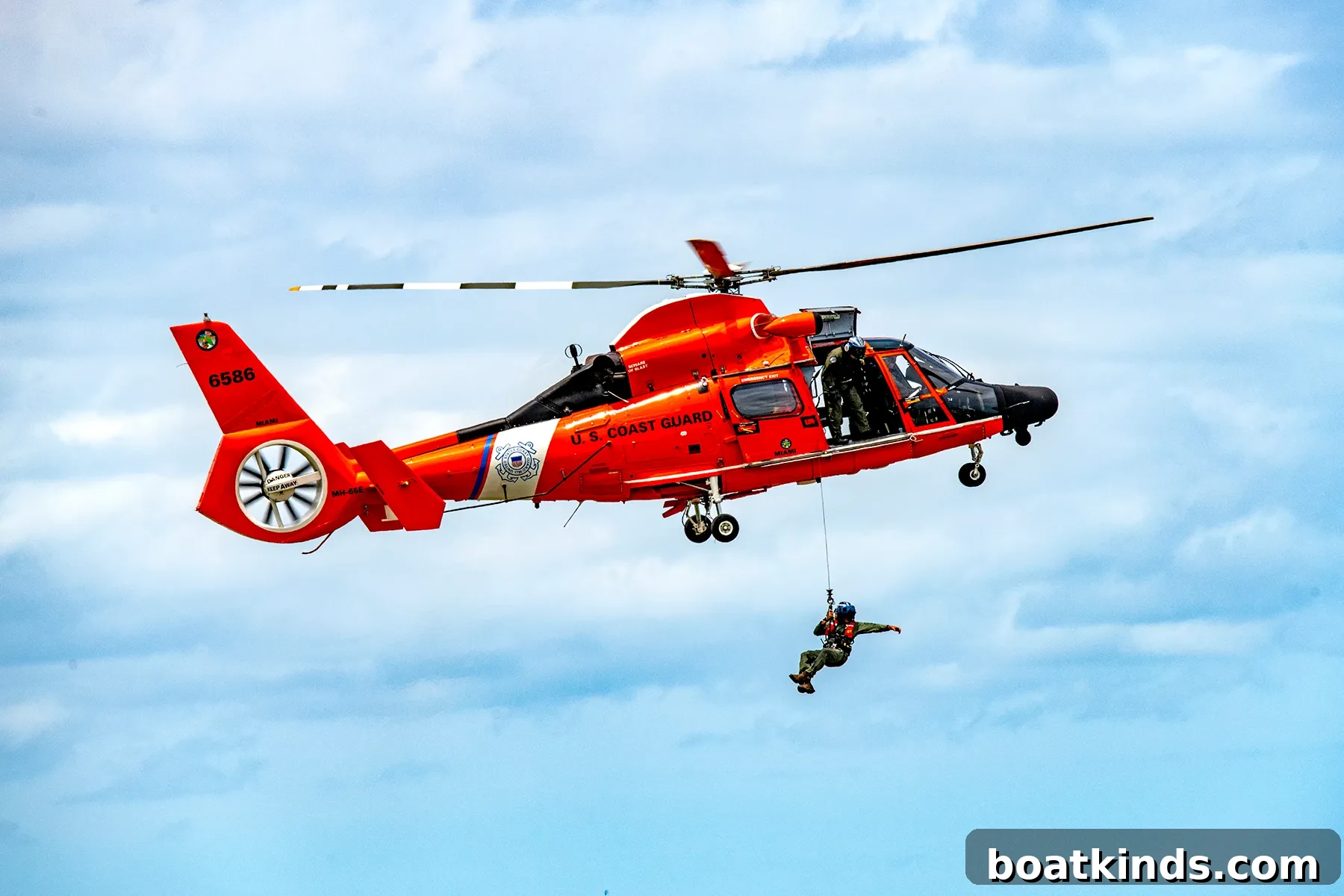
How many lives could a single line-throwing device save? In the late 19th century, rescuers on shore fired the Lyle gun, a line-throwing weapon developed by military officer David Lyle, to deliver a braided, waterproof line to ships in distress. The recoil could throw the gun back six feet, while the line reached nearly the length of six football fields. Once the line was secured, crews sent a “life car” along it to carry survivors ashore — a low-tech, high-impact rescue method that saved many lives before modern search-and-rescue tools existed.
“The specificity that the Coast Guard has to locate you by GPS, put a helicopter over your boat and pluck you off the deck—that’s certainly hard to do, but it’s a lot easier than shooting a Lyle gun from the shore,” says Drew Forster, director of communications and public relations for the National Coast Guard Museum Association.
Groundbreaking and Site
Groundbreaking for the National Coast Guard Museum is scheduled to begin this summer in New London, Connecticut, after the project received federal support. The waterfront museum will occupy roughly 80,000 square feet and serve as the home port for Eagle, “America’s Tall Ship,” which the Coast Guard uses for training. The city of New London is expected to operate the nearby pier and offer transient dockage for visiting boaters.
Fundraising Progress and Financial Plan
Volunteers and a permanent professional staff have been working for years on design, permitting and fundraising for the museum. To date the association has raised $31 million — a record level of private philanthropic support for a Coast Guard-focused project, according to Forster. But the full project cost is estimated at $150 million. Of that, approximately $100 million is needed for the museum building itself, $30 million is designated for exhibits, and $20 million will fund a pedestrian bridge linking the museum and waterfront to the nearby train station and downtown area. State and federal sources are slated to cover the exhibit and bridge portions.
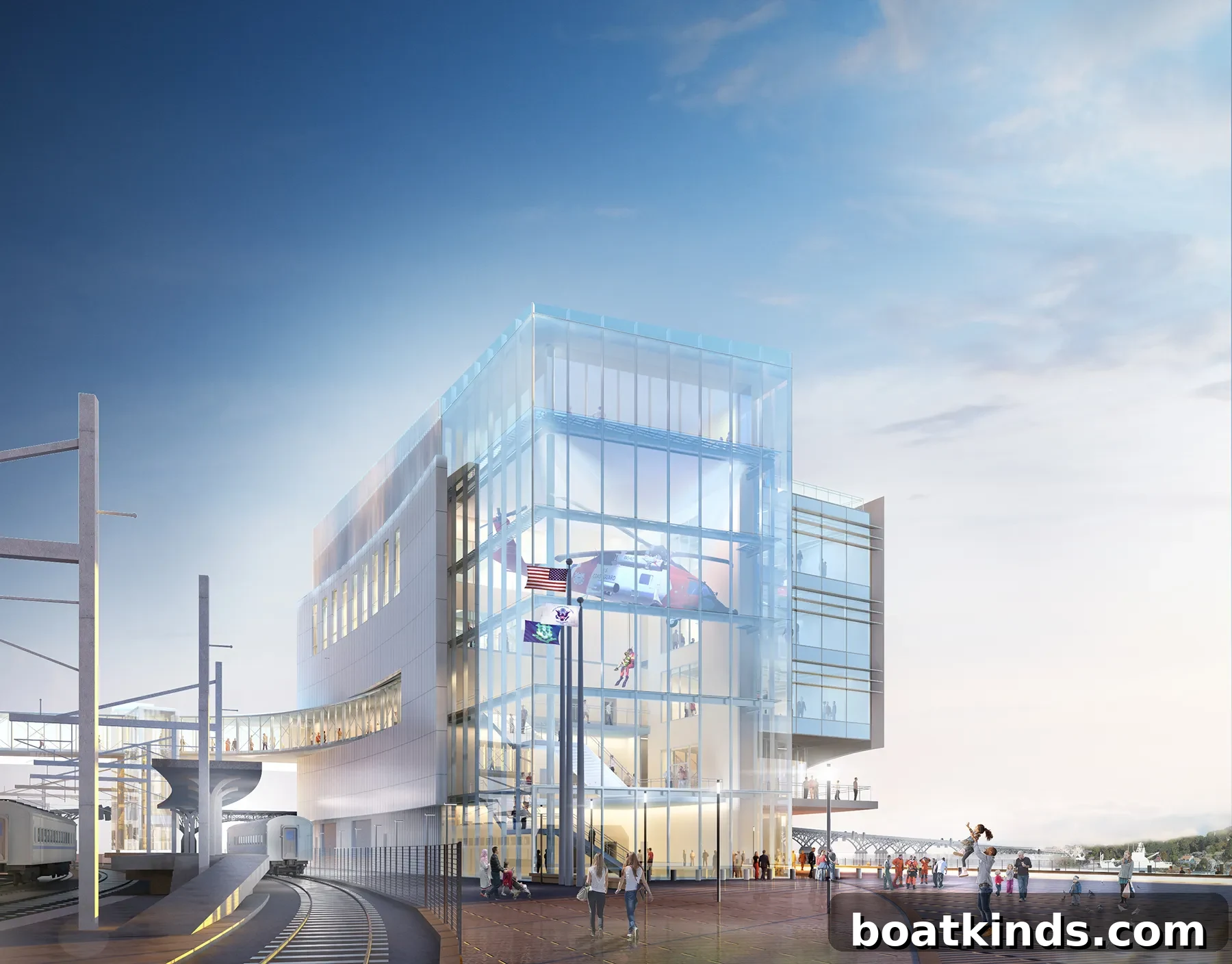
In March, an additional $50 million in federal funding was announced for the building’s construction, reducing the private fundraising target for the building to $19 million. “That last $19 million should be easier to raise than the first $31 million was,” Forster told Soundings. “Everybody loves a winner. That’s what it comes down to. We’re taking a lot more meetings in the last two to three weeks than we had in the first three months of the year.”
U.S. Senator Chris Murphy, who led the push for the extra federal support, has noted that the Coast Guard remains the only armed service without a national institution dedicated to its history and heroism. The museum is designed to fill that gap and to tell the Coast Guard’s story across multiple themes.
Core Exhibits and Storylines
The museum will organize its narrative around five main themes: Defenders of the Nation, Enforcers of the Seas, Lifesavers Around the Globe, Champions of Commerce, and Protectors of the Environment. Each wing will mix artifacts, immersive displays and interpretive storytelling to connect visitors with the Coast Guard’s mission and legacy.
Defenders of the Nation
This section highlights the Coast Guard’s participation in every major U.S. conflict since the service’s founding in 1790. It will include personal stories such as that of Douglas Munro, who received the Medal of Honor posthumously after his actions during the Guadalcanal Campaign in 1942.
Enforcers of the Seas
Exploring the Coast Guard’s dual status as both a military service and law enforcement agency, this exhibit will cover missions ranging from drug and migrant interdiction to historical eras like Prohibition and the era of alcohol smuggling.
Lifesavers Around the Globe
Centered on search-and-rescue operations, this wing will feature immersive experiences. Visitors will be able to feel the sights and sounds of rescues, including the story of Ida Lewis, once called “the bravest woman in America,” who risked her life on the ice to save others. The exhibit will also honor Capt. Richard Etheridge and his all-Black lifesaving crew from Pea Island, North Carolina, presenting one of their most daring rescues to give a sense of 19th-century lifesaving work.
Champions of Commerce
Sponsored by the Power family and located on the J.D. Power III Stewardship Deck, this section explains how the Coast Guard supports commerce by managing ports, navigation aids and maritime traffic. Visitors will learn how cargo flows to stores across the country rely on the Coast Guard’s oversight of ports, rivers and seaways.
Protectors of the Environment
This area will address the Coast Guard’s environmental response and stewardship, with exhibits about major incidents such as the Exxon Valdez and Deepwater Horizon oil spills and the service’s role in cleanup and protection. The exhibit will also cover fisheries enforcement and the vast enforcement zone the Coast Guard monitors, including U.S.-registered commercial vessels and the threat of overfishing.
Education, STEM, and Visitor Interaction
The museum will include a STEM Discovery Center where children and adults can explore science, technology, engineering and math through Coast Guard missions. School groups and corporate teams will participate in age-appropriate command-center simulations that emphasize teamwork and problem-solving. Museum designers and Coast Guard specialists are still developing additional exhibit storylines and selecting artifacts, many of which have been preserved in storage and are ready to be displayed.
When complete, the National Coast Guard Museum will serve as a national center for learning about the service’s history, its lifesaving missions, its role in commerce and law enforcement, and its environmental responsibilities — all while providing an interactive, educational experience for visitors of all ages.
This article was originally published in the July 2022 issue.