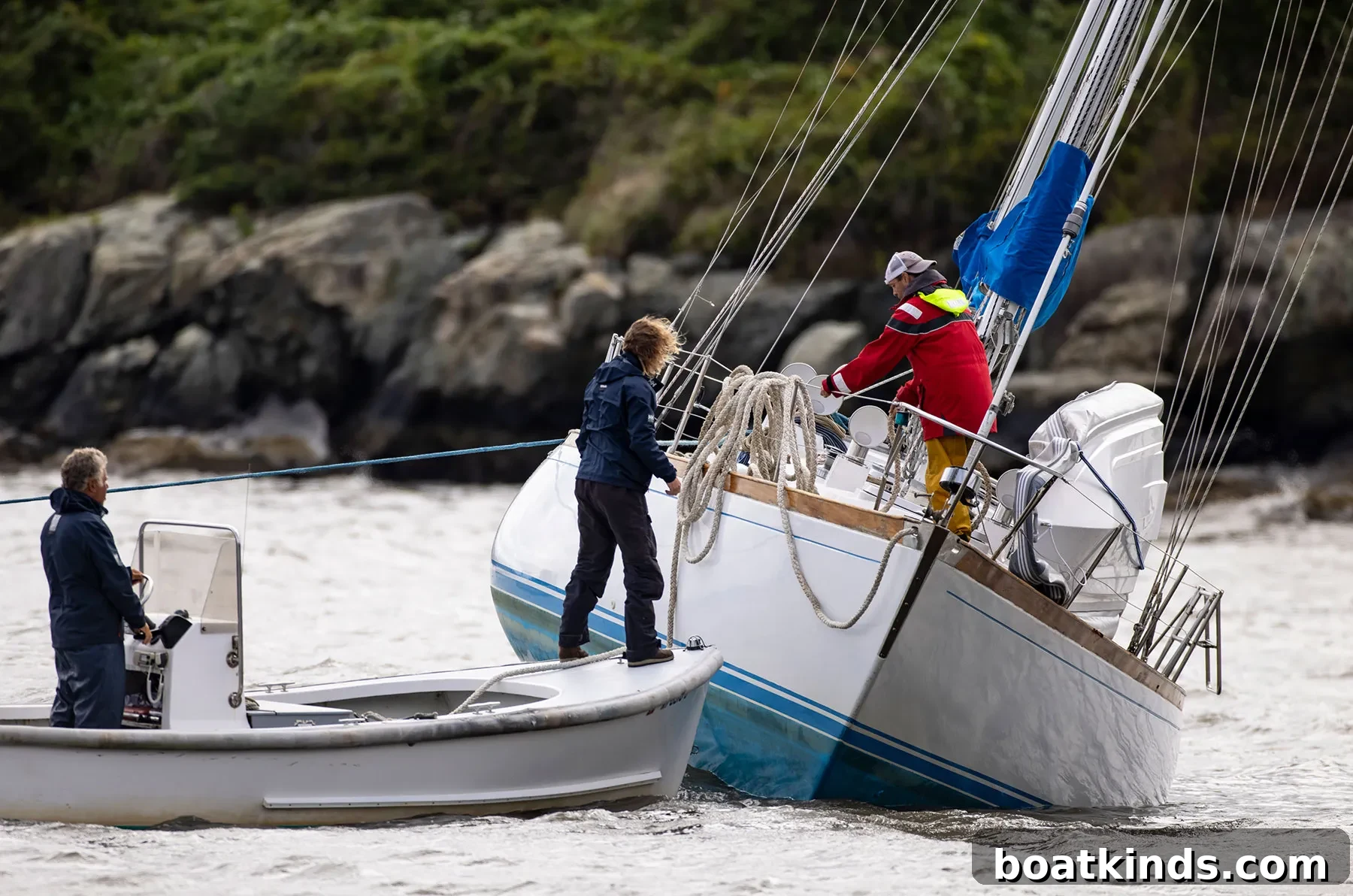
How to Handle a Grounding: Practical Advice for Boaters
Every experienced boater has, at some point, run aground. It’s an embarrassing, sometimes frightening event, and odd things can happen—like the time my 57-foot ketch came to rest on a submerged cypress stump in the Intracoastal Waterway. We were off-watch when a loud thud woke me. I ran aft, cut the engine, and discovered the bowsprit pointing at the treetops while the cutwater sat high and dry on the stump. There was no muddy wake, no obvious damage, and the cooling intake remained clear. After a careful inspection, we posted a crew member on the bow, restarted in neutral, and eased astern. The boat slid backward off the stump and settled gently back on her waterline. It was harmless—embarrassing, but instructive.
Hard Groundings vs. Soft Groundings
Groundings fall into two broad categories. Hard groundings involve collisions with significant obstructions—submerged jetties, reefs, rock piles or wreckage. These can cause substantial structural damage, injuries, or worse. If you suspect a hard grounding, prioritize safety: don life jackets, call for assistance, and consider remaining aboard but stationary until professional help arrives. If lives are at risk, use Channel 16 to make a Pan-Pan or Mayday call.
Soft groundings are more forgiving and are often recoverable with measured seamanship and patience. They typically involve sand, silt or grass bottoms and rarely cause major damage if handled correctly. Panic and impulsive actions—like immediately gunning the engine in reverse—are the most likely causes of further harm.
Initial Actions When You Run Aground
Immediately shift to neutral and stop the engine. Sailboats should douse sails. Take a calm, systematic survey of the situation: check for injuries, inspect the hull for leaks, and verify whether the propeller(s) and rudder(s) are clear. Note how fast you were going and what you struck—sand or rock makes a big difference. Record your exact position and keep an eye on compass bearings and nearby landmarks; subtle changes in bearings and water color will help you find deeper water.
Don’t assume deeper water is behind you. Climb to a higher vantage point on the boat and look for variations in water color and surface action. If visuals are inconclusive, use a dinghy with a weighted line to sound around the hull.
Techniques to Get Off
There are several tactics to attempt before calling for professional help. Use them in sequence, with caution and good communication among crew.
- Weight shifting and heeling: Move crew fore and aft and side to side to change the boat’s trim and reduce draft at the point of contact. On sailboats, easing or raising the main and heeling the boat away from the shallows can help.
- Cautious propulsion: Only use the engine if you are confident the propeller and rudder are free. Thrust astern gently, or try driving forward with the rudder hard over if deeper water lies to one side. Twin-engine boats can try alternating thrust to rock free. Monitor engine temperature and raw-water strainers—sand and silt can foul intakes.
- Wake timing: If the tide is rising, time your thrusts with passing wakes for extra inches of lift. This can be effective but requires knowing where the deeper water is and that your running gear is free.
- Kedging-off: Set a kedge anchor in deeper water (usually by dinghy) and winch or heave the boat toward it. This lets you pivot the boat or present the bow into a lifting tide. Use a suitable anchor and clear communication while lowering and setting the rode.
- Pivot-push: Using a padded inflatable tender to push on the bow can help turn a vessel away from a bar, especially for larger outboard-powered boats.
How to Kedge Safely
Kedging requires practice. Lowering the anchor into a dinghy and rowing it clear is a reliable method: secure the anchor so it won’t shift during transit, then release it cleanly so it drops free. Pay out rode carefully and apply gradual tension, ideally on a rising tide, while coordinating engine thrust and weight shift. Many recreational boaters opt to call for a tow before attempting complicated kedging maneuvers if they lack practice or confidence.
Towing: When to Accept a Tow and When to Call Professionals
A passing boater may offer a tow, but towing carries risks. An inexperienced towing operator or an undersized setup can cause damage—lines can snap back with tremendous force, and boats can be damaged if forces are misapplied. If lives are at risk, contact the Coast Guard. If you need assistance but conditions are not life-threatening, a professional towing service has the right gear and experience to recover you safely.
Final Advice
A soft grounding can be a learning experience rather than a disaster if you stay calm and apply a logical sequence: stop the engine, survey the situation, ensure your running gear is clear, determine the tide and deeper water, and then attempt recovery techniques in a controlled way. Avoid hasty engine revving or risky improvisation. And one last piece of practical wisdom: hope for a rising tide.
This article was originally published in the February 2022 issue.