
How to Maintain Exterior Teak: Cleaning, Sealing, and Practical Care
Teak is prized for strength and durability, and it’s commonly used for decks, covering boards, swim platforms, ladder rungs and trim. Proper exterior teak maintenance preserves its appearance and longevity. Left unattended, teak will weather to a silvery gray; if you prefer the warm, rich look of oiled teak and a durable, non-slip surface, regular care is required.
There are two main approaches to teak: let it weather naturally, or maintain it with cleaning and oiling. Ignoring teak requires the least effort, but weathering can lead to problems such as cracking or screwheads pushing up bungs, which may cause leaks. Routine maintenance keeps the wood attractive and helps prevent long-term damage.
Understand that teak contains both soft and hard grain. Aggressive scrubbing or sanding removes the soft grain, leaving a rough texture that traps dirt, grime and biological stains. To avoid this, work across the grain when scrubbing with a stiff bristled brush so you preserve the soft grain. If the deck is uneven or has raised areas, moderate high spots with a power sander or hand sanding using a sanding block and medium-grit wet/dry paper, but be careful of thin veneers.
Check the teak thickness before sanding. Some installations are thin veneers over plywood; sanding through a veneer exposes underlying materials and can force a costly repair or a paint job.
I prefer a two-part liquid teak-cleaning system for speed and consistency. These systems remove dirt and discoloration without the heavy scrubbing that damages soft grain. Apply the cleaner with a soft-bristle brush or a nylon scrub pad to distribute the product evenly. Many teak cleaners are acid-based—read and follow the label instructions carefully.
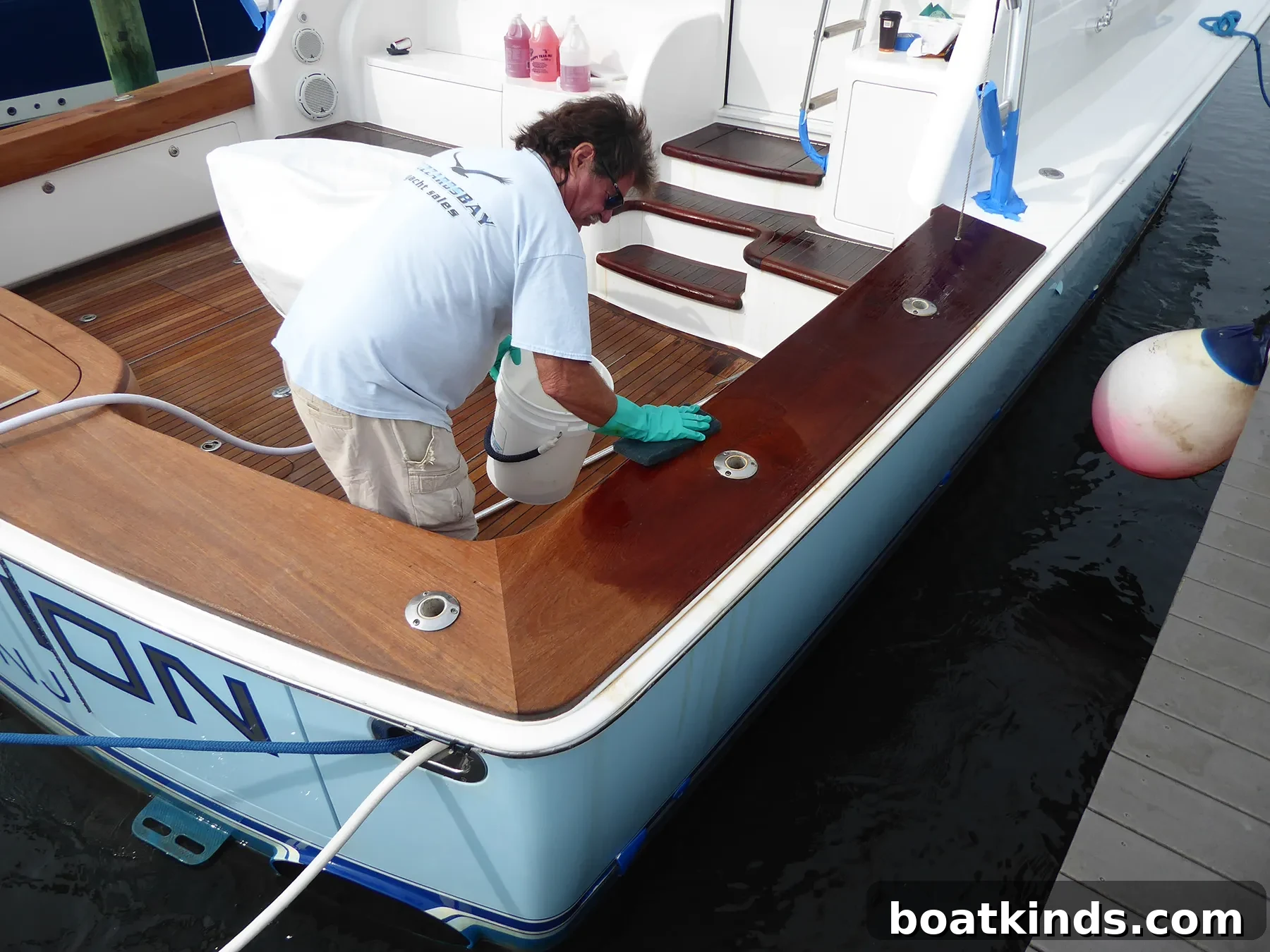
Acid-based cleaners extract dirt and biological stains effectively but require precautions. Protect adjoining fiberglass, painted surfaces and metal fittings—acid can damage anodized aluminum and other finishes. Mask metal with generous layers of tape and remove teak treads, such as flybridge ladder steps, to avoid splash-through. During the entire process, flush hullsides, scuppers and transom with lots of fresh water to prevent streaking on gelcoat or paint lines.
Begin any cleaning session by donning rubber gloves and waterproof footwear and rinsing the teak thoroughly. The wood must be wet for the cleaner to work well, and overcast days are ideal because they slow evaporation and keep the teak moist while you work.
Pour a generous amount of the step-one cleaner into a bucket and spread it with a hand-held nylon pad or a pad on a long-handled brush. Working in manageable sections helps control the product around fittings and corners. The teak will darken as dirt lifts to the surface. Keep the wood damp and work efficiently; if areas start to dry, mist them with water and continue. Ensure the cleaner reaches evenly across the entire surface so the wood takes on a uniform shade.
Two-part systems are designed to be used sequentially. After applying step one to the whole area, rinse your pad and bucket, then apply the step-two neutralizer. The neutralizer lightens and stabilizes the wood and stops the active chemistry of the first solution. While step two acts, rinse surrounding areas again to protect finishes, then thoroughly rinse the teak until it returns to a rich, brown tone similar to freshly sanded wood. Carefully wash away all traces of the neutralizer from adjacent surfaces.
If gray streaks remain after drying, repeat both steps in those spots and rinse again. Lift deck hatches and rinse gutters and undersides to avoid trapped residues. When dry, properly cleaned teak will have a light golden tan; some owners like leaving it unsealed, but exposure to air and sunlight will soon oxidize it to gray.
To retain the golden glow and protect the pores, apply a teak sealer or oil. Several commercial products are available; one favored brand is Tip Top Teak sealer, which highlights grain and has a pleasant scent. Avoid improvised mixtures—homemade combinations of linseed oil, pine tar and turpentine can cause long-term problems, including softening or damaging rubber seams and remaining tacky.
Make sure the teak is bone-dry before sealing so it can absorb the oil. Warm, sunny conditions are best. Apply light coats with a bristle paintbrush or a clean terry-cloth rag; wrap a rag around a putty knife to reach tight joints. Avoid getting sealer on fiberglass, metal, varnish or painted surfaces—if you do, clean it promptly with a cloth dampened with denatured alcohol.
After two or three light coats, check absorption by applying a swipe in a small area. If the wood still soaks up sealer, add another coat. Stop when the teak no longer absorbs oil; overapplication leaves a tacky surface that attracts dirt and spreads underfoot.
Routine washing with boat soap and water will extend the life of the finish. When needed, refresh worn areas with another light coat of sealer. With consistent care you’ll preserve both the look and function of your teak and enjoy the compliments that come with a well-maintained boat.
This article was originally published in the September 2022 issue of Passagemaker magazine and appears in the March 2023 issue.