
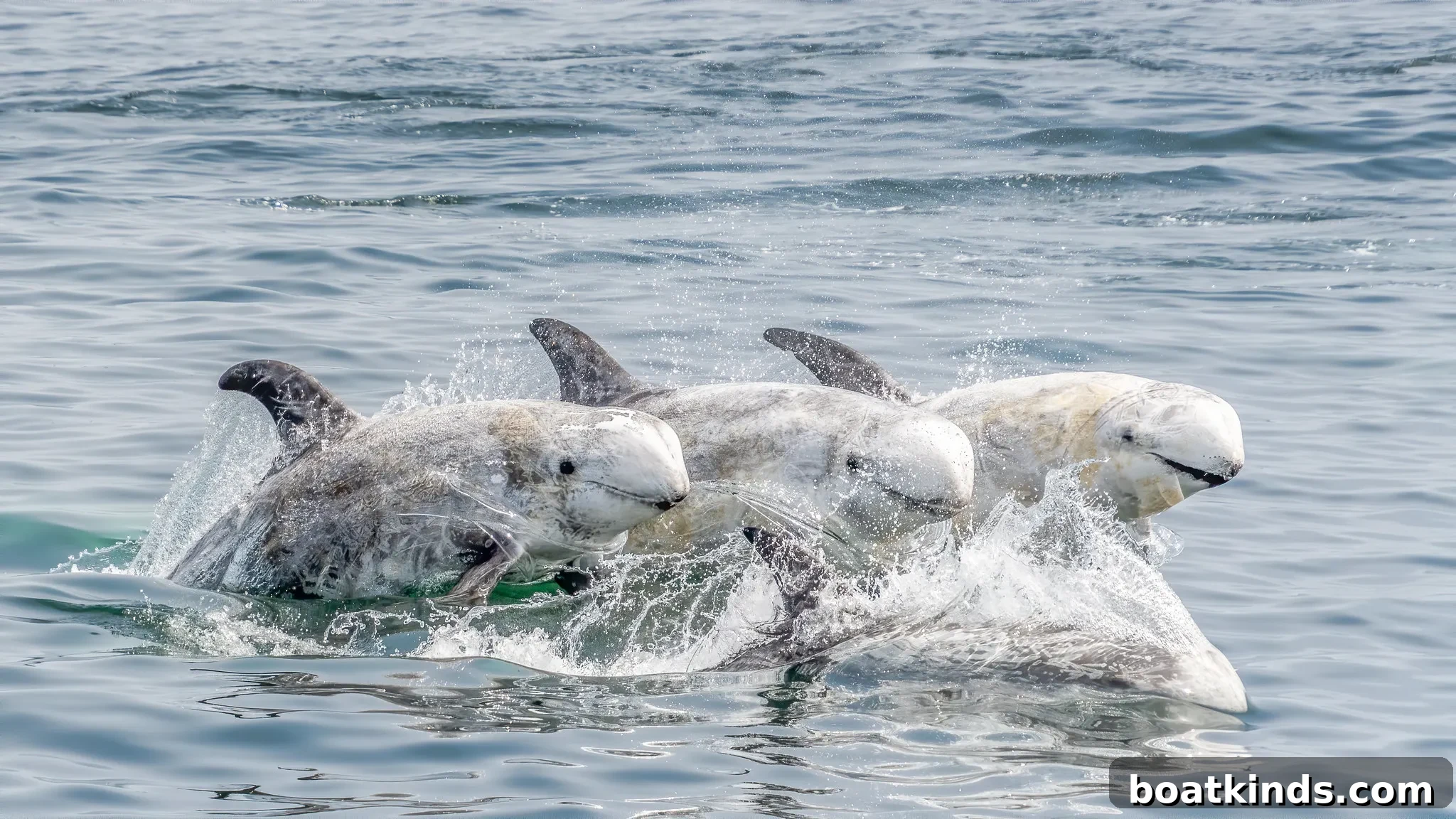
Most boaters simply want to enjoy sightings of wild dolphins and other marine animals, but increased vessel traffic and people getting too close are creating real problems. In some places, post-lockdown boating has intensified encounters with local dolphin populations, leading to both unintentional disturbance and, in some cases, deliberate chasing or harassment. These behaviors can scare animals away from feeding or resting areas and increase the risk of injury from vessel strikes.
Officials and conservation groups have highlighted hotspots where interactions are particularly frequent, and regulatory agencies in places such as Hawaii and the United Kingdom have moved to tighten protections. For example, U.S. federal agencies have considered measures like buffer zones to protect resting spinner dolphins, while British organizations have warned that busy waterways near feeding grounds are seeing boats and watercraft too close to cetaceans.
When planning to view marine wildlife from a boat, it is important to know the laws and best practices. In U.S. waters, harassing, harming, pursuing, wounding, killing, capturing, or collecting marine mammals protected under the Marine Mammal Protection Act (MMPA) and the Endangered Species Act (ESA) is prohibited. These protections cover all cetaceans (whales, dolphins, and porpoises), all sirenians (manatees and dugongs), and several marine carnivores (seals, sea lions, otters, walrus, and polar bears).
The National Oceanic and Atmospheric Administration (NOAA) is responsible for enforcing federal rules and provides guidance to help boaters observe marine animals safely and respectfully. Regulations and recommended viewing distances vary by species and sometimes by state, so boaters should be aware of both federal and local rules before heading out.
Basic viewing rules for marine mammals by boat
- Keep a respectful distance: remain at least 100 yards from whales and at least 50 yards from dolphins, porpoises, seals, and sea lions. Some species have stricter federal distance requirements.
- Specific federal distance examples:
- 100 yards from humpback whales in Hawaiian and Alaskan waters.
- 200 yards from killer whales in Washington State inland waters.
- 500 yards from North Atlantic right whales anywhere in U.S. waters.
- Limit viewing time: spend no more than 30 minutes observing any individual or group to reduce stress on the animals.
- Do not chase, encircle, trap, or leapfrog animals with any watercraft. Never position a vessel between an animal and the shore.
- Avoid multiple vessels converging on the same animals; multiple boats increase disturbance and risk.
- Reduce speed and avoid sudden changes in speed or direction near marine mammals. Operate at no-wake speeds when animals are nearby.
- If whales approach, put the engine in neutral to allow them to pass safely. Move slowly and cautiously if you must reposition.
- Avoid approaching animals head-on; if you need to maneuver, do so from the rear or side at a safe distance and remain roughly parallel to the animal’s path.
- Never intentionally accelerate or direct your vessel to create a wake for animals to bow-ride or wake-ride.
- If animals show signs of disturbance—changed behavior, rapid movements, or repeated dives—slowly and calmly leave the area.
- Be especially careful around mothers and calves; never place your vessel between a calf and its mother.
- Watch for behavioral cues such as breaching, tail slapping, or surface bubble patches that indicate feeding behavior; these cues signal the need for extra caution.
Viewing sea turtles from a boat
- Remain at least 50 yards away from sea turtles.
- Do not feed or attempt to feed sea turtles.
- Avoid high speed, sudden maneuvers, and any actions that could trap turtles between vessels or between a vessel and the shore.
- When a sea turtle is observed, slow to a no-wake speed and put engines in neutral if it approaches; allow the turtle to pass and move away on its own.
NOAA is continuing to develop guidance for new technologies, including drone use around marine life. As a rule of thumb, never feed wildlife and always prioritize the animal’s welfare over getting a close-up sighting or photograph.
For the most current and detailed guidance on viewing marine life and on specific legal requirements for protected species, consult NOAA’s official resources and local wildlife authorities before planning wildlife-viewing activities.