
Andy Tyska sat alone in the office after a long meeting about Bristol Marine’s acquisition of the historic boatbuilder Huckins Yachts. The other attendees had left, and he found himself at a desk moved into the office of Huckins president Cindy Purcell, the company’s third-generation owner whose family began Huckins in 1928. On the desk was a leather binder Purcell had assembled from her personal files: vintage marketing materials, letters and archival documents from Frank Pembroke Huckins.
Tyska opened the binder and turned its fragile pages carefully. “It made me realize I have a lot to learn, and that there’s a Huckins voice that is so definable as it relates to the product,” he says. “It’s pretty cool to have that front-row seat.”
When the acquisition was announced in late September, the 52-year-old Tyska was quickly inundated with calls and emails. Many congratulated him; some wanted reassurance. Huckins owners wanted to understand his background and plans for the brand. Since then, Tyska has been showing them—hosting tours, meeting owners, and introducing Bristol Marine’s approach to service, restoration and new builds. During one recent visit a Huckins owner toured Bristol Marine’s facilities and saw the variety of classic craft in the yard: Aphrodite laid up for winter, a restored 1911 tender, the Sparkman & Stephens-designed 1930s sailing yacht Black Watch, and a Trumpy. “It’s kind of a no-brainer where they realize this is the right fit,” he says. “People also asked me, ‘Are you going to build boats again?’ Based on conversations so far with owners and the interest we’ve seen, we’re already well along with conceptual designs for a new Huckins.”
A Lifetime of Preparation
Tyska grew up in Arlington Heights, a suburb of Chicago, the youngest of five. His family waterskied and sailed on local lakes, and the water became a central influence. He enjoyed math and engineering and eventually discovered naval architecture while studying at the University of Michigan in Ann Arbor.
As a junior he needed an internship. While many classmates sought positions with major oil companies or shipbuilders, Tyska took a different route: he mailed inquiry letters—this was before email—to designers and yards listed in Sail magazine. Most replied with polite rejections. One response, however, was a voicemail from Halsey Herreshoff, grandson of renowned designer Nathanael Herreshoff and an America’s Cup veteran. Halsey invited him to Bristol, Rhode Island, to help with design work and the new America’s Cup Hall of Fame efforts at the Herreshoff Marine Museum. Although Tyska’s time there involved varnishing and painting rather than drafting, it opened connections with influential practitioners and builders.
Those contacts shaped his next steps. He reached out to industry names, arranged interviews and asked what made a successful boatbuilder. That research led him to call Ted Hood after graduation. Hood initially dismissed him as a “college kid with an engineering degree,” but after persistence Tyska was hired—very cheaply—into Hood’s shop. He moved to Bristol in 1994 with three other naval architects, working days for established firms and nights building their own design practice. Hood drew by hand and Tyska and colleagues translated those sketches into digital plans, learning practical design and construction techniques along the way, including work on the Whisperjet series.
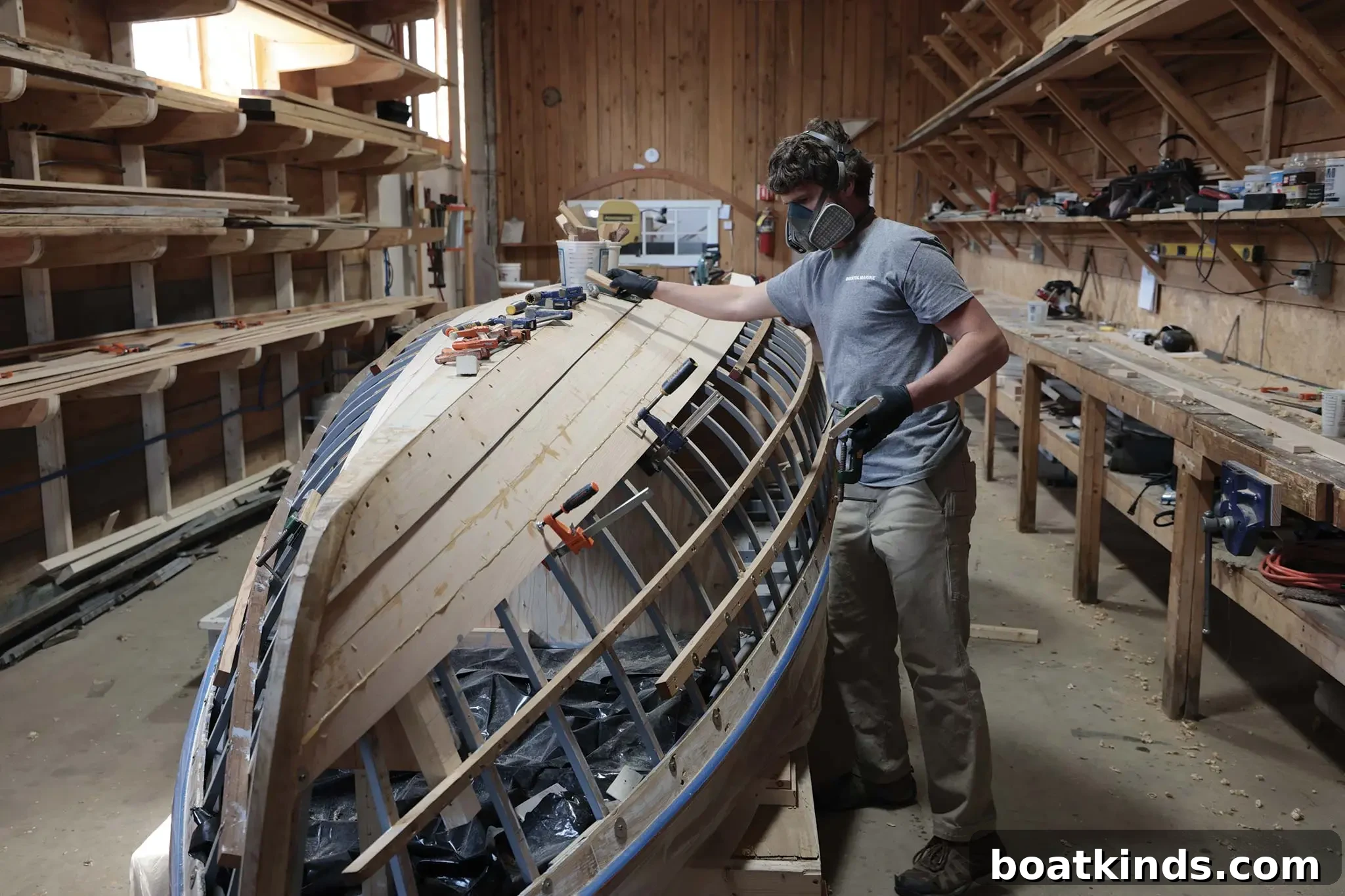
In 1998 Tyska bought a small waterfront workshop in Bristol, the first site of what would become Bristol Marine. He later added full-service yards in Somerset, Massachusetts (acquired 2012), Boothbay Harbor, Maine (acquired 2017), and in late 2024 the Huckins facility in Jacksonville, Florida. Over more than 25 years he has focused on building a company that blends preservation of traditional craftsmanship with modern service capabilities.
Looking Back to Move Ahead
The Huckins acquisition prompted Tyska to rethink Bristol Marine’s identity and how its yards relate to regional maritime history. He has long been active in Rhode Island’s marine trades community and involved with the Coggeshall Farm Museum, a living-history site that rekindled his interest in historic preservation—not only of boats but of tools, machinery and traditional skills.
As the Huckins deal progressed, Tyska decided to rebrand each of his locations using their historic names, reconnecting each yard to its local heritage. The Bristol facility—previously Bristol Yachts and once Wardwell’s Boatyard in the early 1900s—will return to the Wardwell name. The Somerset yard, which was Bowers Shipyard in the late 1800s and known for building three-masted wooden schooners, will be called Bowers Shipyard. Boothbay Harbor will become Sample’s Shipyard, honoring Frank Sample, who built a line of Down East cruisers there. Huckins will retain its historic name. “There’s a thread that sews together these yards: protecting the past and investing in the future,” Tyska says. “People want the continuity of a trusted visual presence, but we’re not just putting dots on a map—we’re restoring distinct stories in multiple places and linking them.”
Future Plans
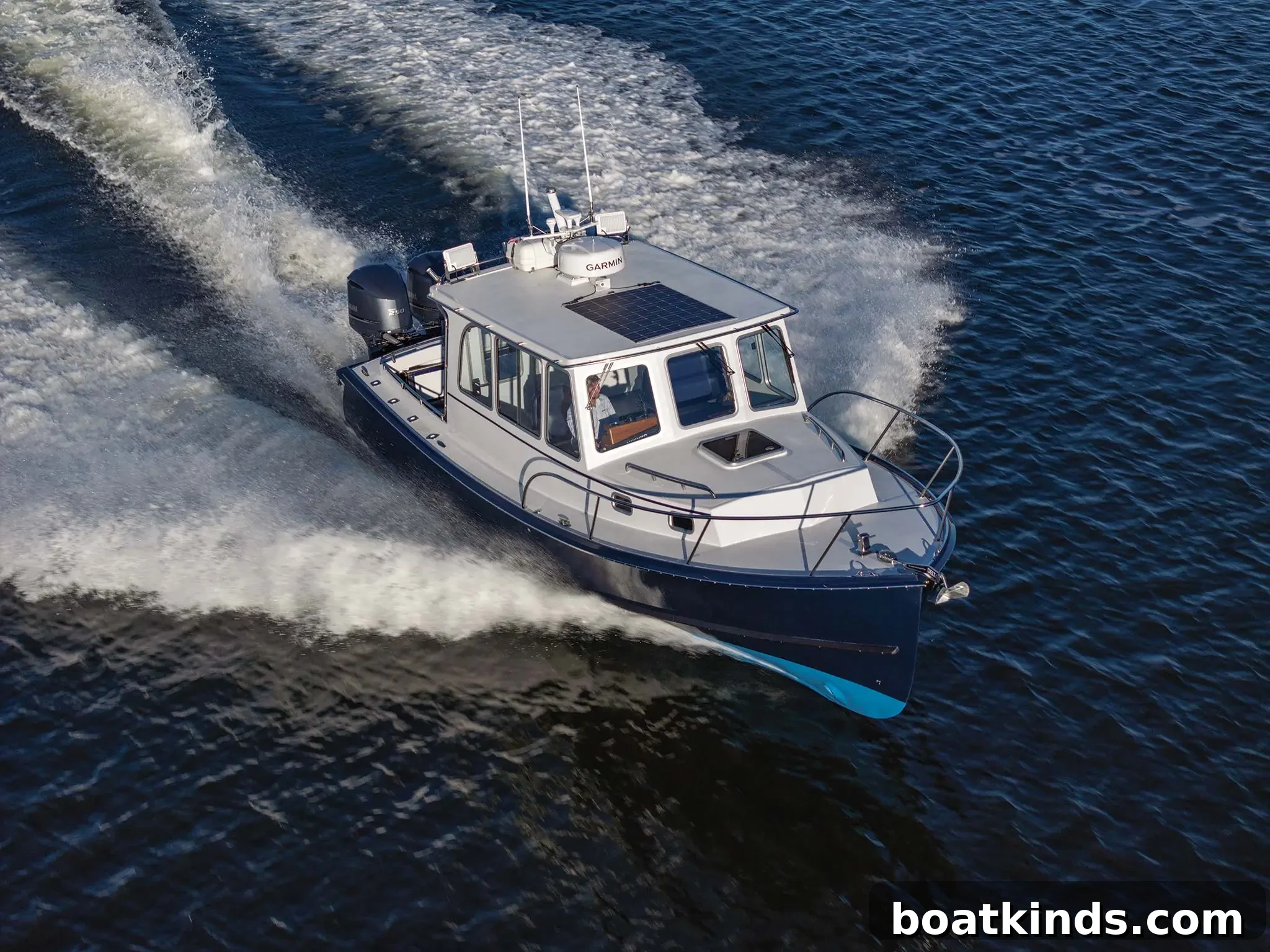
Owners and observers want to know what will happen across these shipyards. In New England, all three yards are collaborating on the Bristol 30, a modern Downeast-inspired, outboard-powered boat with an LOA near 35 feet. The design evolved from David Nutt’s Southport 30 and represents Bristol Marine’s first concerted push to produce a new recreational model. The yards—whose core businesses remain service, refit and repair—have already built three hulls: Hull No. 1 went to a cruising couple in Niantic, Connecticut; Hull No. 2 launched for a Boothbay Harbor boater who uses the boat for commuting, offshore fishing and connecting artists with Maine’s coastline; Hull No. 3 is currently for sale as a flexible, unfinished platform that could be customized or completed as a dayboat or walkaround layout.
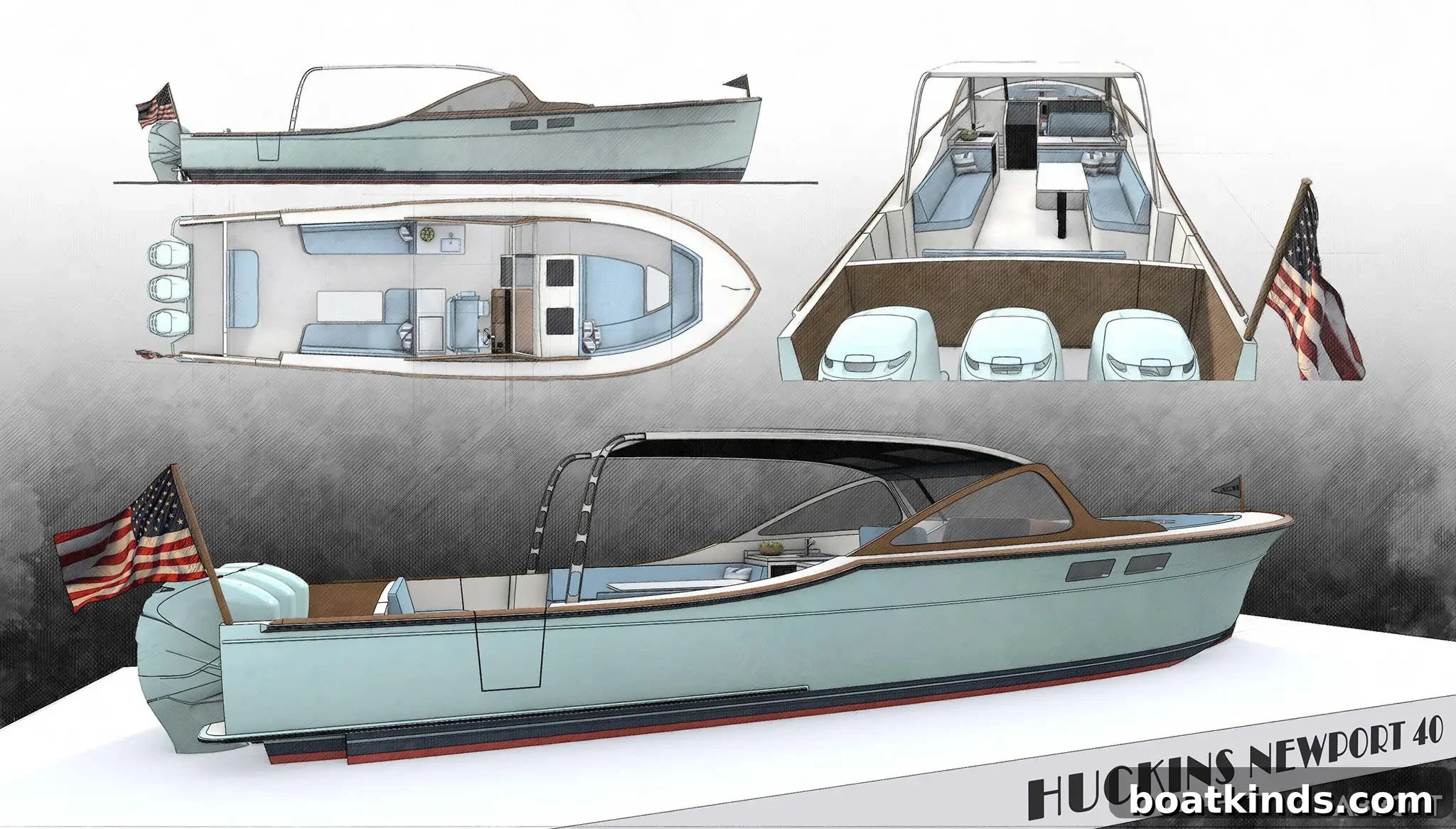
At Huckins, Tyska plans to develop an in-yard museum celebrating the brand’s legacy and to digitize design archives so owners and historians can access plans and patterns remotely and in person—similar to the curated project he completed at Boothbay Harbor with assistance from the Herreshoff Marine Museum. Refit and repair work will be an ongoing focus at Huckins, alongside new models. The first new Huckins design in concept is the Newport 40, a project currently in discussion with potential owners and being refined to reflect market expectations while retaining Huckins hallmarks: seaworthiness, quality construction, safety and comfort.
In addition, Bristol Marine is exploring plans for further Atlantic 44 builds—possibly as a semi-custom program with a larger production cadence. The Atlantic 44 is a well-established Huckins platform known for efficient performance, quiet operation and comfortable cruising characteristics; the design has seen multiple iterations and continues to present opportunities for development.
Tyska is also in talks with two other New England facilities about preserving their maritime heritages and is considering ways to revitalize dormant brands. “Some names have been acquired and shelved,” he says. “We’re interested in keeping those marques alive in people’s minds, not necessarily by building every model again, but by preserving the stories and expertise behind them.”
Beyond brand stewardship, he aims to build a network of specialty partners—skilled technicians focused on systems, painting, varnishing and other trades—working as collaborators and potential partners rather than simply subcontractors. “Those smaller providers have years of hard-earned knowledge,” he says.
As always, he remains open to opportunities that arrive unexpectedly—like a recent call about a ship saw capable of cutting 6-inch frames for tall-ship schooners. He explored who else might use the tool—museums, restoration shops and yards along the East Coast—and began building connections. “What we’re doing is special,” he says.
January 2025