
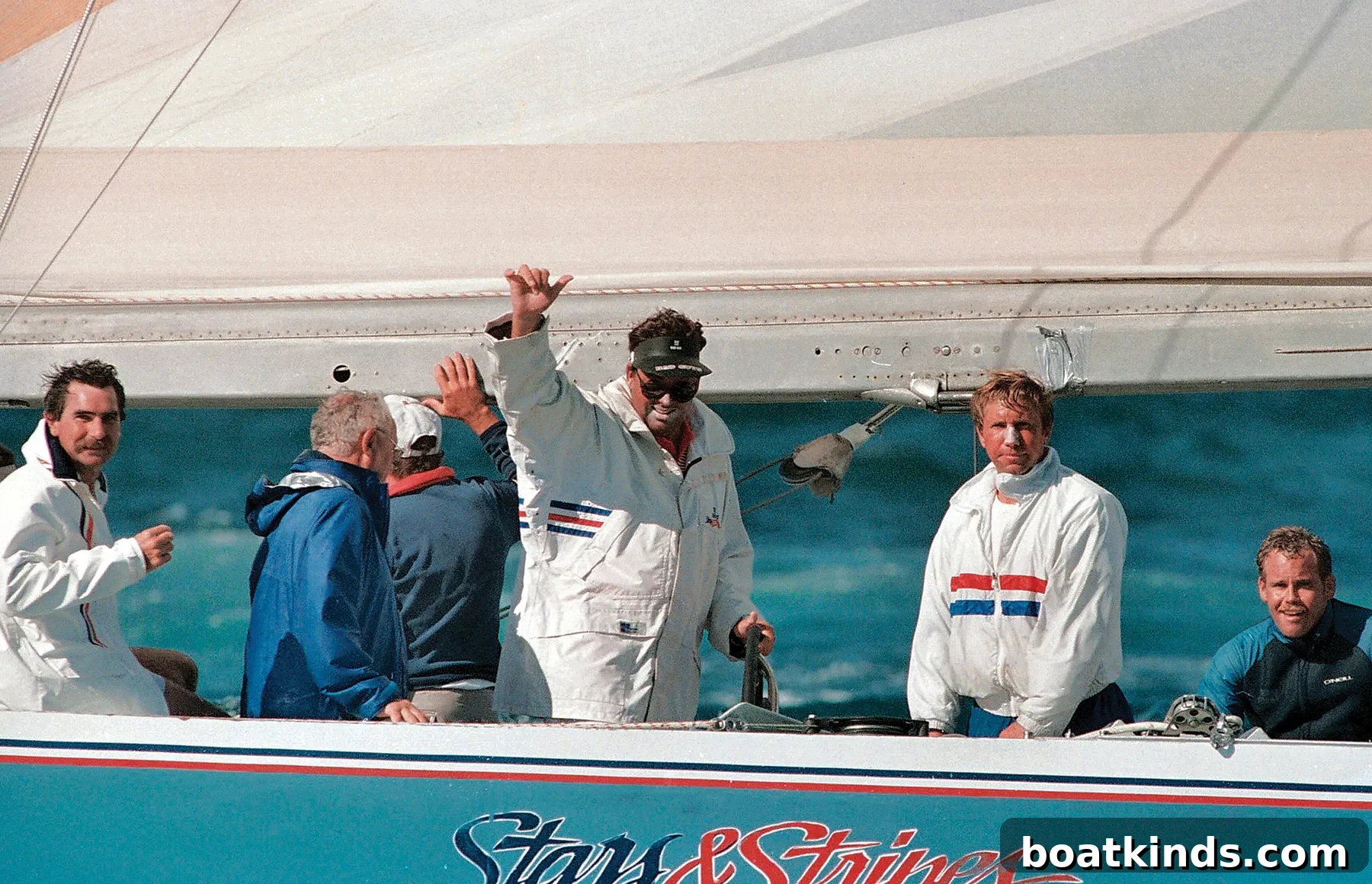
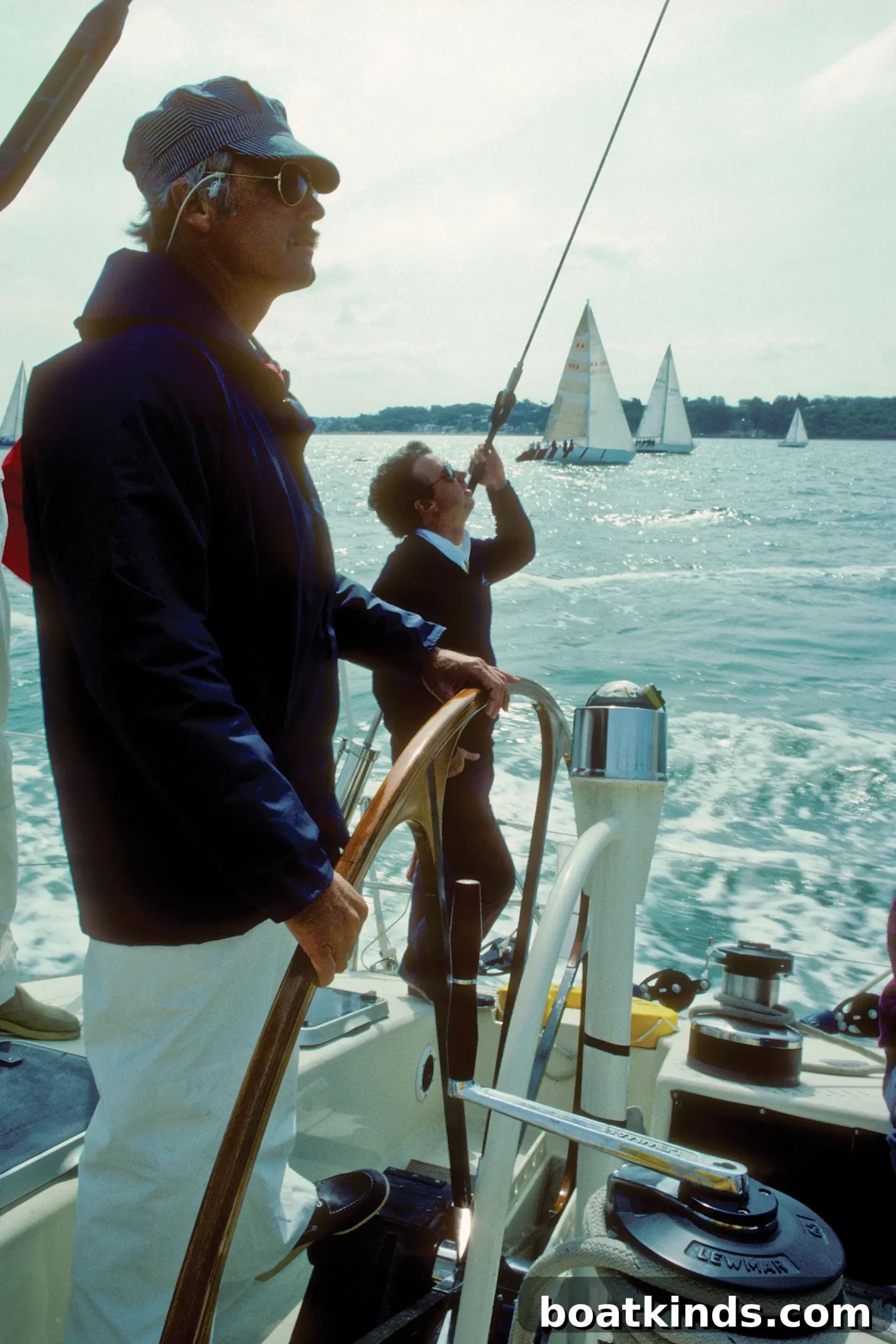
During the 1960s, ’70s and ’80s, when 12-Meter yachts contested the America’s Cup off Newport, Rhode Island, the city’s Armory on lower Thames Street served as the event’s primary press office. Skippers, navigators and other sailing legends came through the preserved 1800s brick building to give interviews and recount events, often still salt-scented from life at sea. Those moments helped shape the history of competitive sailing.
Now, in spring 2022, visitors will be able to follow in those same footsteps. The Armory is being transformed into The Sailing Museum, a public destination that will house the National Sailing Hall of Fame and an outpost of the America’s Cup Hall of Fame. The America’s Cup Hall of Fame will retain a presence at its current location at the Herreshoff Marine Museum in Bristol, Rhode Island, while the Newport space will bring a different perspective on the Cup’s global story.
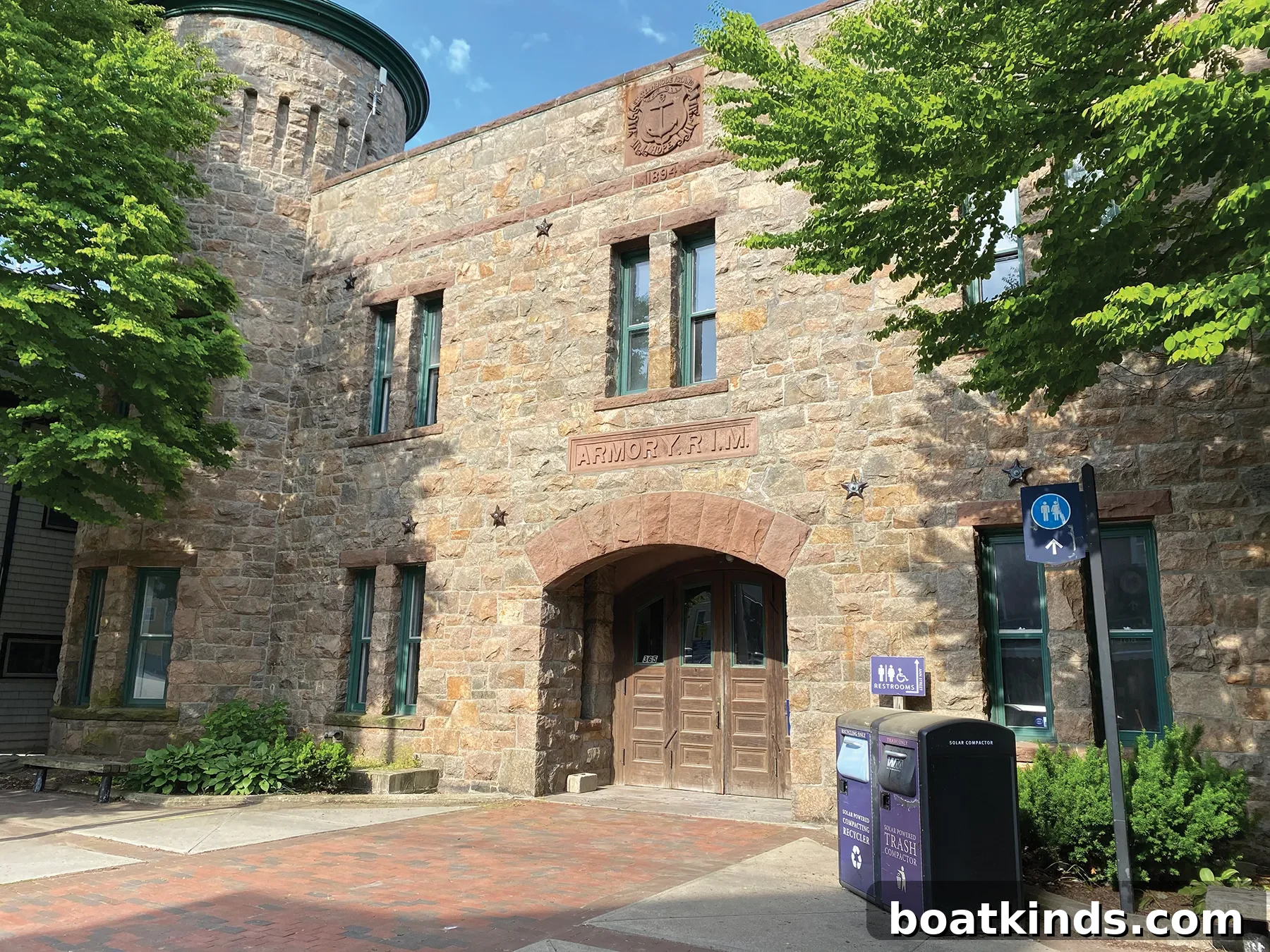
The project has been underway since the National Sailing Hall of Fame purchased the Armory in March 2019 for $1.685 million. The building had been used for antiques sales and its condition is overseen by the Rhode Island Historical Preservation and Heritage Commission. The site is divided so the City of Newport continues to control the beachfront level and public dock, while the state commission ensures that renovations meet preservation standards.
Executive director Heather Ruhsam says the plan is to update the Armory with modern amenities while preserving its historic character. Upgrades will include new electrical systems, HVAC, restrooms and an elevator, but the building’s original woodwork, large roof timbers and period hardware will remain. “From the outside it looks like a castle,” Ruhsam notes. “Inside, the drill hall is a free-span 6,000-square-foot area with gorgeous timbers that are perfect for a museum focused on sailing.”
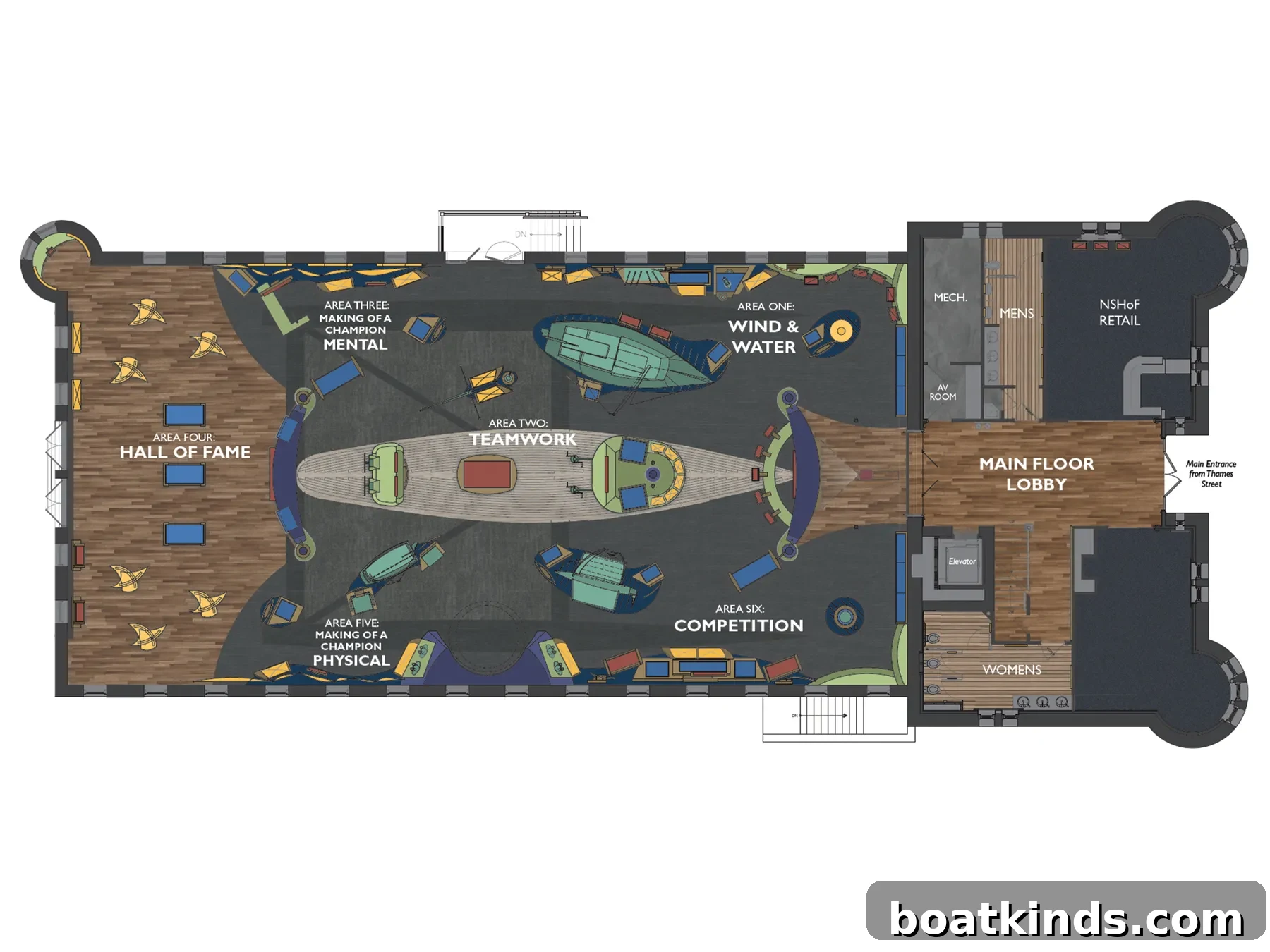
HealyKohler Design of Washington, D.C., has been selected to develop the museum’s floor plans. The firm’s experience with sports arenas, cultural centers and hall of fame projects made them a good fit for a museum that must appeal both to sailors and to general visitors who come to Newport for its rich maritime history. “People visit Newport even if they aren’t sailors,” Ruhsam says. “We want to give them a window into the world sailors know and love.”
The Sailing Museum will be arranged into thematic zones that guide guests from basic elements of wind and water to deeper aspects of teamwork, competition, and athletic and mental skill. The Hall of Fame component will spotlight the personalities who shaped modern sailing, presenting their stories in context and celebrating their contributions to the sport.
Interactive and digital experiences will play a major role. Visitors can participate in an RFID-based personality quiz that suggests whether they are better suited to a single-handed dinghy or a fully crewed offshore boat, and that personal profile will connect to exhibits throughout the museum. Hands-on displays will let visitors feel a tiller’s response as a boat moves through water, while large touchscreen installations will deliver layered stories to multiple viewers simultaneously.
Because the America’s Cup has both local and international chapters, maintaining exhibits at two sites makes sense. Newport’s outpost will weave America’s Cup narratives into broader international and community histories, while the Herreshoff Marine Museum in Bristol will focus on the company’s dominant run during the so-called Herreshoff Era when the firm built the defenders for eight America’s Cup races. “The Herreshoff Museum is about engineering and innovation,” says Bill Lynn, president of the Herreshoff Marine Museum. “The America’s Cup represents the bleeding edge of sailing technology, and the Herreshoff connection during that 40-year span gives us rich stories to explore.”
The two locations are being planned to complement each other so visitors may be encouraged to experience both sites. In Bristol, America’s Cup Hall of Fame exhibits will be placed in a building on the former Herreshoff Manufacturing Company campus that is being converted for museum use, allowing a deeper dive into technical and historical detail. In Newport, exhibits will emphasize broader themes and accessible entry points for the many tourists who visit the seaport each year.
Event space at the Armory will accommodate programs for both the America’s Cup Hall of Fame and the National Sailing Hall of Fame. Several prominent figures in American sailing are inductees of both halls, and many older champions continue to be seen around Newport’s waterfront. While tourists and nonsailors are expected to make up the majority of museum visitors, the design aims to engage them and spark enthusiasm for sailing. “Probably 75 percent of our visitors will be tourists and nonsailors,” Ruhsam says, “so we have to capture their attention and get them excited about this sport.”
Although the original plan aimed for an earlier opening, the pandemic prompted a cautious approach. Ruhsam explains that the museum’s team is waiting for the right moment to welcome the public, ideally when effective treatments and vaccines are widely available. They are targeting spring 2022 to coincide with the start of the sailing season and peak tourist activity in Newport.
The renovation seeks to balance historic preservation with contemporary museum experiences: honoring the Armory’s past as a hub of sailing lore while creating an accessible, engaging space for future generations. Visitors will leave with a stronger sense of the sport’s physical demands, technological progress and the people whose achievements shaped competitive sailing.
This article originally appeared in the August 2020 issue.