
Life Proof Boats: Engineering, Safety and Purpose-Built Design
Micah Bowers, CEO of Life Proof Boats, has a talent for making memorable videos that demonstrate his company’s product philosophy. Early on, to prove the durability of the company’s foam buoyancy collars, he shoved a pocketknife, a speargun, a machete and an arrow into one of the collars, and struck it with both ends of an axe on camera. He intended to include footage of a chainsaw test as well, but the chainsaw wouldn’t start—an anecdote he shares with a laugh.
Bowers grew up on Bainbridge Island in Puget Sound, where boating was part of daily life. Summers working in Alaska’s fisheries and a mechanical engineering degree from Gonzaga University led him to work in Hawaii, and later into the boat-building industry in Washington state. After a stint at SAFE Boats in Bremerton, he joined Inventech Marine Solutions (IMS) in 2014, which launched the Life Proof brand in 2016.
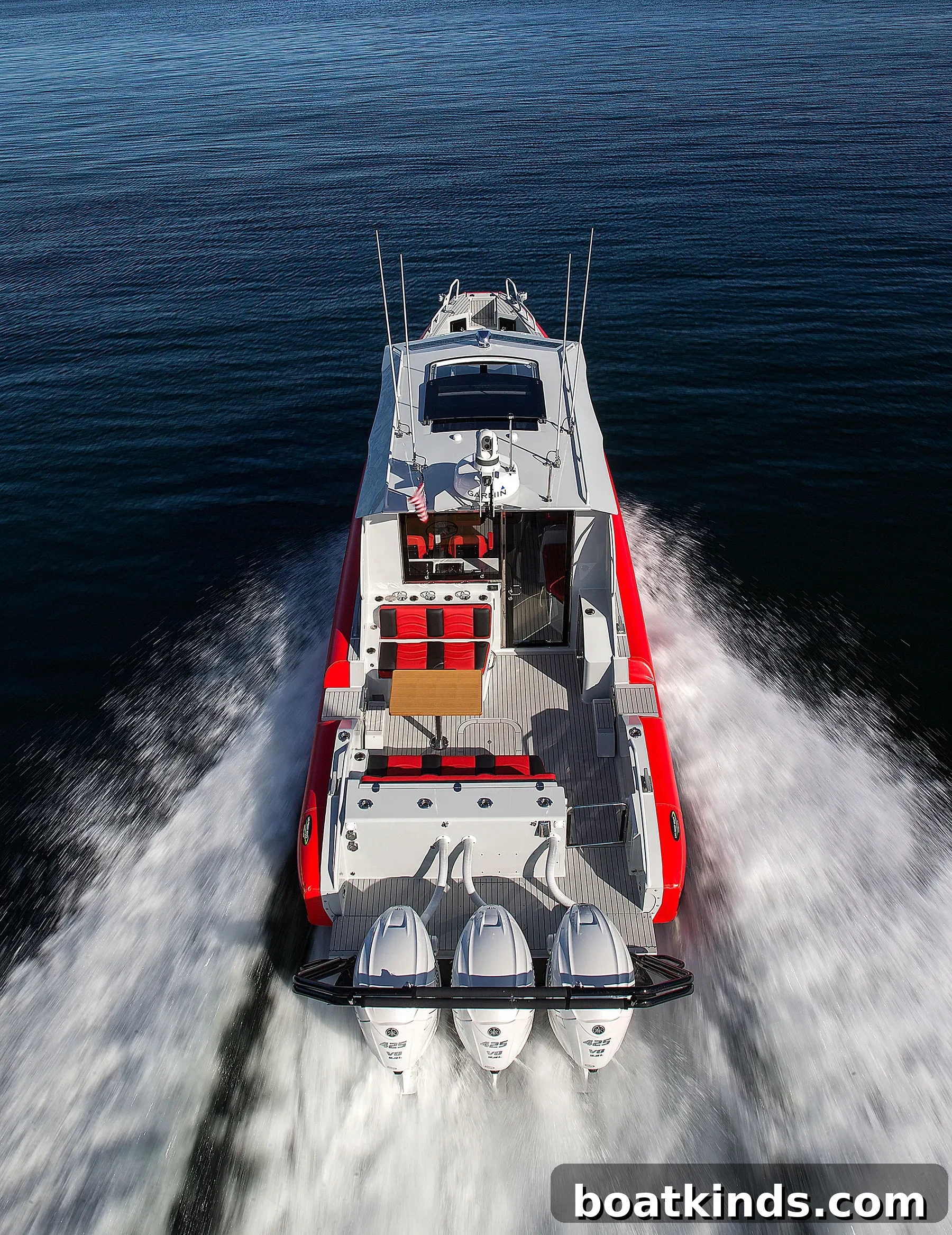
Life Proof Boats is known for aluminum hulls stabilized by robust foam collars that act like life jackets. These collars, along with shock-mitigating seating, self-bailing decks that clear water quickly and foam-filled hull voids, are central to the company’s safety-first design. Though Life Proof’s products have attracted law enforcement and military buyers worldwide, the company began by building recreational boats tailored for harsh conditions and serious performance.
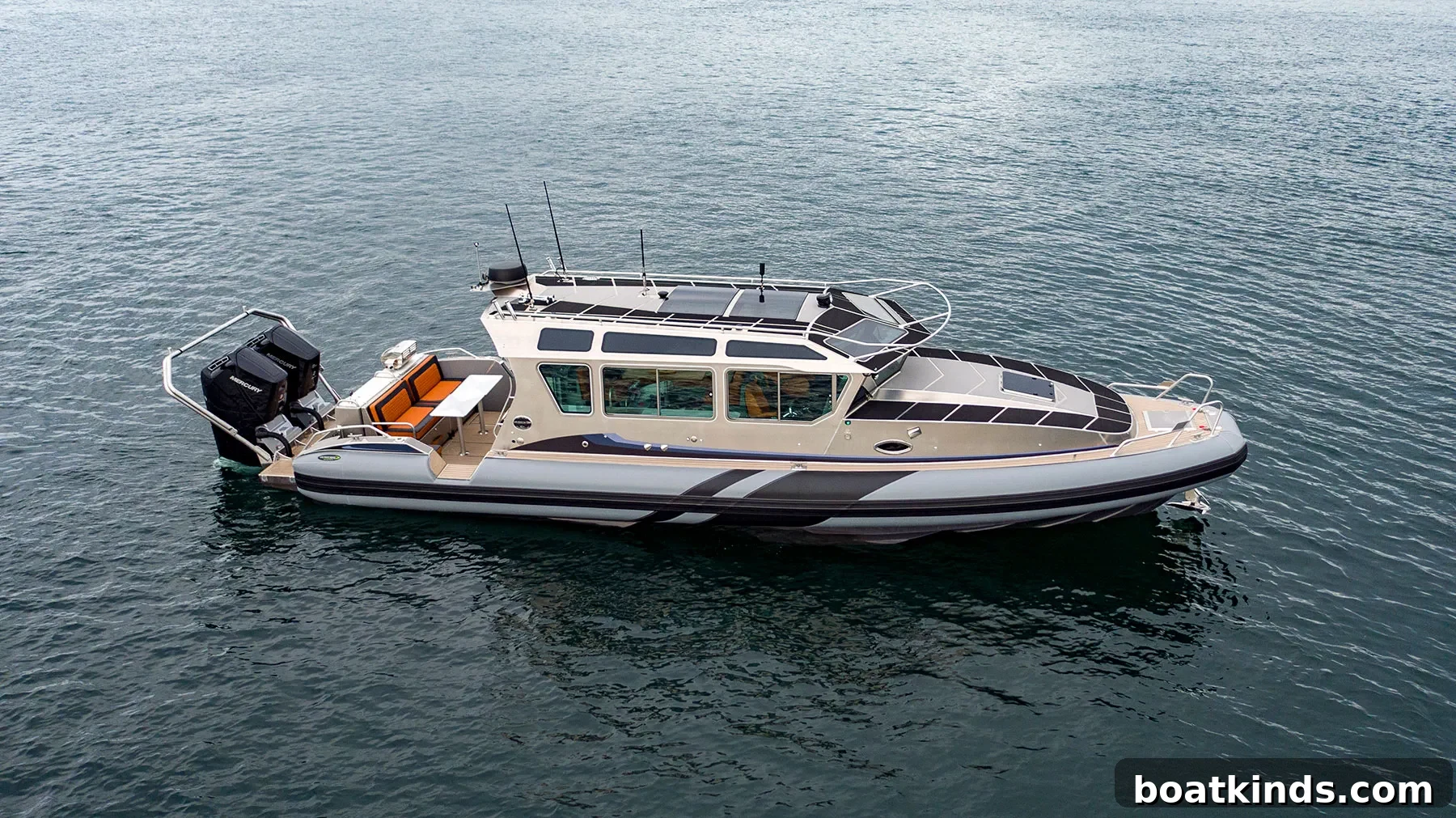
The model range spans from an open 17-foot center console to larger full-cabin boats. The 35 Full Cabin and 41 Full Cabin launched in recent years, and a 50 Full Cabin was scheduled to join the line in 2022 with high-horsepower outboard packages. Life Proof builds for a broad range of missions, offering choices from center consoles to Yachtline flagships, and configurations that include inboards, diesel jets, sterndrives and multiple outboard setups.
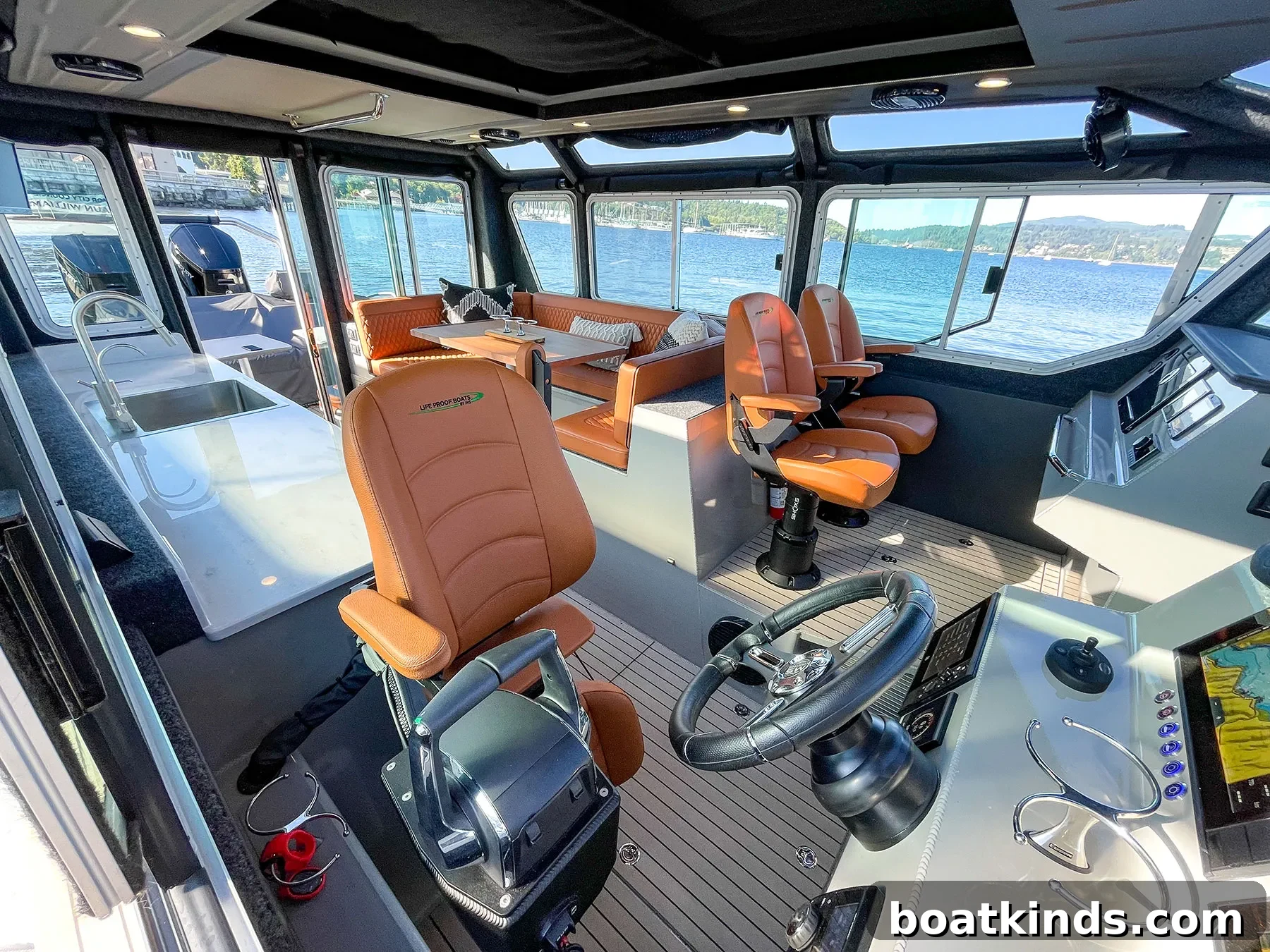
Bowers, now in his mid-30s, emphasizes functionality in every detail. His videos and presentations focus on performance metrics such as propulsion, fuel consumption, battery systems and the adjustability of Shockwave seats. He insists on skilled handcraftsmanship for the aluminum construction—a U.S. Navy and Coast Guard-specified 5086 alloy—and stresses that quality welding and careful finishing are the backbone of the product.
What inspired Life Proof Boats? Life Proof evolved from IMS after prototype hulls and demos generated direct requests to build complete boats. Although the business started with recreational models, local law enforcement soon began ordering vessels, and the company’s focus broadened to serve both civilian and agency markets.
How did the Life Proof name originate? The name was chosen to convey resilience and reliability—the idea that the boat is built to handle whatever conditions you encounter, providing confidence to owners and operators.
What are the pros and cons of different collar types—air-filled tubes, solid foam collars and hybrid air-foam collars? Air-filled tubes provide buoyancy but can deflate. Hybrids combine air with foam as a backup, giving redundancy. Over time Life Proof has shifted toward all-foam collars for new builds because they offer more interior beam (a D-shape reclaiming space inside the hull), greater durability and reduced maintenance. The company still offers retrofits for hybrids and air collars, but all-foam collars dominate new production for their safety and storage advantages.
How do you respond to people wary of collar boats? Bowers points out that if you call for help, rescue crews will typically arrive in similar boats—so you’ll feel better being in a vessel of comparable capability. The foam collar adds a tangible safety margin for families and operators heading into rough water.
Do you really demonstrate puncture resistance with sharp objects and firearms? The company’s early puncture tests were filmed to show the collar’s resilience; Bowers has also planned tests to confirm that common pistol calibers, like 9 mm, do not penetrate the collar to the aluminum hull beneath. Those demonstrations are meant to illustrate real-world protective qualities, not to sensationalize.
Why aluminum? Aluminum 5086 is strong, durable and repairable. It’s the commercial-grade alloy required by maritime agencies and it responds well to skilled hand fabrication. Life Proof emphasizes hand-trimmed and hand-welded build quality, allowing for modifications over a boat’s life—such as adding cleats or downriggers—without structural compromise.
Are aluminum boats practical in warm climates? Yes, when properly insulated and designed. Life Proof sells into warm-weather markets—Hawaii, Saipan and the U.S. Southeast among them—and offers climate comforts such as air conditioning and wind- and spray-protective options in models like the GT Coupe. Fiberglass hardtops are used on some convertibles to help with thermal performance, and removable tops give flexibility for varying conditions.
What are your performance-enhancing fins for? The fins are designed to improve handling and cornering stability. Rear fins help the boat “hold a corner” like a car on rails and protect the collar by keeping the hull flat through turns. The forward fin provides a pivot point for better control in heavy-water or broaching conditions, allowing precise low-speed maneuvering and recovery when powering out of a turn.
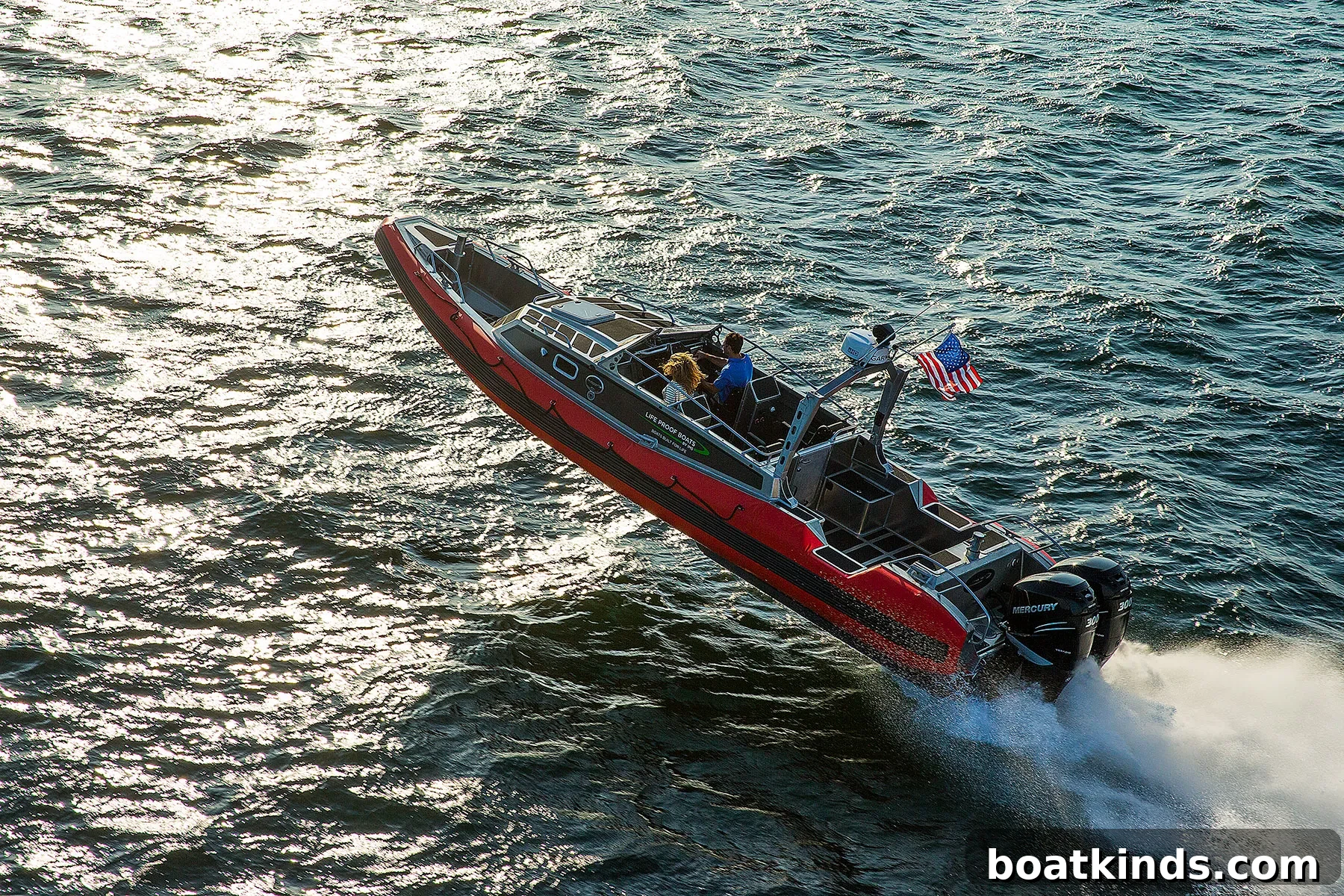
Do you limit propulsion types? Life Proof builds around mission needs and is propulsion-agnostic—outboards, inboards, diesel engines, waterjets and sterndrives are all used. Recent projects include high-performance twin outboard installations, inboard diesel waterjet boats for agency work, and custom drives such as Volvo sterndrives and MAN diesel/waterjet combinations for large Yachtline models.
What differentiates the Pleasure Class from the Yachtline? The Yachtline focuses on elevated finish, paint, fairing and premium touches—the flagship models where experimental, progressive ideas are developed. Successful features and innovations from Yachtline builds often make their way down into Pleasure Class models.
How have the 35 and 41 Full Cabin models been received? They’ve resonated well with owners who want a blend of rugged capability and refined functionality. The first 35 was delivered in 2020 and the line has expanded, while the 41 debuted in 2021 with refinements applied between builds. The 50 Full Cabin was next in line and was scheduled for launches and showings in 2022.
Why mount dinghies and surfboards over the outboards? Placing dinghies over the engines lowers windage and the center of gravity and reduces vertical acceleration, making it safer and easier to launch without tall davits. It’s become a practical layout choice that other regional builders have adopted.
Who buys Life Proof Boats? The customer base is diverse—recreational owners, law enforcement, military and agency buyers. Across that diversity, safety and strength are central reasons clients choose Life Proof: owners want a boat built to withstand challenging conditions while delivering reliable performance.
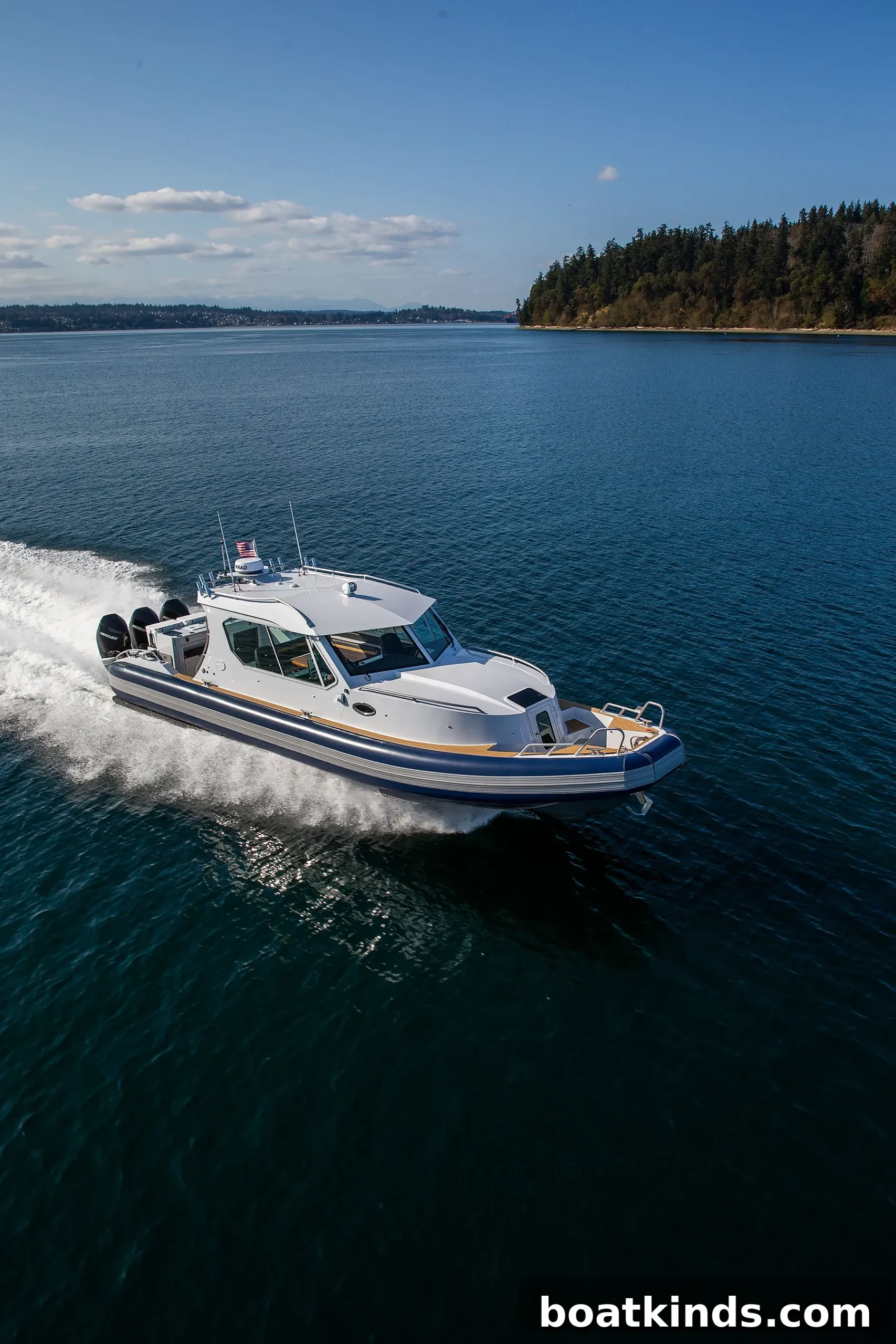
How fast is the recreational side of the business growing? Life Proof has doubled in size annually since 2016 and recently added a fourth facility. Recreational sales have grown significantly—around half of current sales were recreational in the referenced year, with projections of increasing to roughly 70 percent. The company employs over 60 staff, maintains a multi-year backlog and builds roughly 30 boats per year, with plans to expand markets beyond the Pacific Northwest.
What keeps you motivated? Bowers says the work remains creative and engaging: constant custom designs, iterative improvements and hands-on problem solving. From new bench configurations to electric sunroofs requested by clients, the team balances stress with the satisfaction of producing robust, well-engineered boats.
This article was originally published in the February 2022 issue.