
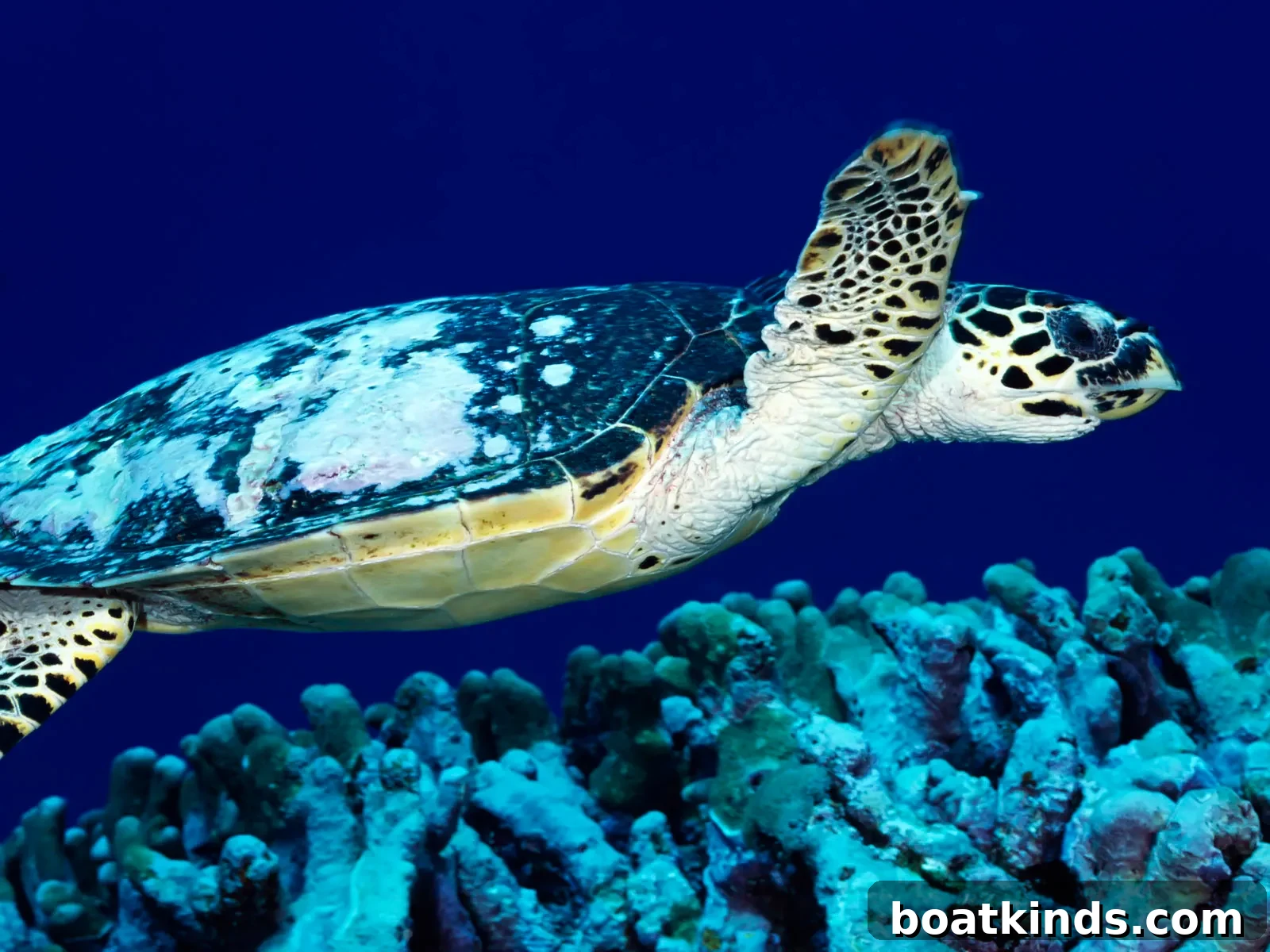
Yoshi the Loggerhead: From Long-Term Aquarium Care to a 23,000-Mile Ocean Journey
Yoshi, a loggerhead sea turtle, spent two decades living under human care at the Two Oceans Aquarium in Cape Town after being rescued with a damaged shell by the crew of a Japanese fishing vessel. Over those 20 years she became a beloved resident, an educational ambassador for turtle conservation, and an important part of the aquarium’s rehabilitation program. Staff learned from caring for her and, using lessons from that work, the aquarium has helped rehabilitate and release more than 600 turtles over a twelve-year period.
As conservationists and aquarium staff considered the next step in her life, they asked an important question: could Yoshi be returned to the wild? To prepare her for life at sea, the team developed a focused conditioning and exercise program designed to rebuild her stamina and hunting instincts so she could survive long-distance ocean travel.
The rehabilitation and conditioning regimen was rigorous and carefully planned. Trainers taught Yoshi to feed on a moving target so she would exercise while practicing foraging behaviors. Two divers worked inside her exhibit, positioned at opposite ends, and encouraged her to swim 20-meter lengths as she chased a target. This targeted exercise program built strength and endurance while reinforcing natural feeding responses. The training continued for roughly 18 months until veterinarians and keepers were confident she was ready for release.
Yoshi was fitted with a satellite transmitter and released 30 nautical miles off the coast of Cape Town in December 2017. Because her origin was unknown, researchers could not predict where she would travel, but they monitored her movements closely using satellite tracking. The data that followed revealed an extraordinary migration pattern and provided new insights into loggerhead behavior, endurance, and long-range navigation.
During her first year at sea Yoshi traveled north along the west coast of southern Africa, reaching waters off Angola before returning to the Cape Town region. From there her route took her across the Indian Ocean to the waters off Australia, an unexpected and highly notable crossing. As of the most recent tracking updates, she was located off the Pilbara coast in Western Australia. Researchers observing her movements noted foraging behavior and expressed hope that she could be recaptured briefly to fit a replacement satellite tag to continue monitoring her activity. They also speculated that, if she continues to display localized movements, she may attempt to nest in the coming season.
At roughly 400 pounds in weight, Yoshi has covered an astonishing distance: close to 23,000 miles logged on her satellite tag. That voyage is widely believed to represent the first recorded movement of a single sea turtle between Africa and Australia, making her journey especially significant to marine biologists studying long-range migration and natal homing in loggerheads. Some researchers have suggested that her pattern of travel could indicate a return to the general area where she hatched, though confirming a natal origin would require further genetic sampling and comparison with known nesting beaches.
Yoshi’s story highlights several important themes in marine conservation: the value of long-term rehabilitation programs, the potential to successfully reintroduce long-captive animals to the wild when proper conditioning and monitoring are provided, and the power of satellite telemetry to reveal movements that were previously unknown. Her journey has helped scientists and conservationists better understand loggerhead migration routes and the resilience of an animal that spent many years in human care before embarking on an epic ocean crossing.
Beyond the scientific significance, Yoshi’s return to the ocean captured public imagination and reinforced the role that aquariums and rescue centers can play in species recovery. Her case demonstrates that with patient rehabilitation, careful training, and post-release monitoring, captive turtles can sometimes readapt to life in the wild and contribute to the populations researchers and conservationists are working to protect.
Yoshi remains an important individual for ongoing study. Continued monitoring of her movements and behavior will add to the growing body of knowledge about loggerhead ecology and migration, and may one day confirm whether she has indeed returned to her natal region to reproduce. For now, her remarkable voyage stands as a testament to successful rehabilitation, careful planning, and the extraordinary navigational abilities of sea turtles.