
Reports of Japanese-labeled boats washing ashore on Oregon beaches have become a recurring sight in recent weeks. At least four vessels bearing Japanese writing have been found along the Oregon coastline in the last month, prompting increased attention from state officials, scientists and local communities concerned about debris from the 2011 tsunami and its environmental impacts.
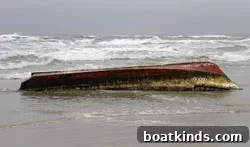
Chris Havel, a spokesman for the Oregon Department of Parks and Recreation, said that while a definitive link to the 2011 tsunami may not always be possible—especially when serial numbers and registrations cannot be matched—the sudden appearance of multiple Japanese boats is striking. “The embassy in Japan is very disciplined in that if they can’t make a direct link between a serial number and registration, they don’t offer us any explanation,” Havel explained. “However, how many Japanese boats washed up on the Oregon coast before the tsunami? Almost zero. I think it’s safe to say that it’s likely related.”
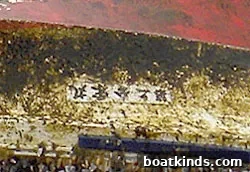
The most recent vessel recovered was a 24-foot open fiberglass boat found at Muriel Ponsler Wayside beach, north of Florence, Oregon, and removed on March 14. That recovery follows several other finds along different parts of the coast, underlining a pattern of trans-Pacific debris arriving on U.S. shores.
Other notable incidents along the Oregon coast in recent weeks include:
• A 17-foot panga-style fiberglass boat that washed ashore two miles north of Sunset Beach on February 27.
• A 30-foot vessel discovered on Horsfall Beach on February 20, which was identified as a boat originating from Honshu Island and believed to have been lost in the 2011 tsunami.
• A 30-foot fishing boat that beached along Gleneden Beach on February 5, found just days before a visiting group of Japanese environmentalists arrived in Oregon to help clean beaches affected by tsunami-related debris.
Experts warn that much more tsunami-generated debris could continue to reach the West Coast in the months and years ahead. The Japan Ministry of the Environment has estimated that roughly 5 million tons of debris entered the ocean during the disaster, which claimed nearly 16,000 lives. While scientists estimate that about 70 percent of that material settled on the seabed off Japan, the remaining mass—around 1.5 million tons—remains adrift on ocean currents and is expected to reach U.S. shores over an extended period of time.
Removing and disposing of marine debris is expensive and logistically complex. Havel has cited costs ranging from $1,500 to $2,500 to handle an individual boat, with much higher expenses for larger structures such as floating docks—illustrating the financial burden coastal communities and state agencies can face when dealing with this influx of debris.
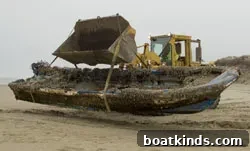
Beyond cleanup costs, environmental risks are a central concern. Biologists from the Oregon Department of Fish and Wildlife have documented non-native organisms attached to debris recovered from the ocean. Steve Rumrill, a department biologist, reported that gooseneck barnacles, mussels, seaweed and other marine life were found clinging to the most recently beached boat. Samples have been sent to Oregon State University’s Hatfield Marine Science Center for further identification and monitoring.
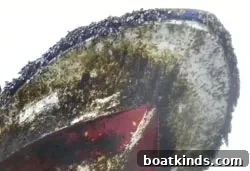
“We still can’t predict which will become invasive and which won’t,” Havel said, underscoring the uncertainty about which organisms may establish populations, reproduce locally, and disrupt native coastal ecosystems. This uncertainty has driven coordinated planning among state agencies and partners to assess and manage the risk posed by tsunami debris.
To address these challenges, Oregon created a Tsunami Debris Task Force to prepare for, respond to and communicate about marine debris events. In June of the previous year, Governor John Kitzhaber appointed Gen. Mike Caldwell, director of Oregon’s Office of Emergency Management, to lead an interagency team responsible for incident preparedness and response, public safety, cleanup operations and public outreach related to marine debris impacting Oregon’s coastline. The task force coordinates cleanup activities, provides guidance to local authorities, and works with scientific partners to monitor environmental impacts.
As more debris arrives, coastal communities, state agencies and researchers will continue to monitor shorelines, coordinate removals and study the organisms attached to debris to better understand long-term ecological effects. The recent spate of Japanese-marked boats highlights the ongoing legacy of the 2011 tsunami and the need for sustained readiness along the Pacific coast to manage both the physical and biological consequences of transoceanic debris.