
The Viking Marine Group has been a dominant force in the powerboat world for decades, especially in the luxury sportfishing segment. As a global leader in semi-custom yachts—with roughly 4,000 boats delivered to date—the New Jersey-based builder has consistently pushed the pace of innovation. With the rapid rise of its center-console line, Valhalla Boatworks, observers continue to study how this family-owned company climbed to such heights.
The company’s growth did not happen by accident. Its foundation is rooted in a family culture of hard work, practical education and an enthusiasm for boats passed down through generations. The drive began with the company’s cofounder, a determined entrepreneur who expected excellence and taught his children to find satisfaction in effort and craftsmanship. That ethic was inherited and refined by his son, and later passed to the grandchildren, guiding three generations as they built the business. The following are the lessons this family learned from one another.
WORK ETHIC
In 1964 Bill Healey and his brother Bob bought Peterson/Viking, a small builder of wooden boats that was struggling at the time. Bob brought financial skill and legal knowledge to the enterprise, while Bill provided hands-on boatbuilding experience and the operational leadership to grow the company. Under their stewardship the name changed to Viking Yacht Company and the business shifted its focus to the expanding market for recreational cruisers and convertibles.
“My father is a marine through and through,” says Pat Healey, who serves as Viking’s president and CEO. “He’s old-school, hardworking and uncompromising. Growing up, I learned quickly that there was a high standard to meet.” Pat recalls frequent clashes with his father when he started working alongside him, but he also credits Bill with instilling an intolerance for failure and a commitment to excellence.
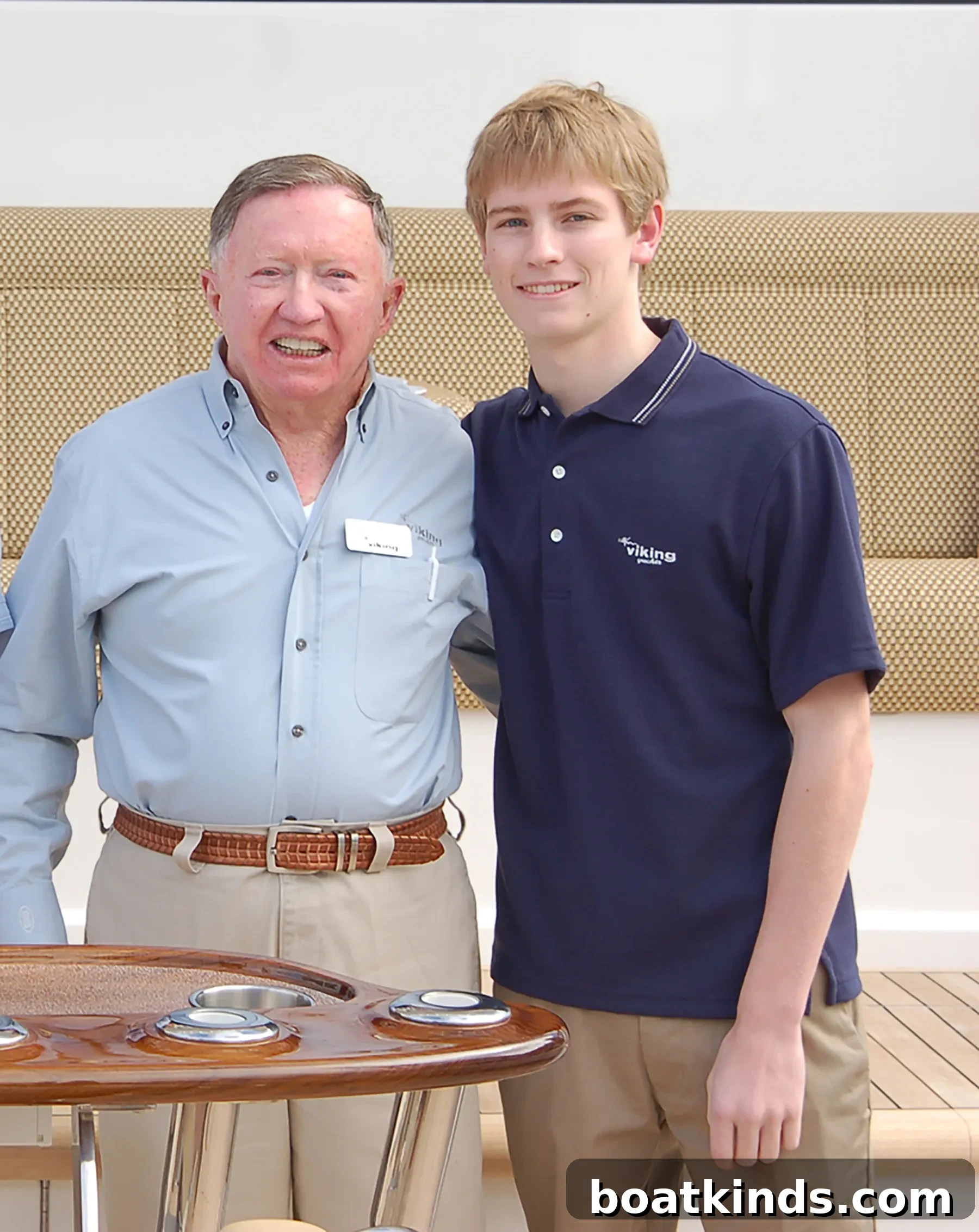
Bill set an example through long hours and personal attention. He worked six days a week, reserved Sundays for family and church, and after each shift he’d call his brother to discuss company matters. He treated builders, designers, engineers and the custodial staff with equal respect, and even with a growing workforce he maintained the tradition of greeting employees at the plant gate at the end of the day. That focus on people remains central to Viking’s culture today.
Bill’s leadership coincided with bold product moves. In 1971 Viking introduced its first 33-foot fiberglass convertible, followed by the popular 40-C in 1972—400 of which were sold over the next decade. The company continued to push into larger and faster models, always with an eye toward improving build quality and crew comfort.
Pat has maintained that respect for the workforce as Viking grew to roughly 1,600 employees. The company continues rituals that reinforce community, including an annual clambake when the factory closes so employees and their families can celebrate together.
A FISH STORY
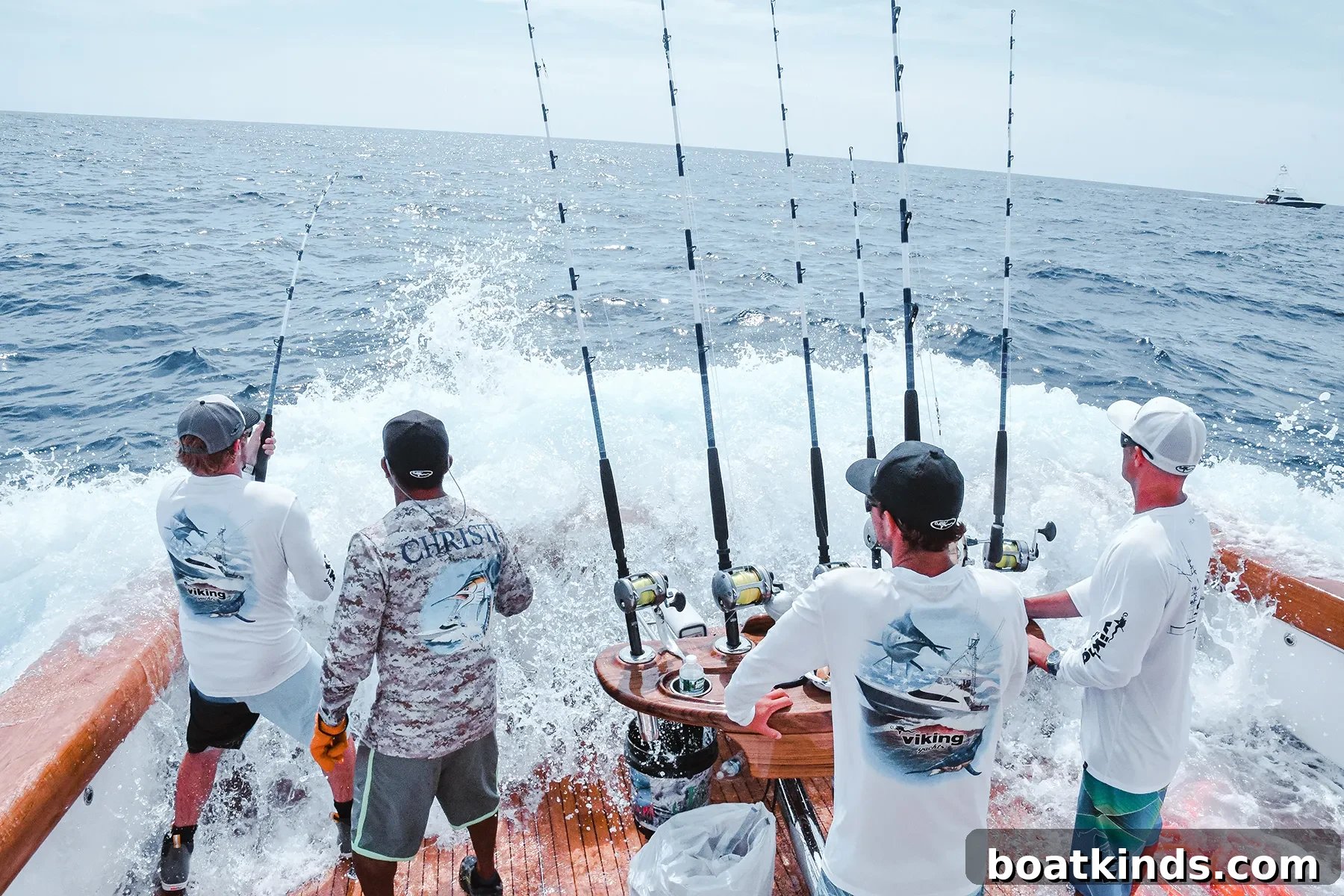
Although Viking became synonymous with sportfishing, Bill was never a dedicated angler—his passion leaned more toward cruising. It was Pat who developed a love for fishing, first aboard local headboats and later offshore, where a single white marlin can spark a lifelong obsession. Early fishing trips with family and company employees helped shape Pat’s interests and, ultimately, Viking’s product direction.
Pat expanded Viking’s demo program—putting new sportfishing models into tournaments up and down the East Coast—and championed designs that balanced tournament performance with onboard comfort. A pivotal example was the Viking 55-C, launched in 1997. Built for tournament competition, it combined speed and handling with spacious, well-appointed accommodations, setting a new standard for sportfishing yachts.
TALE OF TWO BOATS
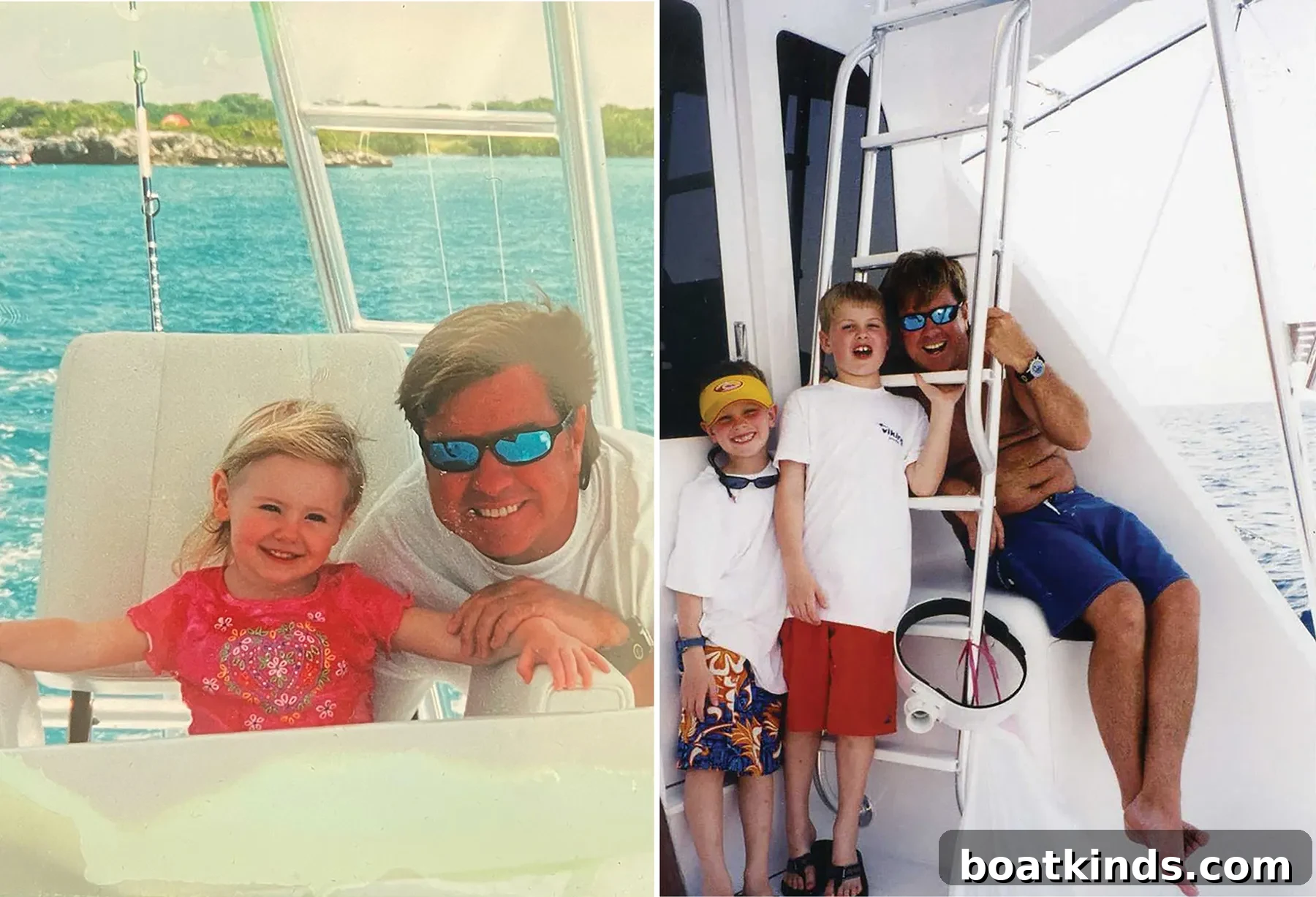
Pat’s relationship with boats began early. He started at Viking sweeping floors at 13 and, after pestering his father, received a dilapidated 16-foot Thunderbird when he was 15. He rebuilt it in the family garage—sanding, painting and installing a used outboard—and the experience gave him practical skills and confidence that he later passed to his own children.
When Pat and his wife Leanne bought their first waterfront home, he bought a beat-up 13-foot Boston Whaler for their sons, Sean and Justin, and handed them tools to restore it themselves. The boys learned hands-on fiberglass repair and boat finishing while their father guided the project. The result was a strikingly rebuilt boat, complete with teak console and seats, aluminum rails and a custom logo. They named it Double Trouble.
The Whaler was later passed to their sister Kaitlyn and renamed Sweet Thing, while Sean and Justin moved on to tournament fishing in a Contender bay boat. Today the original Whaler sits in the Valhalla showroom and remains a reminder of the lessons learned through hands-on work and family collaboration.
SCHOOL, SPORTS AND BUSINESS
Education and athletics were part of the family pathway into the business. Pat took time off after high school to work, travel and fish before attending college; family intervention redirected him to St. Joseph’s University to study accounting, a discipline his father and uncle believed would be useful in the business.
Sean, Justin and Kaitlyn also pursued sports and relevant studies, knowing from an early age they wanted roles at Viking. Sean polished boats on the make-ready dock as a teen, learning the attention to detail required for final deliveries. Justin excelled in baseball, and Kaitlyn focused on marketing and communications—skills she now applies as she manages social media and promotes the brand.
All three have formal roles in sales and marketing, but they also take VIP guests through the manufacturing facilities, staff boat-show displays and participate on demo teams in tournaments. Sean and Justin contributed to the development of Valhalla boats, blending practical experience with modern business approaches.
“Kaitlyn is a social media marketing guru,” Pat notes. Viking’s online followings continue to grow, reflecting how the next generation combines contemporary skills with the company’s traditional values.
THE COURSE AHEAD
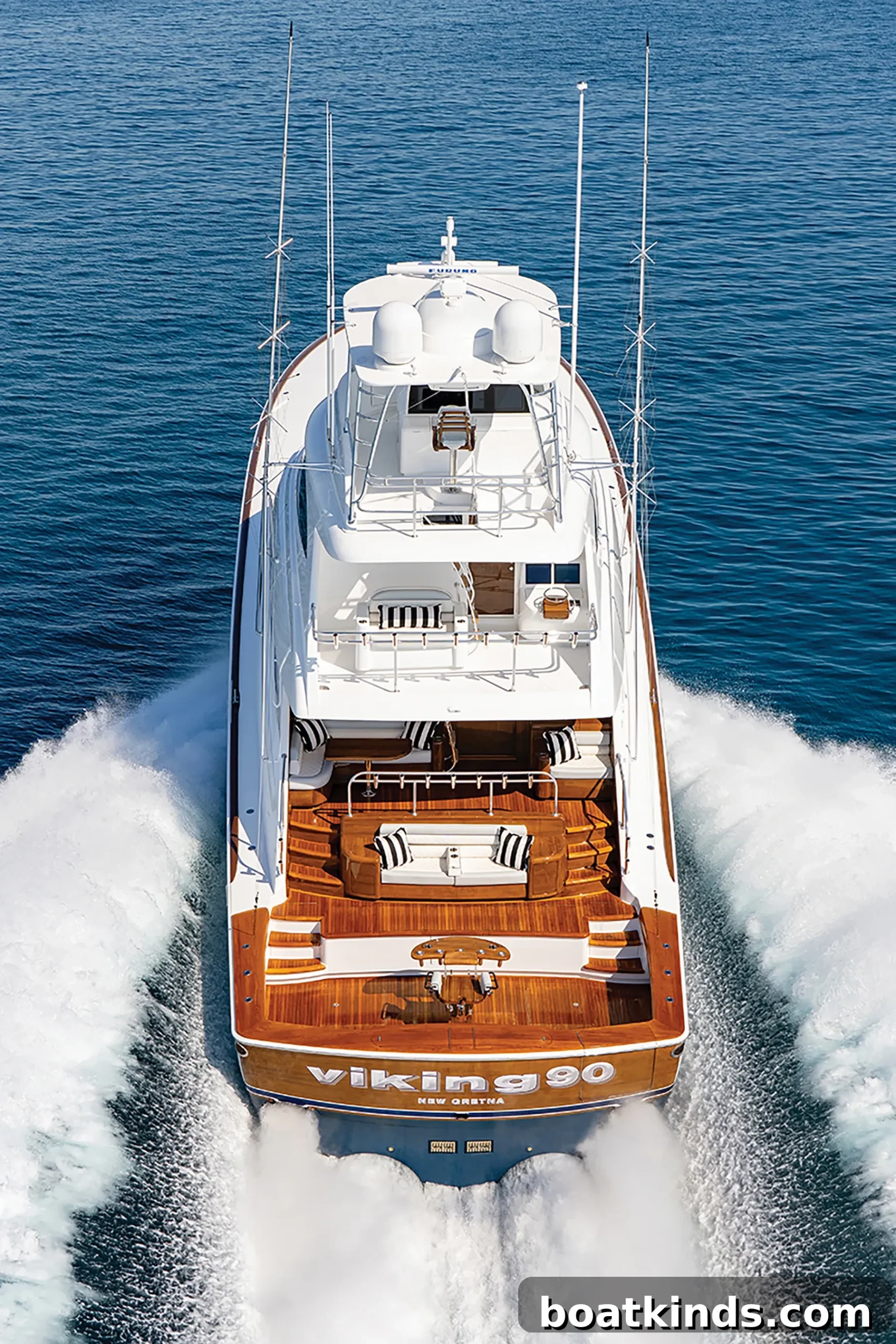
Since 1986 Viking has introduced 45 new models and delivered thousands of boats. More recently the company has accelerated the Valhalla Boatworks lineup: five center consoles in three years and nearly 400 Valhallas produced by the time this piece appeared. Viking also launched two flagship models in 2023—the Viking 90 and the Valhalla 55—the latter receiving industry recognition for innovation.
These achievements required long hours and concerted effort across design, engineering and production. Justin recalls tight production schedules and aggressive timetables that the team met through determination and commitment. The development and testing of the Viking 90, for example, involved thousands of hours of computer modeling and sea trials, and the boat has attracted strong interest from buyers.
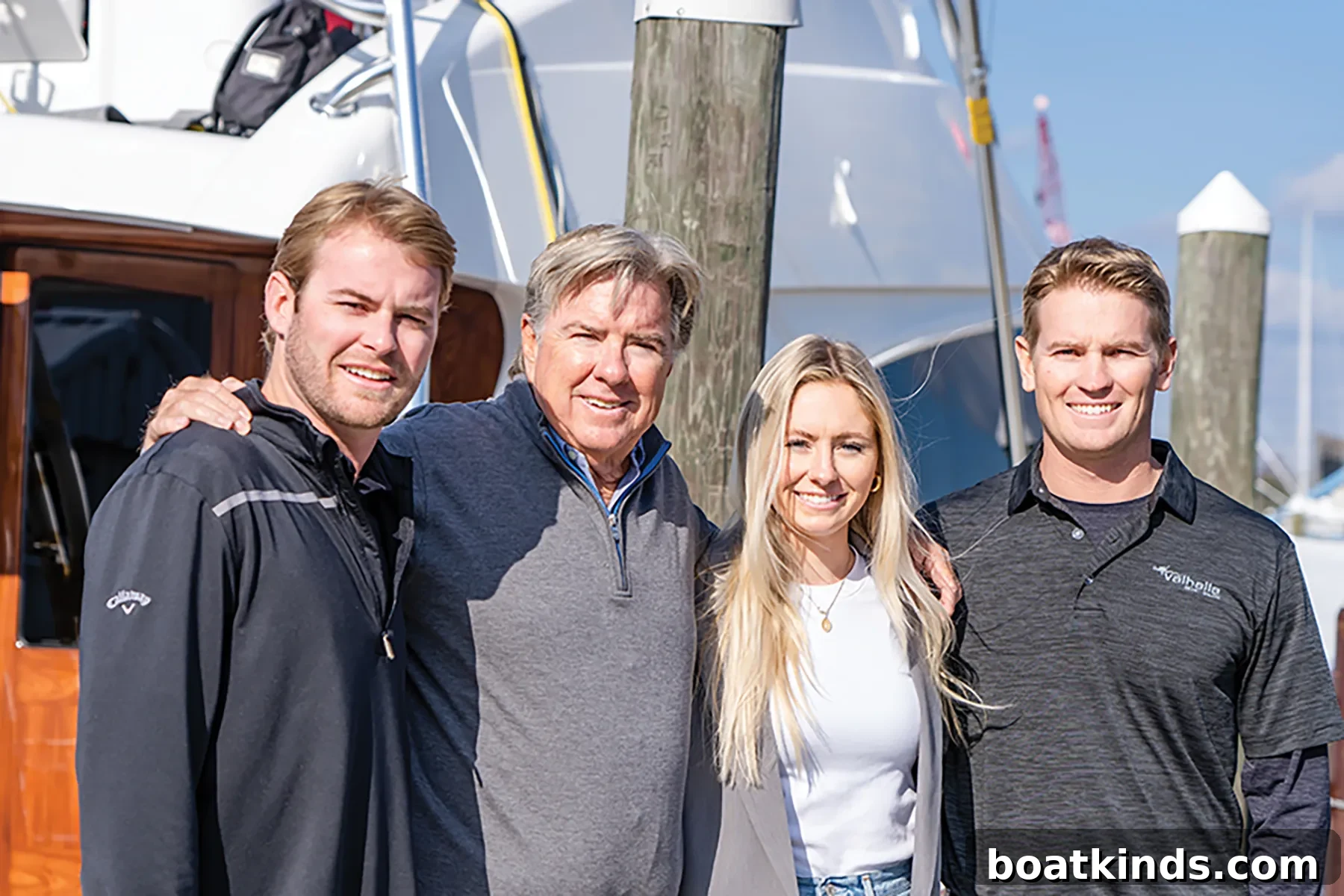
As the family looks to the future, Pat expresses confidence in the next generation. “One hundred percent,” he says when asked if Viking will be well served by his children. He points to their broad experience, the mentorship they’ve received and their blend of modern business savvy with a respect for the company’s people and traditions. That mix, he believes, positions them to navigate a rapidly changing industry while preserving the values that built Viking.
This article was originally published in the June 2023 issue.