
The marker was always there, way out on the shoal. It was anchored by an old chain to a mushroom anchor at the far end of the long sandbar that runs between the Mattaponi and Pamunkey rivers, where they join in a Y to form the York River.
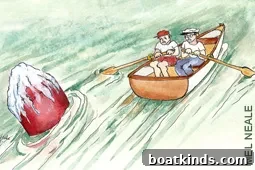
Thousands of years ago that shoal had been solid ground—forest and marsh—then, over centuries, the shoreline retreated. In earlier times members of the Powhatan Confederation camped and hunted on what remained. By the 1950s, when I was about ten, the river had chewed the peninsula back until the shoal stretched out to a small river town sitting between the two rivers. One end of town faced the shoal and the distant Red Buoy.
To us boys it was an almost mythical destination. Men who owned powerboats spoke of it as a good fishing spot and a navigational landmark: if you passed the buoy you were really headed out, and coming back, passing it meant you were finally getting close to home. For a kid in a 12-foot rowboat, though, the buoy existed mainly in stories and imagination.
From downstream, steamboats once made their way into town from ports like Baltimore and Norfolk, altering course near that buoy to choose which river to climb. Miss it, and you could end up aground on the shoal—especially in fog or rain. When there was a drowning, relatives and neighbors sometimes fired cannons past the Red Buoy, a grim custom meant to stir the river and bring a body to the surface. Timber schooners anchored there to wait for tides; tankers, tugs and barges passed it on deliveries and long coastal runs. Storms came roaring up the river from that direction, and hurricanes such as Hazel hit from the buoy’s side first.
I longed to see it. I knew the York broadened into the Chesapeake Bay many miles downstream and that beyond the bay lay the Atlantic and the wider world, but I had only a small skiff. I loved that boat and tended it carefully, yet common sense and my parents forbade me from trying the long, swift current alone. Still, one summer day when the tide was ebbing and the water lay calm, a friend and I took the skiff and rowed for it.
We could not see the buoy from the beach, but the shoal’s shape and the current’s dark, swirling patches guided us. When it finally appeared it seemed white from a distance; only up close did we see that the white was seagull droppings streaking over rusted red paint. I’ll never remember being as relieved to see gull poop.
Passing it felt like a victory—until the current pushed us beyond it. The tide that had been manageable upriver picked up in the channel and carried us into stronger water. We realized we couldn’t simply row back. After a brutal effort we hauled ourselves back to the shallows, hands blistered and salt-stung, then waded and pulled the skiff toward the beach. We knew the shoal bottom was full of crabs, and we had to find footing carefully while the rope chafed our raw palms. When we finally came ashore we found a crowd watching, including parents, and we understood perfectly that we’d been reckless. But we were also proud to have seen the Red Buoy.
That moment marked the beginning. When I later acquired an outboard, I’d pass the buoy easily, then go farther each time. The first day I saw the mouth of the York opening into the Bay was unforgettable: to the north lay the rest of the Chesapeake; to the south, Hampton Roads and the great shipping harbor; to the east-southeast, the Atlantic. It felt like the threshold to a much larger world. With steady work and better judgment, I thought, I could reach the Bay and perhaps, someday, the ocean.
Wolf Trap Light
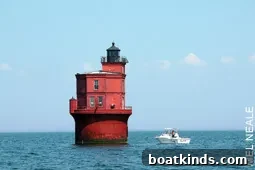
The name Wolf Trap Light sounded like an adventure. From the New Point Light shoals it showed up on the horizon: a lonely tower standing off distant marshes and creeks. Unlike New Point, where the keeper once lived ashore, Wolf Trap rose from its own base in open water; the keeper lived below the lantern in the brick portion of the tower. The idea of a man living alone on a man-made island stirred my imagination.
Wolf Trap became my next target. To reach it I had to learn the creeks, channels and safe harbors between the York and the larger Bay—places to hide from storms and refuge at night. With an 18-foot skiff, jugs of gasoline and provisions, and a compass salvaged from a boat lost in Hurricane Hazel, I pushed north from New Point. My charts were crude—an old Esso cruising guide with artist-rendered landmarks—but I trusted them enough to keep going.
Eventually I found Tangier Island too, a remote, low-lying place where watermen still held traditions and dialects that felt like a link to older times. The people of Tangier eyed my arrival with a mix of disbelief and admiration: a young, inexperienced boater seemed either very brave or very lucky. In truth it was a little of both. These first voyages taught me that once you reached one distant mark, you often had to keep going if you wanted to explore further.
Gun Cay Light
By the early 1980s my wife, Mel, and I had moved from small skiffs to larger cruising vessels. After selling a 41-foot ketch, we bought a 47-foot sloop-rigged motorsailer and cruised widely: the eastern Gulf coast, the Florida Keys, the Atlantic coast, and all around the Chesapeake. We learned to weather cold winters aboard with a wood stove, but we dreamed of the Bahamas—a cruising world of shallow banks, scattered aids and hidden coral heads.
We prepared carefully for our passage and chose Gun Cay Light as our intended landfall to enter the Bahamas Banks. Leaving from Angelfish Creek, a short run across the Gulf Stream would put Gun Cay within reach, but the channel into the Banks demanded precise navigation: a straight run into shallow water, a sharp turn at a rock wall, then another turn into safe, shallow ground. In the Bahamas there were few buoys and many that could drift, so recognition of the light and the water colors mattered as much as any chart.
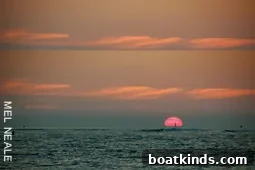
We watched the Bimini chain rise as a grey smudge on the horizon. The structure we’d been aiming for was not a grand lighthouse but a small, house-like tower with traces of white paint—the unmistakable Gun Cay Light. The cay itself was little more than rock and scrub, with a service dock and a shack, but reaching it felt like stepping into another world. Over the next two decades we spent many winters exploring the Bahamas, learning to read water color, current and reef, and to rely on natural landmarks when aids to navigation were absent or unreliable.
On one occasion a critical structure, the Northwest Channel Light, simply vanished; later we heard it had been carried into Nassau by a megayacht whose owner had, it seems, trusted an autopilot too blindly. That episode underscored a lesson we’d learned: aids to navigation can fail or move—knowing how to read the water, the shapes of islands and the roll of a distant shore is often safer than blind faith in buoys.
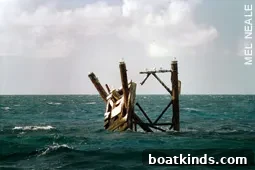
We came to trust God-made ATONs—natural aids to navigation—just as much as man-made ones. The voluptuous roll of Fat Virgin announced the approach to the British Virgin Islands; twin hills and certain rocky outcrops signaled islands in the Bahamas. Reading currents taught us where to drift or hold position, and understanding bottoms and ledges improved our fishing, lobstering and anchoring. We learned to spot grouper in shadowed ledges, to avoid fire coral and sea urchins, and to accept the occasional misadventure as part of paradise.
Mile Zero
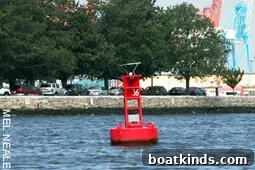
After long passages we’d always find an inlet back on the East Coast, and with the ICW and its buoys our last miles home were familiar. The ICW’s Mile Zero—just off Red 36—became a marker for us like the Red Buoy had been when I was a boy. It meant the ICW began to the south or ended to the north; it marked transitions and homecomings.
The first time we crossed Mile Zero in our 47-foot motorsailer we had two babies aboard, provisions for months, schoolbooks and all the gear a cruising family carries. The sense of heading “south” felt like discovering a new universe. Over the years we passed Mile Zero north and south many times. The children grew up, the voyages changed, but the rituals remained. Coming north, as Chesapeake waters loom on the horizon, we still think of the York River and the Red Buoy, and we know that familiar waterways continue to lead us home.
March 2013 issue