
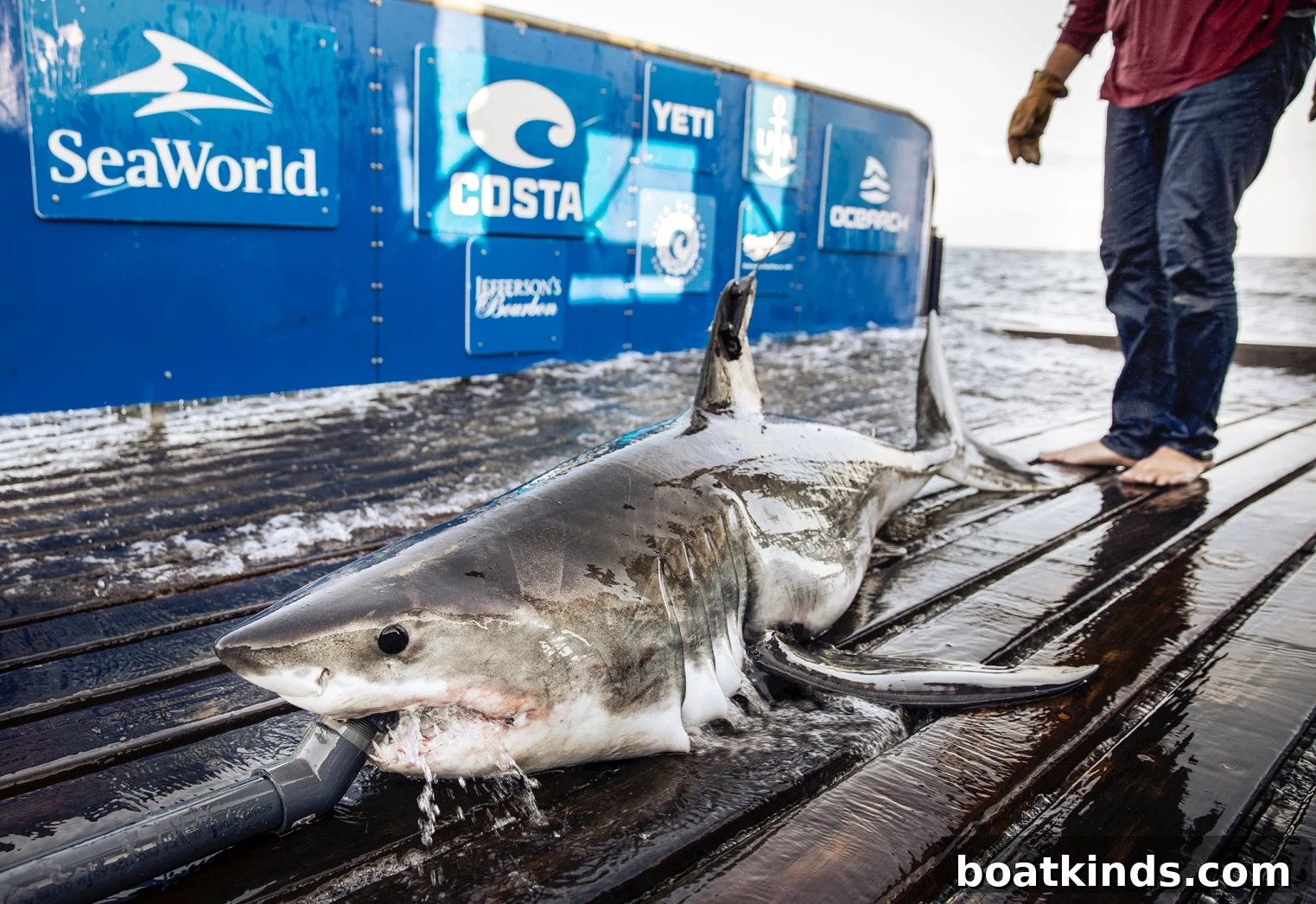
Great White Shark Research Moves from Massachusetts to Nova Scotia
Researchers studying great white sharks have shifted their focus from the waters off Massachusetts to the coastal areas of Nova Scotia, continuing an established seasonal effort to tag and monitor these apex predators in the Northwest Atlantic. The team, operating under the OCEARCH research program, recently tagged three great white sharks off Cape Cod and has now moved north to eastern Canadian waters to tag additional animals. This marks OCEARCH’s fourth consecutive year conducting fieldwork in the region.
Tagging and tracking programs like this one provide important insight into shark movements, habitat use, and seasonal behaviors. By deploying satellite and acoustic tags, scientists can follow individual sharks across hundreds or even thousands of miles, identifying key feeding grounds, migration corridors, and areas where conservation measures might be most effective. The eastern shores of Canada have emerged as a particularly valuable study area for understanding the summer distribution of Northwest Atlantic great whites.
OCEARCH Chief Scientist Bob Hueter summarized the region’s importance succinctly: “We’ve learned this part of Atlantic Canada is very important to the Northwest Atlantic white shark population as a summer feeding ground. It’s all about the rich food resources there in summer, including fish, seals, and the occasional dead whale.” Those abundant food resources help explain why large adult sharks return to these waters regularly during the warmer months.
The expedition team has already had notable encounters in the area. On a previous trip to eastern Canadian waters, OCEARCH captured and tagged a particularly large female great white named Nukumi. That shark measured 17.5 feet long and weighed approximately 3,500 pounds, underscoring the size and vitality of animals using these feeding grounds. Each tagging event adds valuable biological data—length, sex, condition—and provides a mobile data relay through satellite transmissions that help researchers piece together seasonal patterns and long-term trends for the species.
OCEARCH scientists plan to remain off the eastern coast of Canada through the end of September to maximize the window for tagging and observation. The timing aligns with the peak period when many prey species are abundant and when great whites concentrate inshore to feed. The team’s extended presence allows for repeated surveys, follow-up tagging attempts, and close coordination with local stakeholders.
Chris Fischer, OCEARCH founder and expedition leader, noted the strong local support and professional collaboration they have found in Nova Scotia. He said the province “has become our favorite place to work in the Northwest Atlantic,” praising community commitment to objective science and an ocean-first approach. That local partnership is important for both field logistics and long-term conservation outcomes, as fishermen, coastal communities, and provincial authorities all play roles in improving knowledge and stewardship of marine ecosystems.
Public interest in the project is high. OCEARCH’s tagging work is often covered in regional media, and the organization maintains an online tracker and resources that allow the public to follow tagged sharks in near real time and learn about individual animals and expedition findings. Coverage in outlets such as the Boston Herald has highlighted the shift in seasonal research activity from Cape Cod to Nova Scotia and the growing recognition of eastern Canadian waters as a vital summer habitat for great whites in the Northwest Atlantic.
As researchers continue their work through September, each new tag and observation will refine understanding of great white shark ecology in the region. That knowledge is essential for informing fisheries management, public safety measures, and conservation planning. With recurring visits over consecutive years, OCEARCH and its partners are building a multi-year dataset that will help reveal how populations use the Atlantic coastline, respond to changing prey patterns, and move between feeding and breeding areas. Continued collaboration between scientists and coastal communities in Nova Scotia will remain key to this effort.