
Charleston Race Week delivered on many fronts: 191 boats registered, steady winds and favorable weather, strong camaraderie among competitors, and lively post-race gatherings. Yet the true heart of the event was the determination and passion of the sailors themselves—most notably two young women whose very different paths to the regatta highlighted sailing’s broad appeal and resilience.
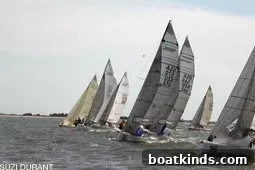
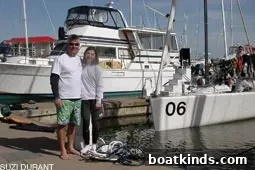
Among the fleet, Riley Chadwick stood out as the youngest competitor. The 12-year-old sixth-grader from Annapolis called Charleston her “very first international regatta” and brimmed with excitement at racing alongside crews from Canada and Germany. Riley sailed aboard the Melges 24 Cujo, owned by Greg McCliment of Novi, Michigan, with her father, Navy Lt. Commander Chris Chadwick, as part of the crew.
Riley was a lively and committed member of Cujo’s hiking team. The boat finished 21st out of 31 entries, but her enthusiasm was undimmed. “I loved hiking out,” she said with a laugh, adding that she enjoyed every moment except being left out on the rail during tacks. Riley has been around boats as long as she can remember—her parents introduced her to sailing as an infant—and she still lists the sport ahead of most other pastimes: “Sailing is my favorite pastime, other than video games.”
Riley and her family race regularly on a J/80 called Church Key with East Port Yacht Club, and she takes weekly lessons at the Severn Sailing Association. Ambitious for her age, Riley already has clear goals for the future: she hopes to attend the U.S. Naval Academy and dreams of owning and living aboard a large racer-cruiser—mentioning boats like a TransPac 52 or a J/122, or whichever big new model appears in the J fleet.
Katie Burns: From military service to competitive sailing
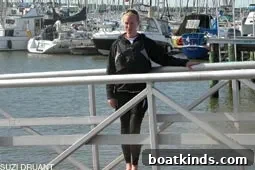
By contrast, 25-year-old Katie Burns brings a very different background to the race course. An Army veteran and former Black Hawk helicopter mechanic who served in Iraq, Burns is now a student at Old Dominion University in Norfolk, Virginia. Sailing on the Viper 640 Blade Runner, owned by Phil Davis and Sheldon Schroeder from Corpus Christi, Texas, Burns finished the week 26th out of 30 boats. Despite a frustrating opening day—“the worst day I ever had on the water,” she said—she approached the result with perspective: “Sometimes you have to lose to learn.”
Conditions shifted dramatically on the second day as wind and swell increased and race marks were changed multiple times. Inexperience among some crewmembers—several were competing in their first regatta—compounded the challenge. Burns described how difficult it was to find rhythm when crew and rig setup weren’t in sync. “The owners were new to racing and couldn’t get the rig right. Every time we tried to put up the kite, we wiped out,” she explained, noting how a capsize and being left behind while the boat kept moving made the day especially tough.
Katie’s sailing roots trace back to junior sailing at Hampton Yacht Club, where her father’s godparents introduced her to the sport. She quickly fell in love with sailing and has since competed internationally in Portugal and across the U.S. East Coast. Mentored by experienced sailors such as Pete Hunter of North Carolina—who sails the Thompson 30 Wairere—Burns has developed a competitive drive and an analytical approach: “He’s taught me to always think, ‘What could I do better?’”
Her Army experience has shaped her character and resilience. After returning from service she felt unmoored, but racing helped her reclaim purpose and identity. Now majoring in geology, Burns says she enjoys working with maps and navigation, interests that dovetail naturally with sailing. While she once considered staying in the military to pursue flight school and a helicopter pilot career, she’s embraced civilian life for now and plans to balance college with competitive sailing. “I can always go back,” she says, acknowledging that both paths remain possible.
Sailing’s future
The contrast between Riley and Katie underlines the depth and diversity of sailing’s next generation. Riley represents the youthful enthusiasm and family-supported development that feeds junior programs and club fleets. Katie exemplifies a pathway where discipline, adversity, and mentorship converge to create a focused, competitive sailor. Both stories reflect why events like Charleston Race Week matter: they provide a testing ground for skills, a community for learning, and memorable experiences that shape future goals—whether aiming for the Naval Academy, living aboard a big cruiser, pursuing nautical navigation, or simply returning stronger at the next regatta.
Charleston Race Week may be measured by entries, weather, and results, but its lasting success lies in inspiring sailors of all ages and backgrounds. From preteens on hiking teams to veterans finding new direction through racing, the regatta continues to build the sport’s talent and passion.
This article originally appeared in the September 2010 issue.