
More Novice Boaters Drive Demand for Online Courses from America’s Boating Club
From her base on Sanibel Island off Florida’s Gulf Coast, Mary Paige Abbott has noticed the same trend many experienced boaters have observed: a surge of newcomers on local waterways looking for a socially distanced way to enjoy time outdoors — and many with little or no experience at the helm.
“For years, there have been people who should not be out on the water operating their own boats,” Abbott says. “Now, we’re just getting hit with a huge quantity of those people. A lot of them, sadly, are people who have never boated before or who have been exposed to boating, but they’ve erroneously assumed that the sport is easy.”
As chief commander of the United States Power Squadrons—also known as America’s Boating Club—Abbott is helping steer a response that emphasizes education and safety. The nonprofit organization has expanded its catalog of online courses for new and experienced boaters and now offers its foundational class, America’s Boating Course, in both English and Spanish. The organization also introduced a Boat Handling course aimed at improving practical on-water skills for those who have moved beyond the absolute beginner level. These additions sit alongside higher-level offerings such as AIS Electronics for Boaters and Hurricane Preparation.
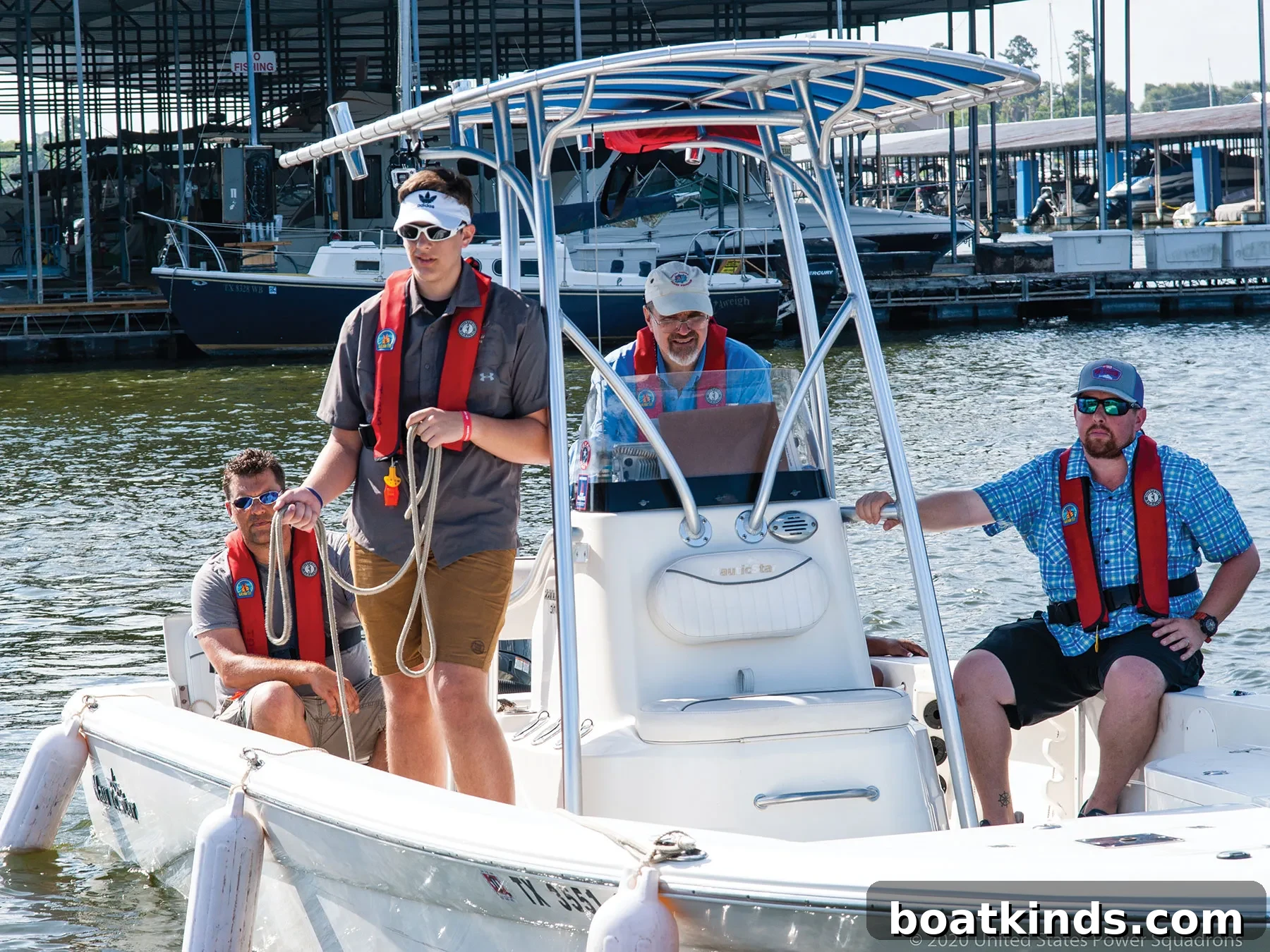
Abbott explains that America’s Boating Club had already been increasing its online educational offerings before the Covid-19 pandemic; the need for socially distanced learning simply accelerated the transition. Historically, local squadrons—about 340 across the United States—delivered classroom-style courses to the public and to club members. But as schedules and lifestyles shifted, the organization adapted, converting many programs into virtual seminars and blended learning formats that better suit modern learners.
A blended learning model combines online instruction with in-person practice, allowing boaters to complete coursework remotely and then follow up with supervised, hands-on sessions. Even amid pandemic-related restrictions, America’s Boating Club members can arrange on-the-water skills training with a local squadron instructor who follows safety protocols such as wearing a mask and gloves. These on-the-water clinics remain available where local rules permit, giving students the practical reinforcement they need to operate safely and confidently.
One course likely to draw interest in the current environment is Cruising and Cruise Planning. Designed for boaters considering extended trips or living aboard for a week or longer, the course runs through eight two-hour sessions and covers the practical realities of extended cruising. “The truth is, it’s not just the life of Riley out there on the water,” Abbott says, underscoring that careful planning and seamanship matter when cruising for days or months.
Membership in America’s Boating Club provides reduced fees for classes, and Abbott expects demand to increase as more people seek training during the colder months or while boats are not being actively used. “Traditionally in the winters, our course sales increase. People are inside and preparing for the next boating season,” she notes. The club is preparing to expand its offerings further, aware that the boating world continually evolves and that ongoing education is essential.
Beyond the United States Power Squadrons, other organizations are also responding to increased interest in boating education. For example, Boaters University from Active Interest Media offers an all-access pass to on-demand classes covering boat handling, engine maintenance, seamanship, survival at sea, fishing techniques, and weather forecasting. These on-line resources let boaters study at their own pace and keep materials for future review, making it easier to refresh skills between seasons.
With more newcomers taking to the water, the emphasis on training and safety has never been more important. Structured courses—whether introductory lessons in boating safety and rules of the water, practical boat handling, or advanced topics like navigation and hurricane prep—help new boaters develop essential skills and help experienced owners refresh techniques. As America’s Boating Club and other providers expand virtual and blended learning options, boaters have more opportunities to learn effectively while maintaining social distance.
This article was originally published in the December 2020 issue.