
U.S. leads the way at Rolex Miami regatta
The Rolex Miami Olympic Class Regatta concluded with a single medal race for the Olympic hopefuls and with finals and petit finals for the women’s match racers, delivering intense competition across multiple classes. The regatta drew a deep international field and provided decisive, high-stakes sailing that mirrored Olympic formats and pressure.
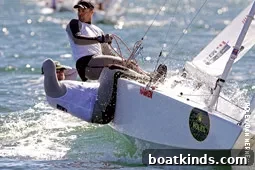
The event followed an Olympic-style format: after five days of fleet racing, only the top 10 boats in each class advanced to the medal race. This structure heightened the importance of every race during the qualifying series and made the final showdown an especially tactical and dramatic affair. In total, the regatta hosted 448 teams comprising 633 athletes representing 45 nations, making it one of the largest annual gatherings of Olympic-class sailors. Medal counts reflected strong national programs: the United States finished on top with 10 medals, Great Britain collected six, France earned five, and Spain secured four.
In the women’s match racing, the final was a tightly contested best-of-five series. The American trio of Anna Tunnicliffe (Plantation, Fla.), Molly Vandemoer (Redwood City, Calif.), and Debbie Capozzi (Bayport, N.Y.) emerged victorious over the British squad led by Lucy MacGregor. The series delivered aggressive on-water tactics and close-quarters maneuvering, underscoring why match racing remains one of the most intense spectator classes in small-boat sailing.
The Laser Radial fleet featured 57 boats and produced a commanding performance from Paige Railey of Clearwater, Fla. Railey built such a large lead during the series that she clinched the gold medal a day before the medal race, yet she still sailed confidently to win the medal race itself. Spain’s Alicia Cebrian secured the silver medal, while Britain’s Alison Young took bronze, showing strong international depth in the Laser Radial class.
Among returnees to international competition, Amanda Clark of Shelter Harbor Heights, N.Y., and Sarah Chin of Hoboken, N.J., both 2008 Olympians, made a notable comeback in the women’s 470. After taking a year off from competition following the Olympics, they returned to form and won the gold medal in their class, demonstrating resilience and effective teamwork in a demanding two-person dinghy fleet.
The Star class saw a dramatic finish. Norway’s Eivind Melleby and Petter Morland executed a come-from-behind victory to claim gold, edging out the team of Andy Horton (South Burlington, Vt.) and James Lyne (Granville, Vt.). Horton and Lyne had led much of the 24-boat regatta and entered the final race with only a three-point advantage. An unforced error at the start forced Horton and Lyne to fall back and fight their way up the course, ultimately finishing fifth in that race and settling for second overall. Mark Mendelblatt of St. Petersburg, Fla., sailing with John Von Schwarz of Annapolis, Md., completed the podium in third place. The Star competition highlighted how quickly standings can shift in a single decisive race.
Paralympic-class racing also drew strong international entries and produced a healthy medal spread. The United States topped the Paralympic-class medal table with four medals. Canada followed with two medals, and Norway, Great Britain, and The Netherlands each claimed a medal as well. The results underscore the growing depth and competitiveness of adaptive sailing in international regattas.
KEY WEST RACE WEEK
Key West Race Week continued its reputation as an end-of-season test for performance and IRC-rated boats. In IRC 2, Mike Williamson of Newport, R.I., celebrated a class victory aboard his Summit 40, sinking into the cockpit with a satisfied smile and a celebratory beer after a week of close racing. John Cooper’s Cool Breeze, representing Cane Hill, Mo., finished second in IRC 2, with David Murphy’s Pugwash from Newport rounding out the podium in third.
Across the other classes at Key West Race Week, winners shared similar moments of relief and camaraderie upon returning to the dock. In the Farr 40 division, Giovanni Maspero’s Italian entry Joe Fly topped the leaderboard, greeted by handshakes and exuberant celebrations from the crew. Runner-up honors went to Barking Mad, owned by Jim Richardson of Newport, R.I., while Nerone, another international entry from Italy, finished narrowly behind Barking Mad and completed a competitive top three.
Both the Rolex Miami Olympic Class Regatta and Key West Race Week showcased the depth of talent in North American and international sailing. From Olympic-class single-handed fleets to two-person dinghies, keelboats, match racing, and Paralympic classes, the events offered a full spectrum of competitive sailing and highlighted athletes who are building toward future international championships and Olympic campaigns.
This article originally appeared in the New England Home Waters section of the April 2010 issue.