
The Ada K. Damon Shipwreck: History, Exposure, and New Discoveries at Crane Beach
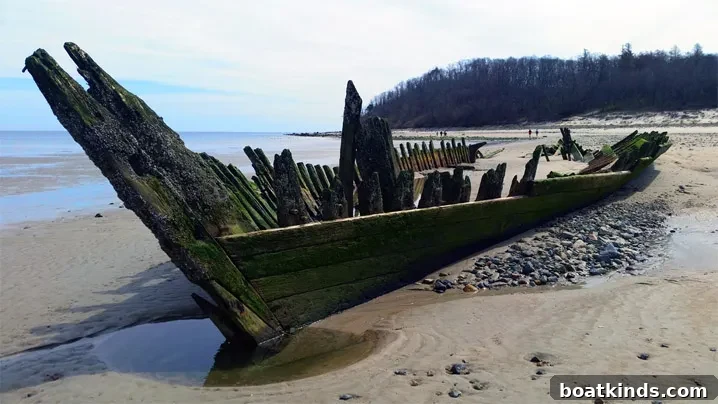
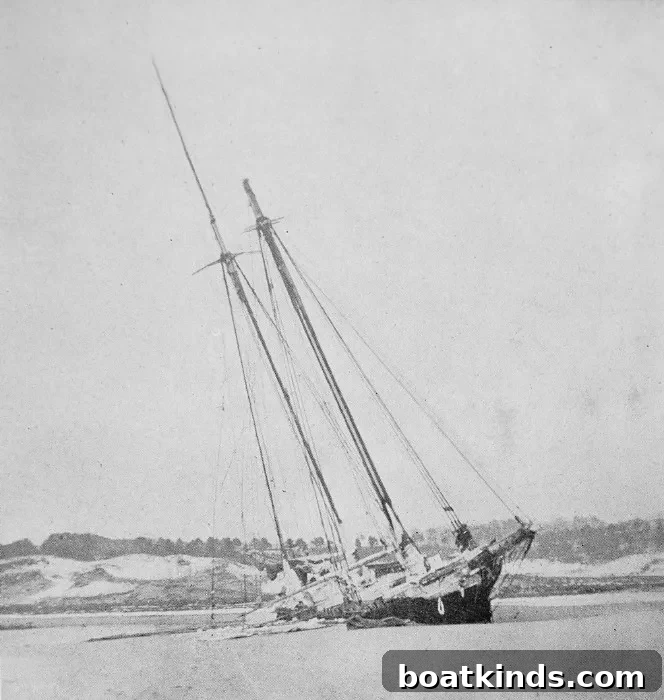
The Ada K. Damon, a sand schooner that came ashore on Crane Beach in Ipswich on Massachusetts’ North Shore around Christmas of 1909, has been a visible and evocative feature of the shoreline for years. Largely buried and forgotten for much of the last century, the wreck became more exposed after coastal erosion in 2020, and in recent seasons the timber and fastenings that once formed a coherent hull have begun to break apart and scatter along the beach.
From Buried Relic to Revealed Remnant
For decades the Ada K. Damon remained partially buried in sand, with only fragments visible at low tide. In 2020, Hurricane Teddy produced enough coastal erosion to uncover previously hidden sections of the ship’s hull. That exposure allowed marine archaeologists and local stewards to study parts of the vessel that had not been seen since it came ashore more than a century earlier. Unfortunately, the same erosion that revealed the wreck also destabilized it: exposed timbers and planking became vulnerable to waves, storms, and seasonal tides, and the wreck has progressively fragmented since then.
Archaeological Opportunity and Response
Archaeologists consider the newly revealed sections of the Ada K. Damon an important opportunity to document construction techniques and learn more about the vessel’s story. David Robinson, director of the Board of Underwater Archaeological Resources in Massachusetts, summarized the attitude of researchers: “Portions of the ship that had been buried for 100 years now were visible, so there was an opportunity there to learn from the site things that we hadn’t known before. So, we took a pile of lemons and turned it into lemonade.” That pragmatic approach guided documentation efforts, recording the exposed hull elements before further deterioration could occur.
Natural Colonization and Beach Ecology
As the wreck has fragmented, the scattered timbers have become integrated into the nearshore ecosystem. Barnacles, algae, small invertebrates, and other marine life have colonized the wood, turning the remnants into microhabitats. The presence of living organisms on the wreck underscores how cultural heritage and natural processes intersect: a single site can be both an archaeological resource and an ecologically productive element of the shoreline.
Community Engagement: Shipwreck Scholars and Education
The Trustees of Reservations at Crane Beach have taken an educational approach to the site with a program called Shipwreck Scholars. This initiative brings children and students to the beach to explore the wreck responsibly while learning about maritime history, coastal processes, and stewardship. In June, all students from Ipswich Public Schools will visit Crane Beach to experience the wreck and the coastal landscape firsthand. These educational visits emphasize observation, historical context, and respect for a fragile archaeological site rather than collection or removal of artifacts.
Conservation Challenges and Future Study
The condition of the Ada K. Damon demonstrates the conservation challenges faced by coastal shipwrecks. Shoreline erosion, seasonal storms, and the natural cycle of burial and exposure mean that time is limited for researchers seeking to document vulnerable elements. Marine archaeologists aim to record construction features, materials, and the spatial distribution of timbers and fastenings while balancing public access and ecological sensitivity. Local stewards, archaeologists, and educators are working together to monitor the site, interpret its history for visitors, and preserve as much information as possible.
Why the Ada K. Damon Matters
Shipwrecks like the Ada K. Damon provide a tangible connection to coastal maritime history. Even as the wreck continues to break apart, its exposed remains offer insights into early 20th-century working vessels on the New England coast and a classroom for students and the public. The combination of archaeological documentation, ecological observation, and community education helps ensure the wreck remains a meaningful element of Crane Beach’s cultural and natural landscape.
Visitors to Crane Beach are asked to observe the wreck respectfully: photograph and learn, but do not remove timbers or artifacts. That approach helps protect the site for ongoing study and for future generations to appreciate the layered stories held in the wood and sand of this historic shipwreck.