
Family-owned E&H Boat Works Can Stay Put Thanks to Amendment 6, Owner Says
How do you spell relief? A-m-e-n-d-m-e-n-t 6. That single change in state law is the reason Christopher Hodge believes his family’s waterfront business can finally breathe easier after years of pressure from rising property values and taxes.
Floridians voted on Nov. 4 to adopt Amendment 6, a measure designed to protect working waterfronts by requiring county assessors to value such properties based on their actual maritime use rather than their “highest and best” non-marine redevelopment potential. For owners of small boatyards and marine service businesses, that shift can mean meaningful property-tax relief and a greater chance of staying in business amid intense development pressure.
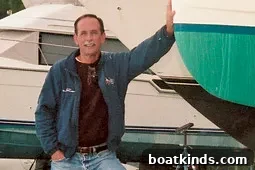
For Hodge, president of the family-run E&H Boat Works and the adjacent self-service facility known as The Ways in Palm Beach Gardens, the amendment comes as a welcome reprieve. The two operations sit on a contiguous 4-1/3 acres of Intracoastal waterfront just north of PGA Boulevard, an area that sits on the edge of what locals call the “PGA Corridor”—some of the most valuable land in Palm Beach County.
“The taxes are the only reason we invented The Ways,” Hodge says. He opened the self-service yard in 1984 as a response to escalating carrying costs that made it harder to operate a full-service boatyard on the property. That creative response helped the family maintain its maritime presence, but it didn’t eliminate the pressure that high property values put on an operating business.
The yard began in 1946, when Leon and Andrea Hodge established E&H on the family’s waterfront parcel. Decades later, Christopher Hodge still lives in the family home between the two yards and walks to work each day. “I’ve probably been working here for 45 years,” he says. “It’s the only job I’ve ever had.” He even keeps an old pay stub from when he worked at the yard at age 10, earning 10 cents an hour.
Today, Hodge reports his total property-tax bill is about $110,000. Over the years he’s received multiple offers to sell the land, some from developers with ambitious plans—a proposed state-of-the-art drystack marina, and even a concept for a large mixed-use project with a hotel, shops, restaurants and marina. Those offers are tempting, he admits, given the rising costs of running a marine business, but Amendment 6 reduces the urgency to sell by ensuring the property’s value more accurately reflects its active marine use.
Despite the relief afforded by the amendment, Hodge stresses that staying put isn’t guaranteed. He and his mother are prepared to continue operating the yards, but market forces and personal decisions still factor into any long-term outcome. “The idea of selling [the yards] and driving someplace other than the boatyard to work is kind of scary,” he says. That attachment speaks to the deep family legacy and identity tied to E&H and The Ways.
Hodge has adapted the business model over time. The full-service yard now operates largely with contractors, while the in-house crew focuses on mechanical and electrical work, carpentry and running-rigging repairs. The operation employs roughly 10 people and rents space to independent specialists. Among his longtime staff are shipwright Don Bishop, known for expertise with wooden hulls, and Hank Stanciec, a specialist in rudders, gears, shafts and alignments.
Equipment at the yards reflects their different roles: E&H still uses its vintage marine railway for hauling and is especially careful with classic wooden boats—Whittakers and Ryboviches—that benefit from the gentler handling the railway provides. The adjacent Ways features a 70-ton Travelift to handle larger lifts.
The business serves mainly powerboats between 30 and 70 feet and occasionally tackles sailboats. Hodge notes that working with boat owners requires a balance of professionalism and mutual respect. “A gentleman who likes his money better than his boat—I just can’t do business with him,” he says, emphasizing that relationships and trust matter in marine service work.
Like many in the marine industry, Hodge has endured lean times. The economic downturn and subsequent credit and market instability took a toll on customer spending and project availability. “It has been devastating to everyone,” he says. “It’s a roller coaster in this business.” Still, the passage of Amendment 6 gives him renewed hope that the family yard can continue serving boaters and preserving a piece of Palm Beach Gardens’ working waterfront.
This story originally appeared in the February 2009 issue.