
Origins of OSTAR: The First Single‑Handed Transatlantic Race
The single‑handed transatlantic race known today as OSTAR (Observer Single‑handed Transatlantic Race) began as a bold idea in the mid‑20th century. Credited to Herbert “Blondie” Hasler and organized under the auspices of the Royal Western Yacht Club of England, the race set out to test human skill, seamanship, and the limits of small‑boat ocean voyaging. The concept—one sailor alone, crossing the Atlantic from southern England to New York—captured imaginations, and even in its earliest incarnation the event established a legacy that still influences offshore racing and solo sailing worldwide.
Hasler first proposed the single‑handed transatlantic challenge in 1956. His press announcement drew broad interest: roughly one hundred yachtsmen signaled they were intrigued by the idea, yet only eight entered officially when the race was first organized. By the time sailors were ready to cast off the lines in 1960, five boats actually set sail. The meager entries and sparse equipment underscore how audacious the endeavor was—participants had no satellite communications, no GPS, and relied primarily on handheld sextants and magnetic compasses for celestial navigation and course keeping.
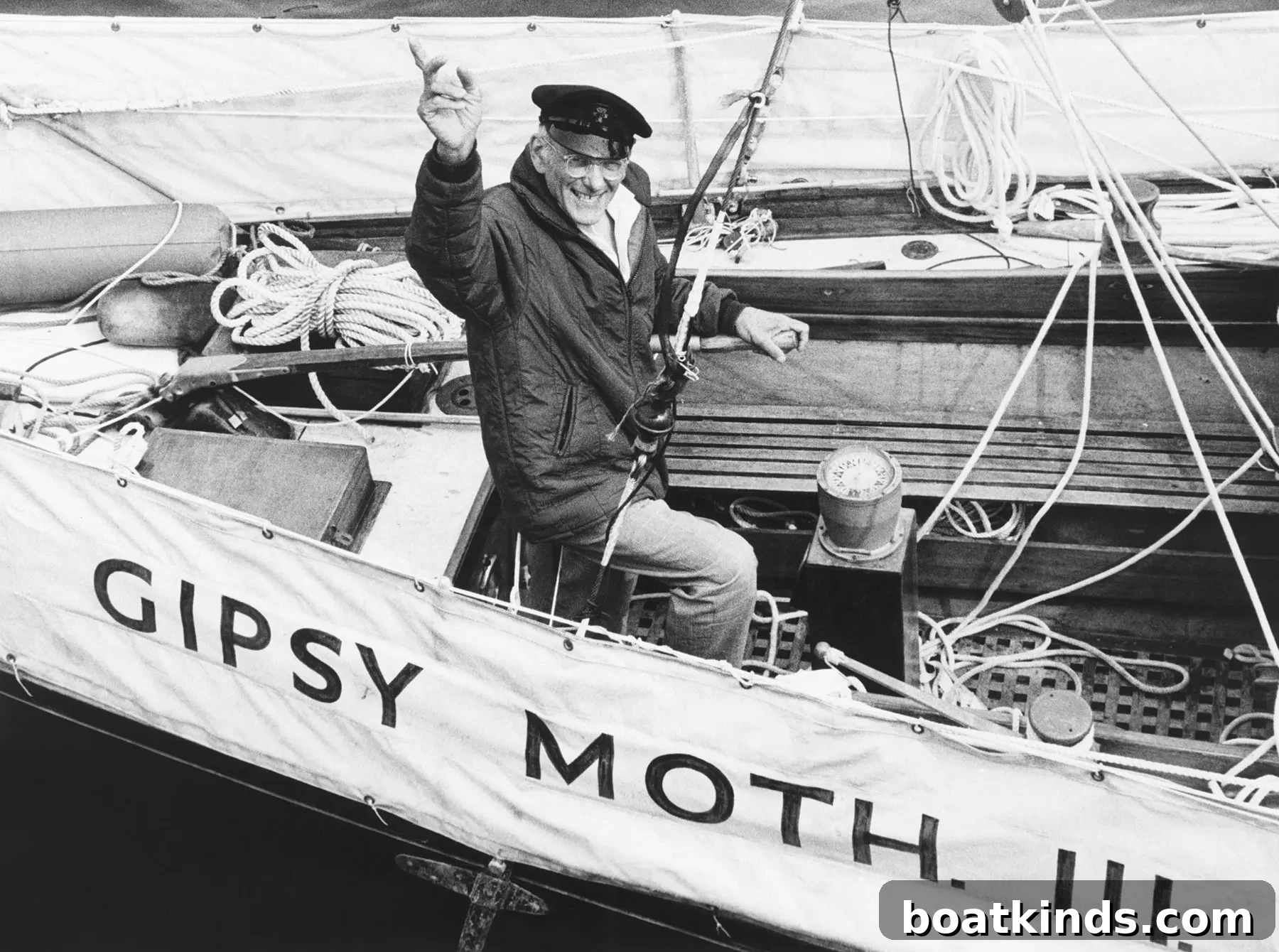
Among those five pioneering competitors was Sir Francis Chichester, an accomplished navigator who had served as an air‑navigation expert during World War II and who had turned his full attention to ocean sailing after taking it up in 1953. Chichester raced aboard the Gipsy Moth III, a 40‑foot ketch that was by far the largest yacht in the fleet. Herbert Hasler sailed a 25‑foot modified Nordic folkboat named Jester, a rugged, seaworthy design well suited to the harsh conditions of the North Atlantic. Another competitor took to the ocean in a much smaller 21‑foot boat—demonstrating the wide variety of vessel sizes and approaches in that inaugural contest.
The absence of real‑time communication meant that spectators on both sides of the Atlantic waited anxiously for news as the days passed. When more than a month elapsed without word, concerns for the sailors’ safety mounted. Then, after a taxing 40 days, 12 hours and 30 minutes at sea, Chichester and Gipsy Moth III appeared on the horizon off New York, claiming victory in the first race. Chichester later described the difficulty of the crossing, noting that every time he tried to point Gipsy Moth toward New York, the wind would come on the nose—an image he likened to trying to aim a hose at a person standing in a doorway. The comment captures both the frustration and the relentless challenge of ocean sailing against adverse winds.
Hasler arrived eight days after Chichester, and the remaining entrants limped in over the following weeks. The smallest boat took 74 days to complete the crossing, a testament to sheer perseverance and determination. The Observer newspaper’s sponsorship gave the race its enduring name—OSTAR—and the Royal Western Yacht Club of England has continued to organize the event through later editions. The race’s early years established traditions of solo skill, navigational mastery, and self‑reliance that continue to define solo ocean racing.
Beyond the competition itself, the inaugural OSTAR highlighted the dramatic differences in equipment and approach between sailors. From Chichester’s relatively large, well‑equipped ketch to Hasler’s stout modified Nordic folkboat and the tiny 21‑footer, the race was a study in how boat design, seamanship, and mental toughness intersect when an individual faces the open ocean alone. It also underscored the role of navigation techniques that predated modern electronics—sextants, compasses, and dead‑reckoning skills that are still taught and respected by offshore sailors.
OSTAR’s legacy reaches beyond its historical moment: it helped popularize single‑handed offshore racing and inspired subsequent generations of sailors to attempt solo ocean crossings. While technology has transformed navigation and safety systems since 1960, the core challenges of wind, weather, and human endurance remain central to the event. The race continues to attract competitors who want to test themselves against the Atlantic, their boats, and the elements.
This article was originally published in the May 2022 issue.