
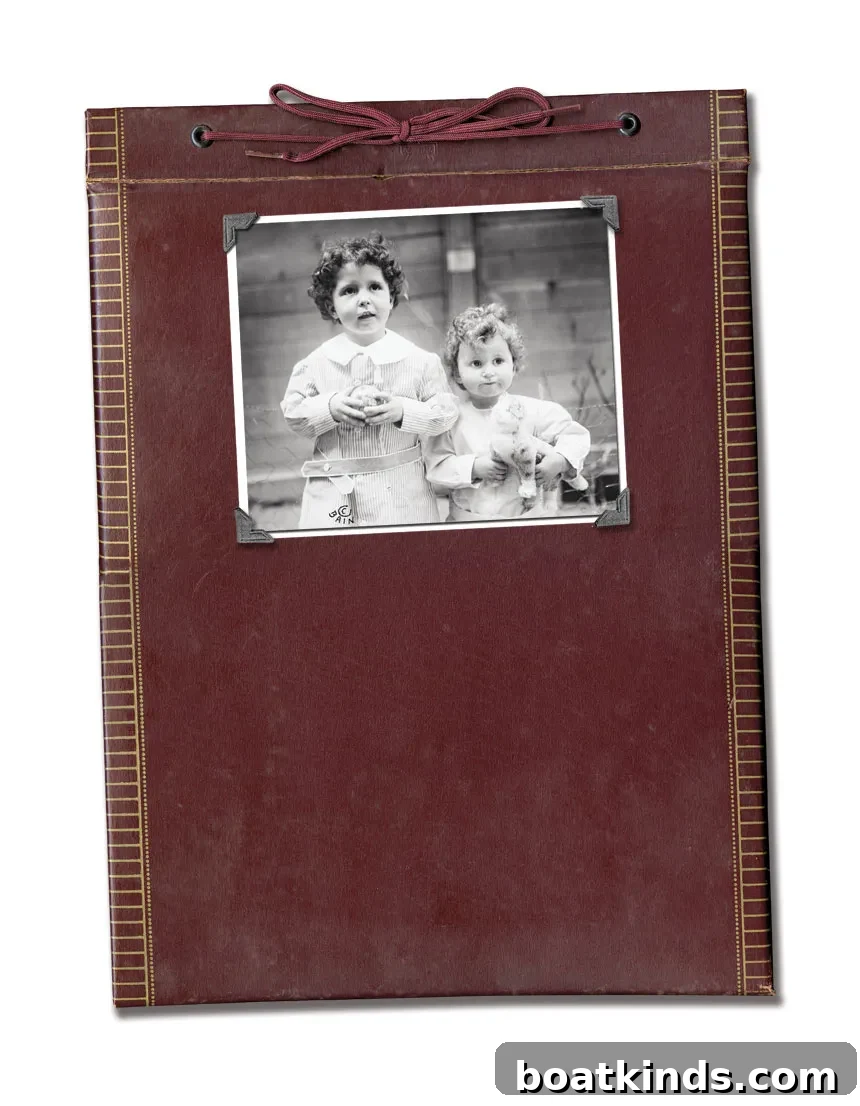
Orphans of the Titanic: The Story of Michel and Edmond Navratil
When the RMS Carpathia carried the rescued passengers of the Titanic to New York, a scene of exhausted survivors unfolded on the docks. Many were numb from the cold and stunned by the collapse of what had been called an “unsinkable” ship. Among those who disembarked were children searching for family members, tearful reunions, and, hidden among the crowd, two little boys who became known as the “Orphans of the Titanic.”
The boys, aged four and two, arrived in a bewildered state. They did not speak English and were too young to fully understand where they had been taken or what had happened to their parents. It was Margaret Hays, a fellow passenger on the Carpathia, who recognized that their speech was not English but a childish French and who began to unravel the boys’ story.
Their names were Michel Navratil Jr. and Edmond Navratil. Their father, Michel Sr., had taken them from France to England and boarded the Titanic bound for America, where he planned to start anew. The boys’ mother, Marcelle, remained in France. During the disaster, Michel Sr. placed his sons in collapsible lifeboat D and uttered a final message for their mother: “Tell your mother that I love her deeply.” He did not survive the sinking; his body was later recovered by the cable ship Mackay-Bennett and was buried with other victims.
Margaret Hays brought the two boys to her home in New York while authorities and the press tried to discover their identities. Hays’s intervention ensured the boys were cared for and shielded from the worst of the publicity as efforts were made to track down their family. Eventually, through inquiries and recognition of the children’s French speech and details they provided, they were reunited with their mother, Marcelle Navratil.
The boys’ futures diverged as they grew into adulthood. Edmond, the younger of the two, pursued a career in architecture and died in 1953 at the age of 43. Michel Jr. took a scholarly path and became a philosophy professor, living to an advanced age. Later, his daughter Elisabeth Navratil wrote Les Enfants du Titanic (published in English as Survivors), recounting her father’s memories of the voyage and the aftermath.
Michel Jr. later described the Titanic through the eyes of a child as beautiful and almost magical: “The Titanic was a magnificent ship. We played on the forward deck. The sea was stunning. My feeling was one of total and utter well-being.” Even after the catastrophe, his recollections retained the wonder he felt aboard the great liner.
Regarding the evacuation and lifeboat experience, he remembered the events without overwhelming fear. “I don’t recall being afraid,” he said. “I remember going ‘plop’ into the lifeboat.” He also recalled the small, oddly human details that cling to memory: the lifeboat ended up beside the daughter of an American banker, who astonishingly managed to save her dog.
The story of the Navratil brothers resonates because it combines the tragedy of loss with a thread of human kindness. Strangers stepped in when two foreign-speaking children found themselves alone in a strange land. The compassion shown by Margaret Hays and others who helped care for the boys is a reminder of how individual acts can alter the course of lives.
Their experience also highlights the broader, heartbreaking consequences of the Titanic disaster: not only the immediate loss of life and the immense public shock but the personal separations and the long search for family connections in the days that followed. For Michel Jr. and Edmond, the public interest around their situation was intense; for their mother, the reunion was a wrenching relief after the trauma of learning that her husband had perished.
The “Orphans of the Titanic” remain one of the most poignant human stories connected to the ship’s sinking. Their tale endures in photographs, first-hand recollections, and the pages of books written by their descendants—reminders that alongside the statistics and headlines are often small, unforgettable lives shaped by a single, tragic night at sea.
This article originally appeared in the June 2018 issue.