
Photos by Michael Cevoli
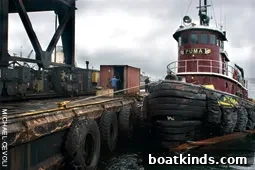
The tug Puma is a classic example of a durable, no-nonsense workboat that has logged decades of service in northeastern U.S. waters. Built in 1962 by the Diamond Manufacturing Co. in Savannah, Georgia, she was originally commissioned by Turecamo Maritime of Staten Island, New York and entered service as Jean Turecamo. Later in her career she was renamed Puma and continued to perform the steady, essential tasks expected of harbor and coastal tugs.
Puma is a twin-screw, steel-hulled tug measuring 92.5 feet in length, with a 27-foot beam and a 12-foot draft. Over the last half-century she has changed hands several times as regional towing companies consolidated. During her working life she has handled barges and towing assignments for companies including Massachusetts Towing Co. of Fall River, Massachusetts; Providence Steamboat Co. of Providence, Rhode Island; and McAllister Towing and Transportation of New York City, according to tugboatinformation.com. Those long relationships and changes of ownership reflect the tug’s value and adaptability in a busy maritime region.
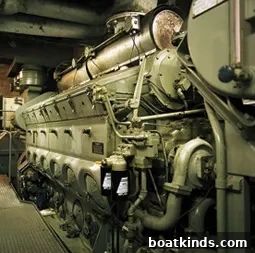
Originally finished in a distinctive forest green, Puma later adopted the red livery of McAllister and continues to operate under that house color. Her propulsion comes from a pair of Caterpillar diesel engines rated at a combined 2,200 horsepower, providing the power and reliability needed for towing, ship-assist work and general harbor service. Based in Providence, Rhode Island, Puma and the rest of the McAllister fleet support a variety of commercial and government customers. Typical duties in the Providence and Narragansett Bay area include assisting tankers and tug-and-barge units in the petroleum trade, handling bulk cargo operations at municipal docks, moving coal to local utility plants, serving the Navy facilities in Newport and assisting car carriers and other vessel types that call the port of Davisville, Rhode Island.
Early in her career, while still registered to Turecamo Maritime, Puma—then operating as Jean Turecamo—suffered a serious onboard fire while towing the barge Morania No. 310 off Point Judith, Rhode Island. A short circuit in the tug’s electrical wiring ignited a blaze that melted the sight tubes on the day fuel tanks and allowed fuel to spill onto the engine-room floor. The crew abandoned the tug and took refuge on the barge. What followed was a total constructive loss of the vessel, but the hull and machinery were recoverable. Massachusetts Towing Co. stepped in, acquired the damaged tug, rebuilt and repaired her, and returned her to service under the name Puma.
Puma’s builder, Diamond Manufacturing Co., operated on the Savannah River just upstream from downtown Savannah. The shipyard produced a variety of marine workcraft—tugs, barges, dredges, cranes and other heavy equipment—during its years of operation from the mid-1950s through the late 1980s. Designed by naval architect Merritt Demarest, Puma was Turecamo’s first twin-screw tugboat, reflecting a design preference for maneuverability and towing power that has proven useful over many decades. With McAllister’s acquisition of Providence Steamboat Co. in 2007, Puma and other vessels from the so-called “green fleet” came into McAllister’s hands, adding to that company’s long-standing presence in northeastern ports.
Workboats like Puma demonstrate how thoughtful design, solid construction and routine maintenance can extend a vessel’s useful life far beyond initial expectations. Steel-hulled tugs built in the 1960s were constructed to be repaired and modernized as needed; major incidents such as fires or collisions often result in comprehensive rebuilds that return the vessel to active service. Over more than fifty years Puma has been repainted, repowered in places where engines and systems have been upgraded over time, and refitted to meet evolving operational needs and regulations. While individual details of maintenance cycles and refits vary, the tug’s continuous presence in commercial towing and harbor-assist roles underscores the enduring value of well-built workboats in coastal and port operations.
October 2014 issue