
Gladys West: The Hidden Figure Who Helped Build GPS
GPS has become so ingrained in our daily routines that we often barely notice it. On days you go boating, you likely consult GPS multiple times before you even power on the chartplotter. You may have checked the weather app before leaving home to see current conditions—GPS. Used your phone or car maps to pick up a friend or find a coffee shop on the way to the marina—GPS. Pulled up the map to the marina even though you already know the route, just to see traffic and estimated travel time—GPS. We rely on GPS for quick conveniences and for essential navigation on the water.
Beyond everyday uses, GPS lets us position boats with remarkable precision so we can navigate narrow channels, plan long voyages, and record our tracks across the sea. Those precise satellite-based calculations trace back to the work of mathematician Gladys West, a recently recognized “Hidden Figure” whose programming and data analysis were vital in developing the system we now use every day.
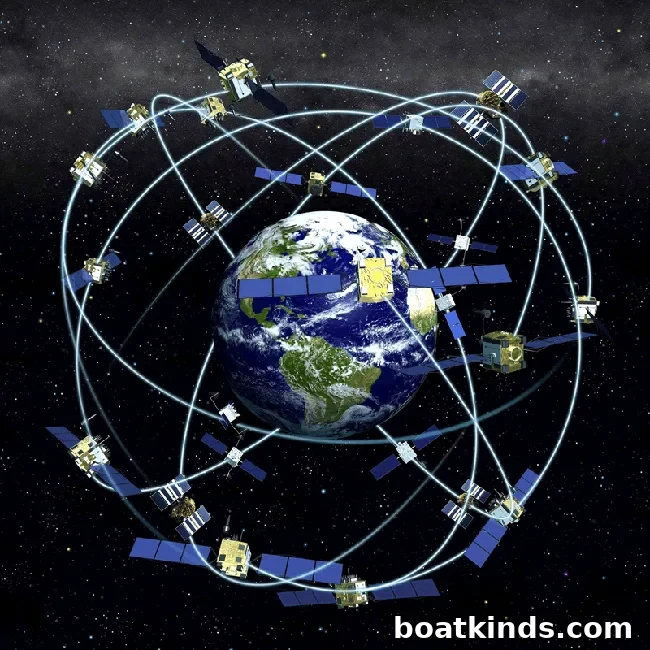
Gladys West was born in 1931 in Dinwiddie County, Virginia. She studied mathematics at Virginia State College and in 1956 became the second Black woman hired at the Naval Surface Warfare Center in the Dahlgren Division. There she worked as a programmer on large-scale computers, collecting and processing satellite-ranging data. Her careful modeling and data processing contributed to the algorithms and reference models that underlie the Global Positioning System.
At the Dahlgren facility, West advanced to project manager for the processing and analysis of satellite data. Her responsibilities included refining mathematical models to account for factors that affect satellite orbits and signal timing—work that ultimately fed into the precision required for a dependable positioning system. The Washington Post later quoted her commanding officer praising her technical skill and dedication during those years.
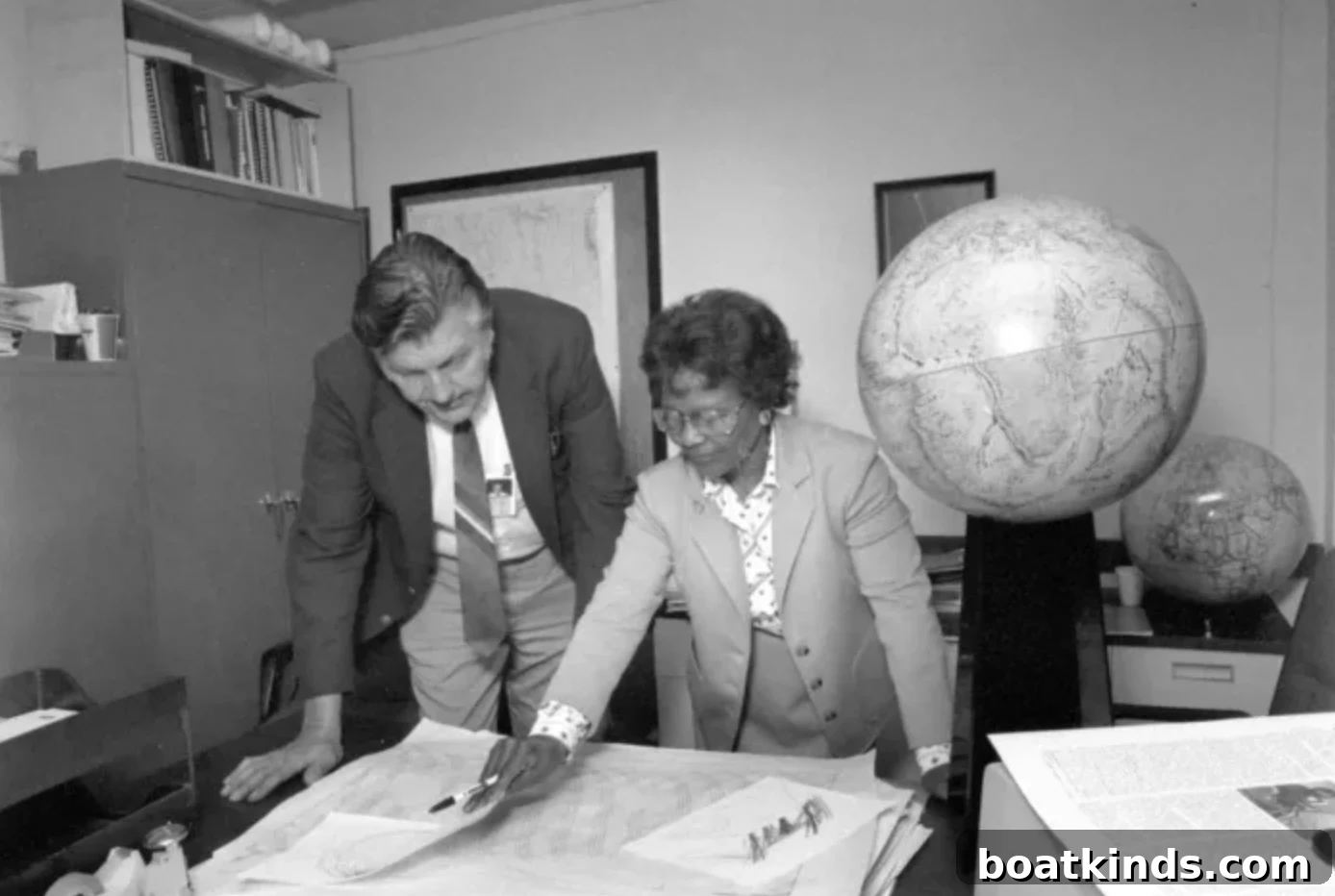
West documented aspects of her work in a 1986 illustrated report titled “Data Processing System Specifications for the Geosat Satellite Radar Altimeter,” which explained the principles used to process satellite altimeter observations. She spent 42 years at the Naval Surface Warfare Center and retired in 1998, leaving a technical legacy that quietly underpins a major part of modern navigation technology.
For many years her role remained little known outside a small circle until a simple line in a personal biography brought it to light. West had written a short biography for an Alpha Kappa Alpha sorority event to honor senior members and casually noted that she had worked on the team that helped develop GPS. A fellow sorority member and longtime friend, Gwen James, read that line and realized the significance of West’s contribution. James chose to share the revelation, helping bring public attention to a vital but formerly unheralded figure in GPS history.

Despite the recognition and commendations West received for her precision and dedication, she remains cautious about total reliance on electronic navigation. She is known to carry a printed map when she travels—an old-school habit that surprises her children and grandchildren. When asked why she does not rely solely on the system she helped create, West explained that, as a mathematician, she understands how models and data can change. She prefers to have a tangible backup and to verify data where possible. That practical skepticism is a reminder for all of us: GPS is powerful, but it is not infallible.
Today, Gladys West’s work stands as an essential contribution to modern navigation and satellite geodesy. Her story also highlights how important technical achievements are sometimes overlooked until someone pays attention to a single detail. For mariners, drivers, pilots, and everyday users, the GPS-enabled conveniences we take for granted rest on decades of careful mathematical work and data processing—work to which Gladys West made a lasting contribution.
This story was originally published in Passagemaker Magazine in 2018 by Brian K. Lind.