
Teenage Solo Circumnavigators: Watson’s Collision and Dekker’s Court Challenges
Two teenagers who have claimed the title of “youngest solo circumnavigator” this year—Zac Sunderland and Mike Perham—have captured public attention, while two other young sailors with similar ambitions face significant setbacks before they can begin their voyages.
On Sept. 9, 16-year-old Australian sailor Jessica Watson was conducting a training passage aboard her Sparkman & Stephens 34, Pink Lady, when the boat collided around 2 a.m. with a 63,000-ton bulk carrier about 17 miles offshore. Watson was not injured, but her yacht sustained minor damage to hull and rigging, she reported on her blog. Local marine police and maritime services assisted her back to shore after she alerted her parents by satellite phone.
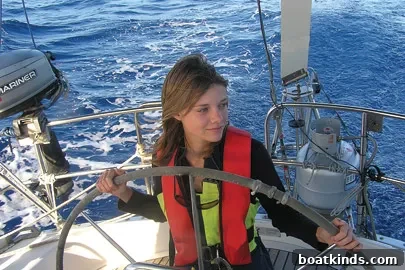
The collision apparently took place in a shipping lane and in calm conditions, but details remained under investigation by three different agencies. Watson said she could not comment on specifics while the inquiries continued. Despite the frightening incident, she wrote that the experience left her feeling confident in her ability to handle emergencies at sea.
Watson had been on a 10-day training run from Mooloolaba to Sydney, a passage of roughly 500 nautical miles, preparing for an intended departure later in the month. Her planned route called for an eastward circumnavigation around the great capes, with an expected finish in April before she turned 17. She took a leave of absence from her studies at the Cairns School of Distance Education, a Queensland-based distance education program, and intended to resume schooling after completing the voyage.
Repairs to Pink Lady were under way at a marina in Queensland. Watson expressed confidence that the damage would not derail her overall schedule. “It just makes me more determined,” she wrote. “I’ve been training for this thing for so many years, it just gave me confidence. Sort of like, ‘Wow, I can actually handle this.’ So it’s good.”
Meanwhile in the Netherlands, 13-year-old Laura Dekker faced legal obstacles to her planned solo circumnavigation. Dekker had intended to depart Sept. 1 on a proposed two-year voyage aboard her 26-foot yacht Guppy. Reports said she had already sailed solo from the Netherlands to England as part of her training. Dekker was born aboard her parents’ boat in New Zealand and spent her earliest years at sea, according to widely reported background details.
A Dutch court intervened and temporarily blocked her immediate departure. The ruling allowed Dekker to continue living with her father, Dick Dekker, who supported the voyage, but placed her under the supervision of Dutch child care authorities for the next two months while her situation was evaluated by a child psychologist. A further hearing was scheduled for Oct. 26, which would occur after Dekker’s 14th birthday.
Dekker’s mother, Babs Muller, has been a vocal opponent of the trip. While acknowledging her daughter’s sailing skill—“She can sail like the devil—that’s not the problem,” Muller said—she expressed deep concerns about the risks Dekker might face, particularly in some overseas ports and the psychological strain of lengthy isolation at sea. Muller said she feared for her daughter’s safety and questioned whether a young teenager was emotionally ready for such an extended, solitary voyage.
The parents were divorced in 2002, and under the terms of the separation Muller has limited access to her daughter. She has said she was reluctant to speak publicly earlier out of concern that doing so might further reduce contact with her child. “It breaks my heart that I may lose contact with her,” Muller said, “but I would rather have a living daughter whom I do not see than a dead daughter.”
These incidents highlight the complex mix of personal ambition, parental support and legal oversight that surrounds very young sailors attempting solo circumnavigations. While some teenagers have completed high-profile solo voyages, others encounter practical dangers at sea or face intervention by authorities concerned with safety and welfare.
This article originally appeared in the November 2009 issue.